

Shide meaning in Shinto centres on purity and the boundary between daily life and the sacred.
These zigzag paper streamers are one of the most recognisable symbols at Japanese shrines.
You’ll see them hanging from ropes, altars, or ritual wands, always marking a space as holy.
What is the Meaning of Shide?
Shide (紙垂) are sacred, zigzag-shaped paper streamers used in Japanese Shinto rituals to mark the boundary between the ordinary world and a purified, sacred space.
They symbolize purity and are commonly seen hanging from shrine ropes (shimenawa), purification wands (haraigushi), and home altars to ward off evil and honor the kami (gods).
Definition and Appearance
The zigzag shape makes them easy to spot.
You’ll usually see them made from white paper, cut and folded in a specific way.
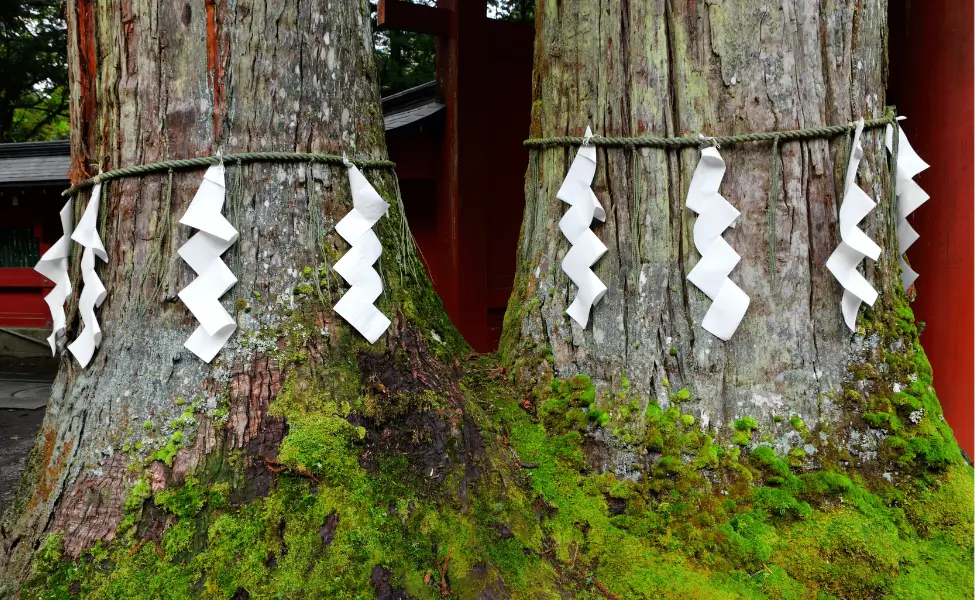
They typically measure 20 to 30 centimetres long and 3 to 5 centimetres wide.
They don’t just hang alone.
Shide connect to sacred items like shimenawa (straw ropes), tamagushi (sacred tree branches), or wooden wands known as gohei.
Common places you’ll see shide:
- Doorways of Shinto shrines
- Kamidana (home altars)
- Around sacred trees
- On purification wands used by priests
The zigzag cuts give a flowing, ribbon-like look when they move in the wind.
This movement isn’t just for show.
It has a spiritual purpose.
Symbolism and Spiritual Meaning
Shide signal that a place or object is set apart for the kami.
Their zigzag form and movement mark a boundary between ordinary life and a purified space.
In ritual, the crackle of paper on a wand is believed to sweep away impurity.
The colour white conveys purity, which is central to Shinto practice.
History of Shide in Shinto
Shide’s history stretches back to ancient Japan, even showing up in the Kojiki, one of Japan’s oldest texts from 712 CE.
At first, they weren’t made of paper at all.
Early versions, called yushide, used tree bark fibres, especially from the paper mulberry tree.
Over time, the tradition adapted but kept its spiritual meaning.
Paper replaced bark during the Heian period (794-1185) as it became more available and easier to fold.
The folding techniques turned into styles you still see at shrines today.
Shinto practices evolved over time, shifting from natural fibres to paper.
This change shows that whilst the core meaning stayed the same, the materials and methods adapted.
Shinto Ritual Uses of Shide
Purification Rituals
Priests use a haraigushi, a wooden wand with paper shide attached, to purify people, objects and spaces.
Slow, rhythmic movements produce a dry rustle that is believed to remove impurity.
You will see purification before festivals, rites of passage and on entering a sacred area.
You might see these purification ceremonies:
- Personal cleansing at shrine visits
- Seasonal purification rituals
Use in Shrines and Sacred Spaces
At shrines, shide hang from shimenawa ropes on torii gates, buildings and sacred trees.

They also appear on festival decorations and processional routes.
The placement isn’t random.
Specific numbers and positions follow traditional patterns.
Other colours may appear for specific events set by local custom.
Household Worship
Sakaki branches with paper streamers stand on many kamidana.
Worshippers place a tamagushi, combining sakaki and shide, before the kami during prayers or special requests.
Many families refresh their sakaki and shide weekly to keep the household altar spiritually pure and to maintain strong ties with protective kami.
How to Make and Display Shide
Materials
Traditional shide use washi, a strong white handmade paper used in many Shinto items.
These days, people often use standard cardstock or thick drawing paper, which works well and is easy to find.
The paper should be white and sturdy enough to keep its shape.
You can also use drawing paper if it’s thick enough.
Step-by-Step Instructions
Prepare yourself first.
Wash your hands and clear your mind.
Only make shide with good intentions.
- Cut strips to about 25 cm by 4 cm.
- Fold lengthways to double the thickness.
- Along both long edges, make cuts every 1.5 cm, each about two thirds across, alternating sides.
- Create the zigzag by folding down, then behind, repeating to the end.
Display and Care
Household altars can display shide by attaching them to the front or hanging them nearby.
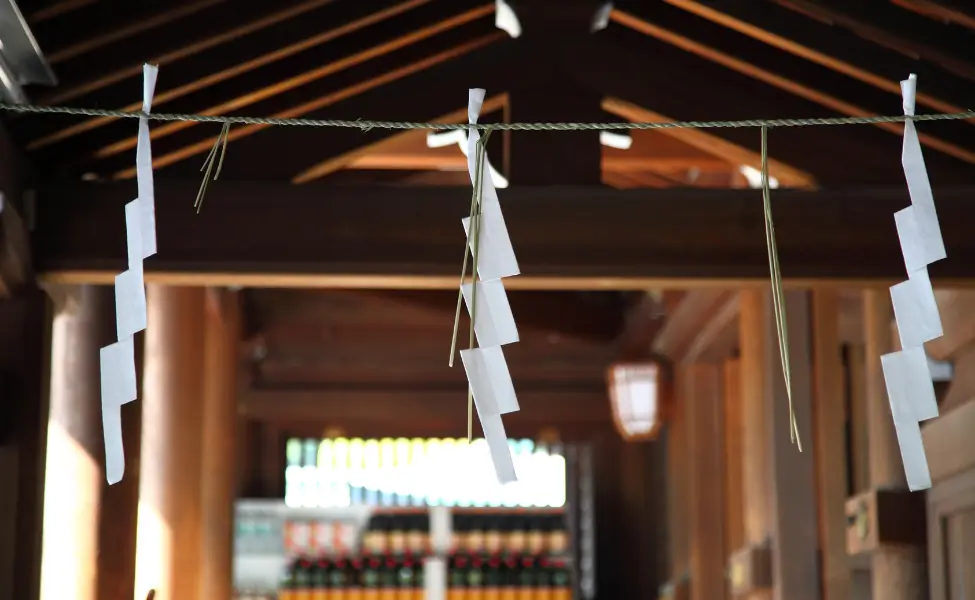
For shimenawa ropes, insert shide strips into the twisted rope by loosening the plaiting a little.
Space them evenly along the rope.
Ceremonial wands use several shide attached to a wooden pole.
The paper should cover about two-thirds of the pole’s length.
Replace shide regularly, as they are believed to collect impurities.
Dispose of old ones respectfully.
Burn them or return them to nature.
Shide in Modern Japan
Shide remain part of everyday religious life.
Priests bless new cars, shops and offices with a haraigushi.
During festivals, ropes with shide mark portable shrines, routes and performance areas.
At home, many families pair sakaki branches and shide on a kamidana and refresh them on a regular schedule.
Glossary of Shinto Terms
Shide (紙垂)
Zigzag-shaped paper streamers used in Shinto.
They symbolise purity and mark the boundary between the ordinary and the sacred.
Shimenawa (注連縄 or 七五三縄)
A thick, twisted rope made from rice straw or hemp. It marks sacred areas, such as shrine gates, sacred trees, or rocks.
Shide are often attached to it.
Kamidana (神棚)
A small household Shinto altar.
Families place offerings such as rice, salt, water, or branches with shide here to honour the kami.
Sakaki (榊)
An evergreen tree considered sacred in
Shinto. Its branches are often decorated with shide for rituals and offerings.
Tamagushi (玉串)
A ritual offering made from a sakaki branch with shide attached.
It is presented to the kami during prayers or ceremonies.
Gohei (御幣)
A wooden wand with two strips of folded white paper (shide) attached.
It represents the presence of the kami and is used in rituals.
Haraigushi (祓串)
A purification wand with many shide attached to the top.
Priests wave it during ceremonies to cleanse people, places, or objects.
Kami (神)
The spiritual beings or deities in Shinto.
They inhabit natural features like mountains, trees, rivers, and also objects or ancestral spirits.
Torii (鳥居)
A gate at the entrance to a Shinto shrine.
Passing through it marks the transition from ordinary space to sacred space.
Matsuri (祭り)
A festival, often held at shrines, that includes rituals, music, dance, and community celebrations to honour the kami.
Frequently Asked Questions
The zigzag shape of shide represents lightning, which in Shinto is associated with rain, agricultural fertility, and the awe-inspiring power of the kami. Additionally, the folded shape creates a distinct rustling sound when waved or blown by the wind, which is believed to sweep away spiritual impurities.
Shide symbolize absolute purity and spiritual protection. Their presence acts as a visual marker indicating that a specific space, object, or person has been ritually cleansed and is set apart for the kami.
Traditional shide are made from white washi, a strong, handmade Japanese paper. In ancient times, before paper was widely available in Japan, early versions called yushide were made from the bark fibers of the paper mulberry tree.
A shide is the zigzag paper streamer itself, while a gohei is a specific ritual tool consisting of a wooden wand with two shide attached to it. Priests use the gohei during Shinto ceremonies to represent the kami’s presence and to bless worshippers.
