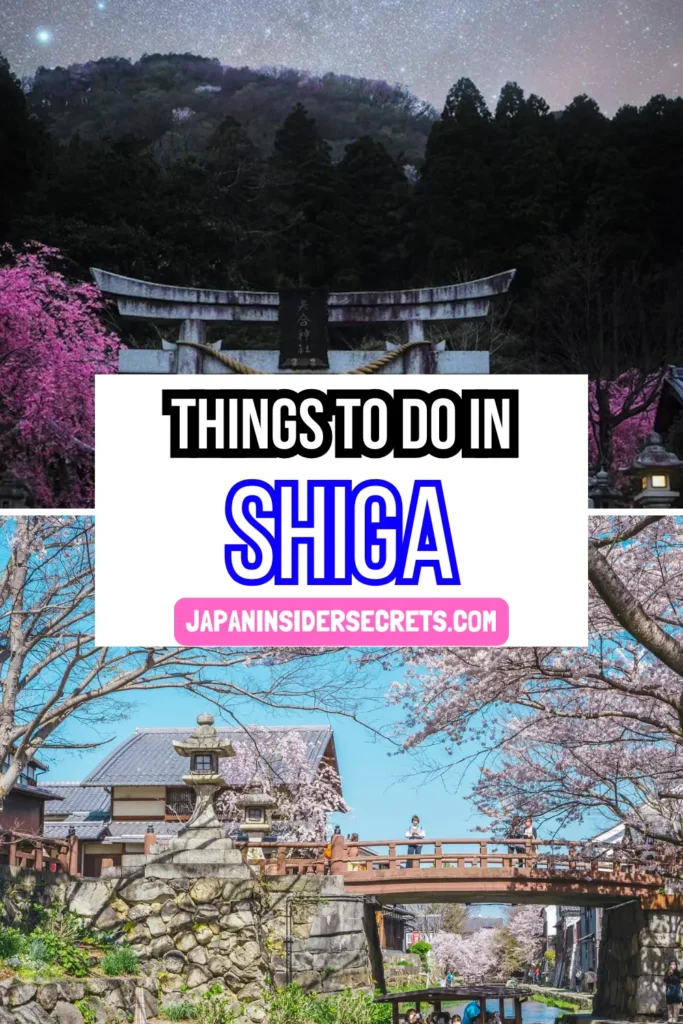

If your Kansai itinerary runs Kyoto, Osaka, and maybe Nara, you are making a reasonable choice.
Shiga Prefecture sits directly east of Kyoto, reachable in under ten minutes by JR train, and most first-time visitors skip it without much deliberation.
Whether that is the right call depends entirely on what you want from a travel day.
Shiga will not suit everyone.
Travellers who want density, major landmarks at scale, or a packed urban schedule will find it too quiet.
Those who want a National Treasure castle with far fewer crowds, a preserved Edo-period merchant town that most Kansai tourists never find, and lake views they can actually get out onto rather than just photograph will find the day earns itself without difficulty.
Getting it right comes down to choosing the correct town for your interests and giving yourself enough time to settle in rather than rush between stops.
Who Shiga Is Best For
Shiga suits travellers who want original castle architecture, open lake scenery, quieter historic streets, and a Kansai day that feels different from anything on offer in Kyoto or Nara.
It does not suit travellers who want dense back-to-back sightseeing, nightlife, major shopping areas, or famous bucket-list names.
The pace here is slower and it is worth knowing before you book the train.
The Three Shiga Towns Worth Your Time
Hikone, Omihachiman, and Nagahama are the three towns most worth building a Shiga day around.
Each suits a different kind of visitor.
Choosing the wrong one for your interests is the main reason people come away feeling the day was thin.
Hikone
Hikone gives the clearest answer to whether Shiga can hold up against Kyoto for historic depth.
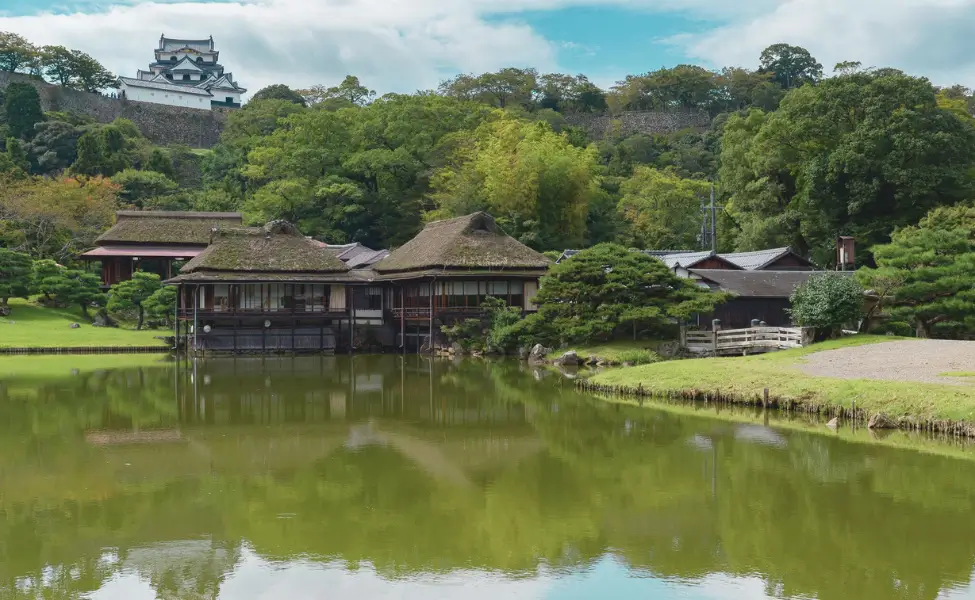
The town centres on Hikone Castle, one of only twelve surviving original castle keeps in Japan and one of only five with National Treasure designation.

Construction began in 1604, and the Ii clan completed the keep in 1622.
What you walk through today is original Edo-period timber and stone, not a postwar concrete replica.
From the top floor of the keep, you look directly over Lake Biwa.
Few places in Kansai put a 17th-century fortress and open lake views in the same visit.
Genkyuen Garden sits at the base of the castle and offers a calm strolling circuit through a traditional daimyo landscape. Most visitors walk straight past it on their way to the keep.
Allow thirty minutes for it anyway.

Hikone Station sits on the JR Biwako Line, approximately fifty minutes from Kyoto Station, and the castle is a fifteen-minute walk from the exit.
The town is compact enough to cover without a car.
Omihachiman
Omihachiman is the town most likely to produce a moment of genuine surprise.
Its historic merchant district along the Hachiman-Bori Canal has preserved Edo-period architecture more completely than most of Kyoto’s remaining old streets.
Flat-bottomed boats travel the canal between merchant houses that still look as though they belong to the 17th century.
The atmosphere along the water is calm in a way that central Kyoto rarely manages.

The town prospered through the Omi merchants, traders who built commercial networks across Japan during the Edo period. Their history shows in the scale and quality of the surviving buildings.
A half-day here combines a boat ride, a walk through the old district, and lunch.
That sits comfortably in a single morning or afternoon without feeling rushed.
Omihachiman is approximately thirty-five minutes from Kyoto Station by JR Biwako Line.
Nagahama
Nagahama sits at the northern end of Lake Biwa and moves at a slower pace than either Hikone or Omihachiman.
Kurokabe Square, a cluster of old buildings converted into glass studios, galleries, and small cafes, gives the town a relaxed character.
Travellers who prefer browsing to structured sightseeing will find Nagahama well matched to that preference.
The town pairs efficiently with Hikone on the same JR line.
Those who want castle history in the morning and quieter lakeside time in the afternoon will find that combination works well.
Note that Nagahama Castle Historical Museum overlooks the lake but sits in a modern reconstruction rather than an original structure.
What Lake Biwa Actually Offers
Lake Biwa is not just something to look at from a viewpoint.
Japan’s largest freshwater lake covers approximately 670 square kilometres.
The experience depends almost entirely on what you choose to do with it, not where you stand.
What the lake gives you depends on your choice of activity:
- Ropeway and terrace views at Biwako Valley on the western shore, where two mountain terraces sit above 1,000 metres with the lake spread below
- Flat-bottomed boat rides along the Hachiman-Bori Canal in Omihachiman, with historic merchant buildings on both banks
- Cycling sections of the Biwaichi route, a 220-kilometre path that circles the entire shoreline with consistent signage
- Kayaking and paddleboarding near Otsu, with rental operators in the area
- Shirahige Shrine on the western shore near Takashima, which has a red torii gate standing in the lake itself. Early morning visits avoid groups and catch better light.
Visitors who pick one or two of these get far more from the lake than those who try to cover several viewpoints in a single day.

For most day-trippers, Biwako Valley or the Hachiman-Bori Canal is the right choice, not both.
Historic Sites That Need Their Own Planning
The towns section covers Hikone Castle, but two other sites in Shiga deserve direct attention when you build your itinerary.
Enryaku-ji Temple on Mount Hiei is a UNESCO World Heritage Site and the headquarters of the Tendai sect of Japanese Buddhism, founded in 788.
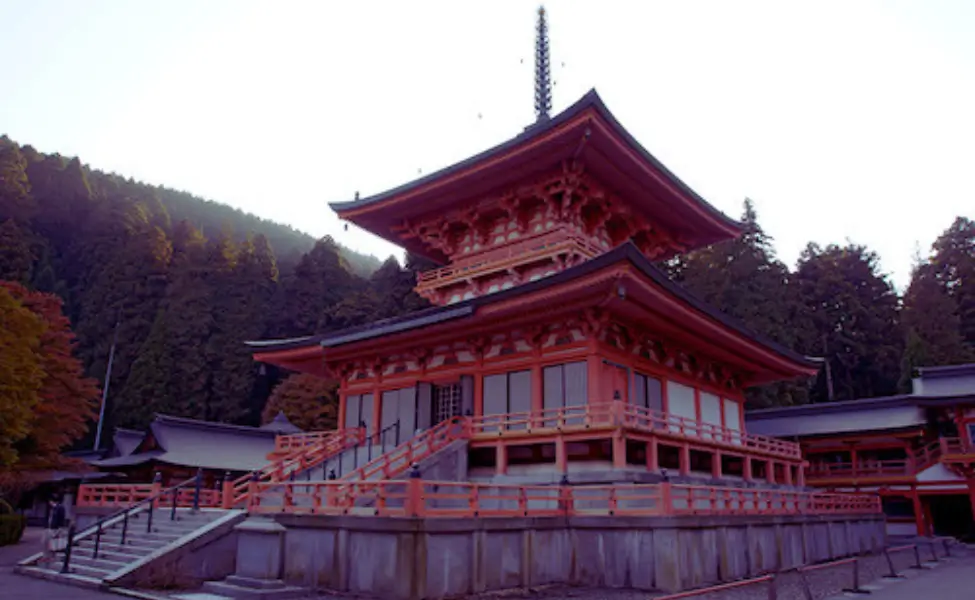
The complex extends across roughly 1,700 hectares and holds more than 100 structures across three distinct areas.
It straddles the border between Kyoto and Shiga, with the Sakamoto Cable Car on the Shiga side providing access from near Hieizan-Sakamoto Station, roughly fifteen minutes from Kyoto by JR Kosei Line.
Allow at least two hours for the central area alone.
Mii-dera Temple in Otsu is the head temple of the Tendai Jimon sect and holds more than forty buildings on its grounds, along with over a hundred National Treasures and Important Cultural Properties.
It sits near the southern end of the Lake Biwa Canal, making it easy to combine with a canal walk or a broader Otsu morning.
Outside cherry blossom season, the grounds stay quiet and reward a slow visit on foot.
The Miho Museum requires a specific note about access.
Designed by Chinese-American architect I.M. Pei, it houses a collection of ancient art from Egypt, Western Asia, Greece, Rome, China, and Japan, with an approach through a mountain tunnel and across a bridge that is unlike anything else in Shiga.
Without a car, reaching the museum means a specific bus from Ishiyama Station that takes around fifty minutes each way.
A dedicated museum day suits it far better than tacking it onto a castle-and-lake itinerary.
The Food That Makes the Trip Feel Regional
Shiga has two dishes worth seeking out deliberately rather than stumbling across.
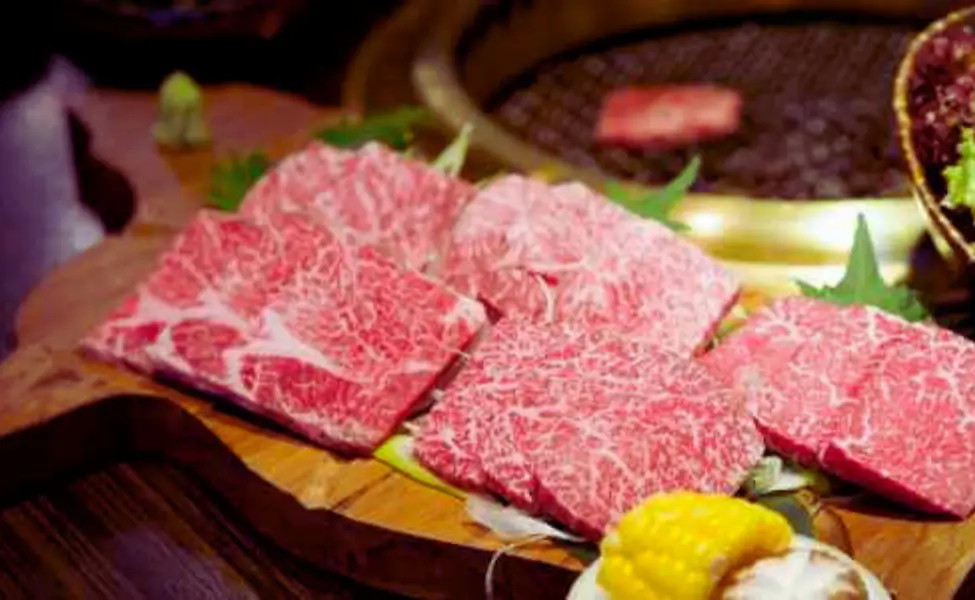
- Omi beef is Japan’s oldest Wagyu brand, with over 400 years of recorded history. Alongside Kobe and Matsusaka beef, it ranks as one of Japan’s three most celebrated Wagyu varieties. Prices in local Shiga restaurants are generally more accessible than comparable Kobe meals. Sukiyaki and shabu-shabu are the most common preparations, and specialist restaurants cluster near Hikone Castle and along the Omihachiman canal district.
- Funa-zushi is a fermented dish made from nigorobuna, a species of crucian carp endemic to Lake Biwa. Food historians regard it as the oldest surviving form of sushi in Japan. The flavour is sharp and pungent, often compared to blue cheese, and the smell is stronger still. Try a small portion with sake on a first encounter rather than planning a full meal around it.
Visitors with time in the Shigaraki area can browse ceramics workshops and showrooms.
Shigaraki is one of Japan’s Six Ancient Kilns, with a pottery tradition going back nearly 900 years.
Pieces range from everyday tableware to the raccoon-dog tanuki figures that appear outside Japanese restaurants worldwide.
Getting There and Shaping Your Day
Shiga’s main towns sit on the JR Biwako Line, which runs directly from Kyoto Station without transfers.
An IC card such as Suica or Pasmo covers all standard fares on this route.
| Town | From Kyoto Station | From Osaka Station | Good for |
|---|---|---|---|
| Otsu | Approx. 10 min | Approx. 40 min | Canal walk, Mii-dera, lake access |
| Omihachiman | Approx. 35 min | Approx. 65 min | Canal boat ride, merchant district |
| Hikone | Approx. 50 min | Approx. 80 min | Castle, garden, open lake views |
| Nagahama | Approx. 60 min | Approx. 90 min | Lakeside browsing, glass crafts |
A solid day from Kyoto combines Hikone in the morning and Omihachiman in the afternoon.
Leave Kyoto by 8:30 and follow this order.
- Arrive at Hikone Station around 9:30. The castle is a fifteen-minute walk from the station exit.
- Spend ninety minutes on the castle keep and Genkyuen Garden. The garden takes about thirty minutes to walk through at a relaxed pace.
- Return to Hikone Station and take the JR Biwako Line south to Omihachiman, approximately twenty minutes.
- Book the flat-bottomed canal boat on arrival. Boats run regularly and the trip lasts around thirty minutes.
- Find an Omi beef restaurant near the canal for lunch. Allow ninety minutes rather than rushing.
- Spend the rest of the afternoon in the old merchant district. The canal-side streets and converted merchant houses repay slow exploration, and several cafes in the historic buildings are worth an hour in themselves.
- Take the JR Biwako Line back from Omihachiman Station around 4:30 or 5:00pm. The journey to Kyoto takes approximately thirty-five minutes, leaving the evening free.
Staying overnight in Hikone changes the experience noticeably.
The town empties after day-trip hours, and the castle grounds at dusk feel very different from the same view at noon.
Every destination in this article is reachable by JR train and a short walk.
A car makes a meaningful difference only for the Miho Museum and some northern shore areas.
For a first Shiga visit, you will not need one.
When Shiga Earns Its Day
So is Shiga worth a day of your Kansai trip?
For the right kind of traveller, the answer is clearly yes.
All of the good stuiff is within fifty minutes of Kyoto Station, on a direct train, with no transfers required.
Shiga earns its day.
The answer is no if your priority is famous headline attractions, a dense sightseeing schedule, or any kind of nightlife.
Its value comes from choosing one or two things and doing them well rather than moving fast through a long list.
Most people who skip Shiga do so because they assume it will not hold up against Kyoto.
The ones who go tend to feel the opposite.