

Fukushima gives you a samurai castle town with a specific and absorbing history one of Japan’s best-preserved Edo-period villages, volcanic lakes that look genuinely unusual, nationally ranked ramen and sake, and considerably fewer other visitors than almost any comparable stop on a Japan itinerary.
That combination is harder to find in one region than it should be, and most people who go come back wishing they had allowed more days.
The nuclear question gets addressed below, because it deserves a direct answer rather than a vague reassurance.
It is also not the whole story of what this prefecture is.
The Case for Adding Fukushima to Your Trip
The standard argument for less-visited regions is that they are quieter than the famous spots.
That is true of Fukushima, but it undersells what the place actually has.
A better argument is that Fukushima combines things that normally require multiple separate stops in Japan.
Aizu-Wakamatsu gives you a castle town with a history tied to the end of the samurai era, vivid enough to remember months later.
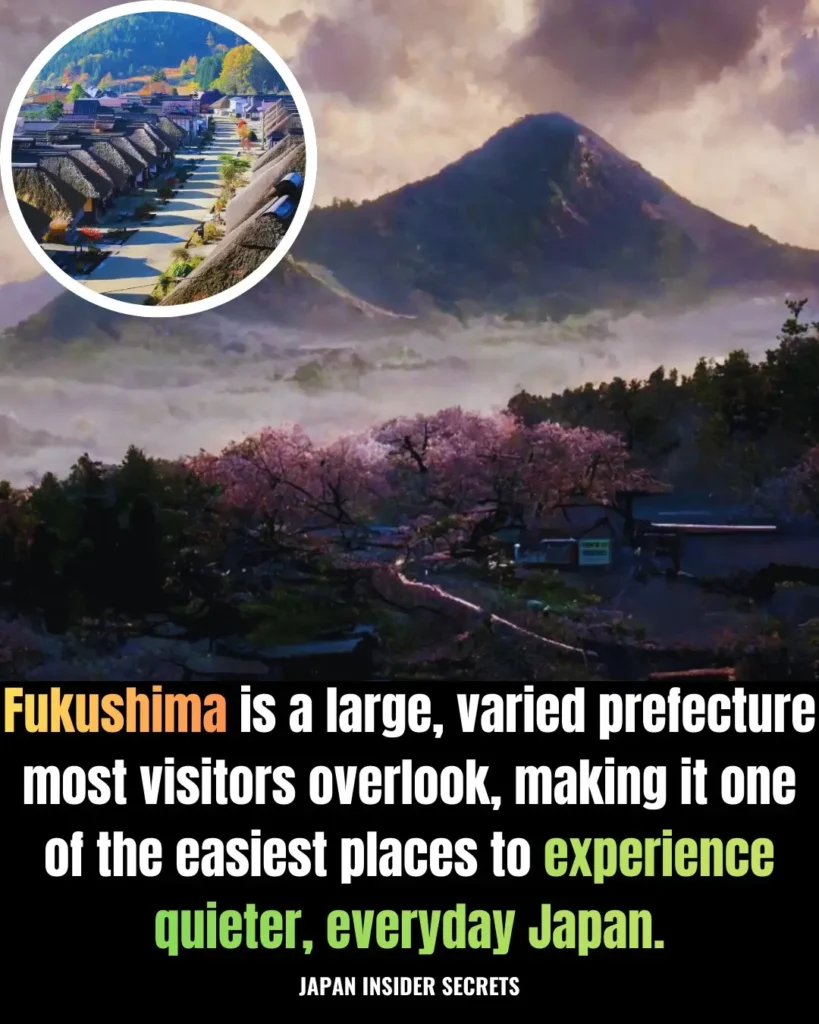
Ouchi-juku, an hour to the south, is the most authentically preserved Edo-period post town most visitors will ever walk through.
The Bandai area adds volcanic scenery and lake walks that have no real equivalent in central Japan.
On top of that, Kitakata ramen is one of Japan’s three main regional ramen styles, and Fukushima won the most gold medals at Japan’s Annual Sake Awards in nine consecutive years from 2013 to 2022, and again in 2025.
Those are nationally verified distinctions, not local marketing claims.
Put that package against a comparable journey time and Fukushima competes well.
Kanazawa is excellent but takes longer to reach from Tokyo and draws considerably heavier crowds.
Nikko is closer but works better as a day trip than a proper stay.
Most of the Tohoku region is worth serious time, but working through it properly asks more of an itinerary.
Fukushima sits closest to Tokyo of all the Tohoku prefectures, and two to three nights here does not ask much from a two-week trip.
The Safety Question, Answered Directly
The restricted area around the nuclear plant covers about 2.2% of the prefecture as of 2024.
It sits on Fukushima’s Pacific coast in the east, fenced off and not accessible to regular visitors.
The western Aizu region, where the tourist highlights concentrate, lies roughly as far from the plant as you can get within the prefecture.
Radiation levels there returned to pre-2011 levels years ago through natural decay and a government decontamination programme that physically removed contaminated topsoil across the affected areas.
To put a number to it, a measured visit to the former evacuation zone recorded a radiation exposure of around 0.024 millisieverts over two days.
A return flight between London and Tokyo exposes you to approximately four to eight times that amount.
Decommissioning work at the plant will continue for decades, and that is worth knowing as context.
What it does not mean is that a standard tourist trip to Fukushima carries any radiation risk worth factoring into your planning.
The plant and the prefecture are not the same thing.
Where to Focus: Aizu Is the Right Answer
Fukushima has three distinct regions separated by mountain ranges, each with a genuinely different character.
For most visitors, the practical recommendation is straightforward.
Go to Aizu.

The western Aizu region holds the castle town, the preserved Edo village, the best volcanic scenery, and the most appealing onsen options.
It is coherent and navigable, and most of what makes Fukushima worth visiting sits within a reasonable radius of Aizu-Wakamatsu.
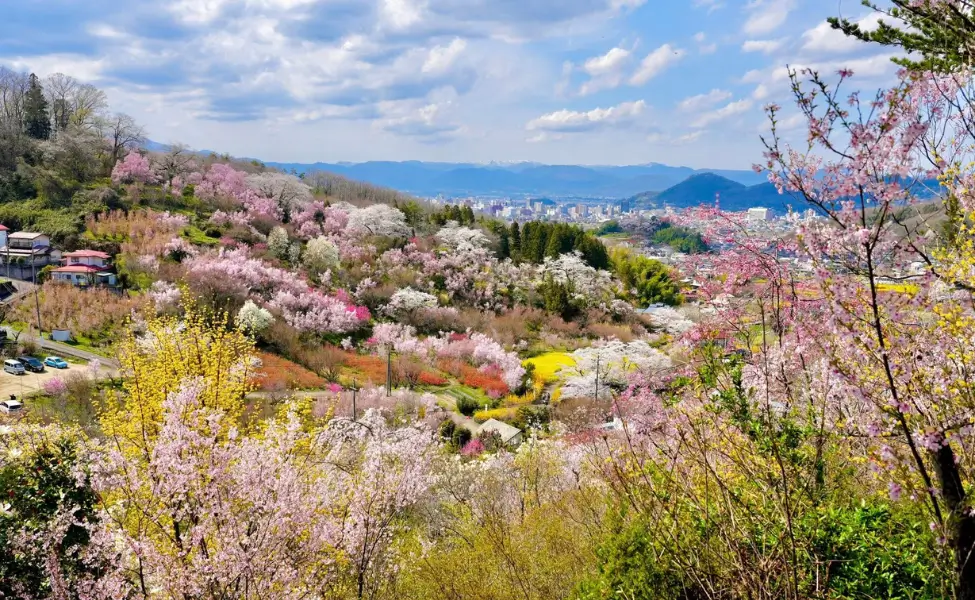
Running through the middle of the prefecture, the Nakadori region adds the prefectural capital and some of Japan’s most photographed spring cherry blossom scenery at Hanamiyama, which is worth building dates around in April if the timing allows.
The eastern Hamadori region, along the Pacific coast, is a different matter.
It includes the areas most affected by the 2011 disaster, and most activity there now involves tsunami memorial sites and recovery experiences.
For some people, that is exactly what they want to engage with, and the Great East Japan Earthquake and Nuclear Disaster Memorial Museum in Futaba is a serious and affecting place.
A first-time visitor with limited days and a focus on history and scenery can skip Hamadori without any sense of having missed Fukushima’s point.
The History That Earns Its Place
Aizu-Wakamatsu was one of the last strongholds of the pro-Tokugawa samurai during the Boshin War of 1868, when Meiji government forces besieged Tsuruga Castle for over a month.
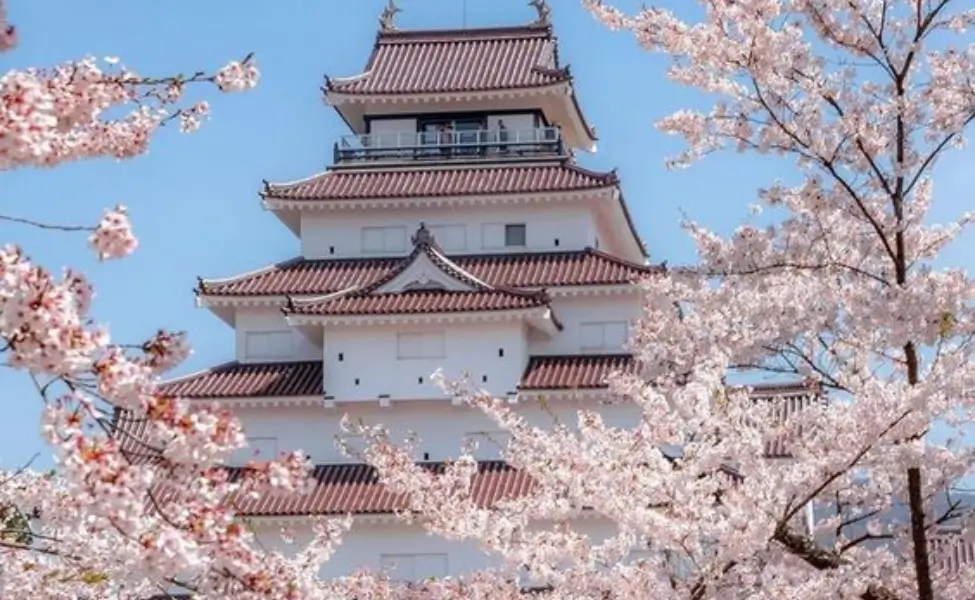
After the fighting ended, the castle was demolished by the new government in 1874 and reconstructed in concrete in 1965, with a museum inside covering the Aizu Domain and the war.
The grounds are particularly worth visiting in April when cherry trees line the outer walls.
The episode most visitors find hardest to forget involves the Byakkotai, the White Tiger Brigade.
This unit of Aizu fighters, mostly aged sixteen and seventeen, took their own lives on a nearby hill after believing the castle had fallen.
Their memorial is a ten-minute drive from the castle. It draws a steady stream of Japanese visitors who learned the story at school, and this is one of those places where the gap between historical site and genuine tragedy stays small.
Ouchi-juku sits about an hour’s drive south and is one of the best-preserved Edo-period post towns in Japan.

Thatched-roof buildings line a single main street, largely unchanged from the days when this served as a rest stop on the Aizu-to-Edo route.
An hour or two is enough to walk it and eat lunch there.
The visual effect feels earned rather than staged, which is harder to say about every heritage site in Japan.
What Fills the Rest of Your Days
North of Aizu-Wakamatsu, the area around Mount Bandai shifts the character of the trip.
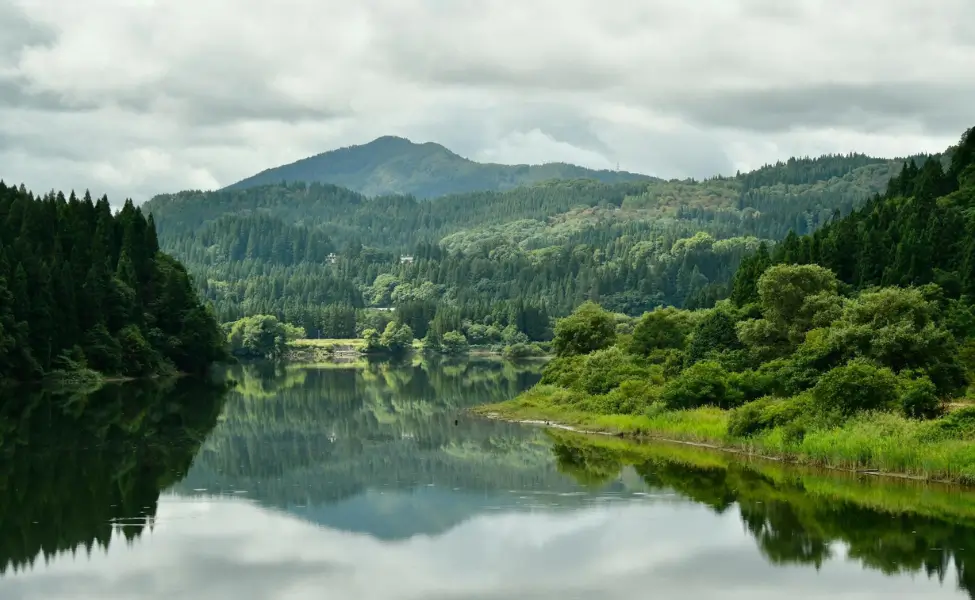
An 1888 eruption collapsed one of the mountain’s peaks, blocking rivers and creating dozens of lakes and ponds across the Urabandai plateau.
The Goshikinuma ponds are worth a morning.
Their colours run from copper to vivid blue-green depending on mineral content and the angle of the light.
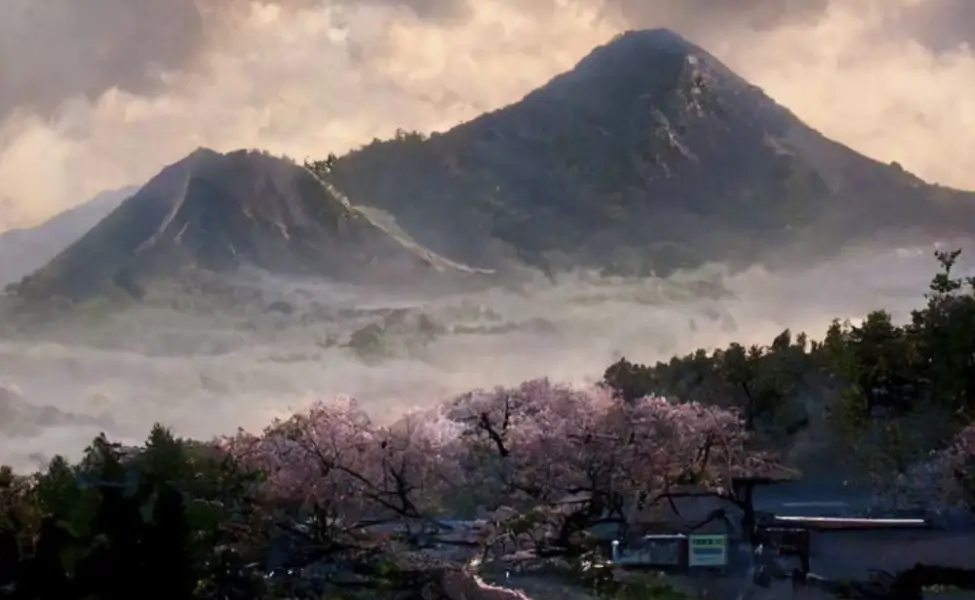
A short walking trail connects them and requires no serious effort.
Lake Inawashiro, Japan’s fourth-largest lake, sits further south with a broader, quieter feel, and in winter hundreds of whooper swans migrate to its shores and stay until spring.
Kitakata ramen has flat, curly noodles made with a high water content that gives them a chewy texture quite different from ramen elsewhere.
Most versions use a soy sauce broth built on pork and dried sardines.
Kitakata City has more ramen shops per capita than anywhere else in Japan, and locals eat it for breakfast as readily as for lunch.
Fukushima is also Japan’s second-largest peach producer by volume and grows cherries, pears, and grapes across the Nakadori region.
For onsen, Higashiyama Onsen near Aizu-Wakamatsu is the most practical base if you want hot spring accommodation close to the castle and Ouchi-juku.
Tsuchiyu Onsen and Iizaka Onsen both serve the Nakadori area well, with Iizaka being one of Tohoku’s oldest hot spring towns and a natural pairing with the cherry blossom season in spring.
If you want an onsen stay that feels further from the sightseeing circuit, Ashinomaki Onsen in the Aizu mountains is the better option.
The Practical Picture, Including the Harder Parts
The Tohoku Shinkansen gets you from Tokyo to Koriyama in just over an hour.
From Koriyama the Ban’etsu West Line runs on to Aizu-Wakamatsu in another seventy minutes.
That puts the total journey time from central Tokyo at under three hours.
Getting around once you arrive is worth thinking about honestly.
Aizu-Wakamatsu manages reasonably well without a car.
The Aizu Loop Bus connects the main sights, and you can reach Ouchi-juku by bus or taxi from the station.
Goshikinuma has bus access from Inawashiro.
A two-night trip built around the castle, the village, and one onsen stay works well on public transport.
Having a car changes things considerably, though.
It opens up the Bandai-Azuma Skyline, makes the onsen options much more flexible, and removes the need to plan around infrequent rural buses.
If you are spending three or more nights and want to move freely, hiring a car at Koriyama or Aizu-Wakamatsu is worth the added cost.
Japan’s major roads are well signposted in English, and driving is not difficult once you are used to keeping left.
Spring is the most popular season.
Mid-April is the sweet spot for cherry blossoms at Hanamiyama and the Miharu Takizakura, a thousand-year-old tree with national monument status.
Late May brings the Soma Nomaoi festival in Minamisoma, where hundreds of riders in full samurai armour race across open ground over three days.
It has over a thousand years of history and is one of the most impressive events in the Tohoku calendar.
Autumn colour peaks from late October into November and is strong around Bandai.
Winter is genuinely cold in Aizu but brings excellent skiing around Mount Bandai.
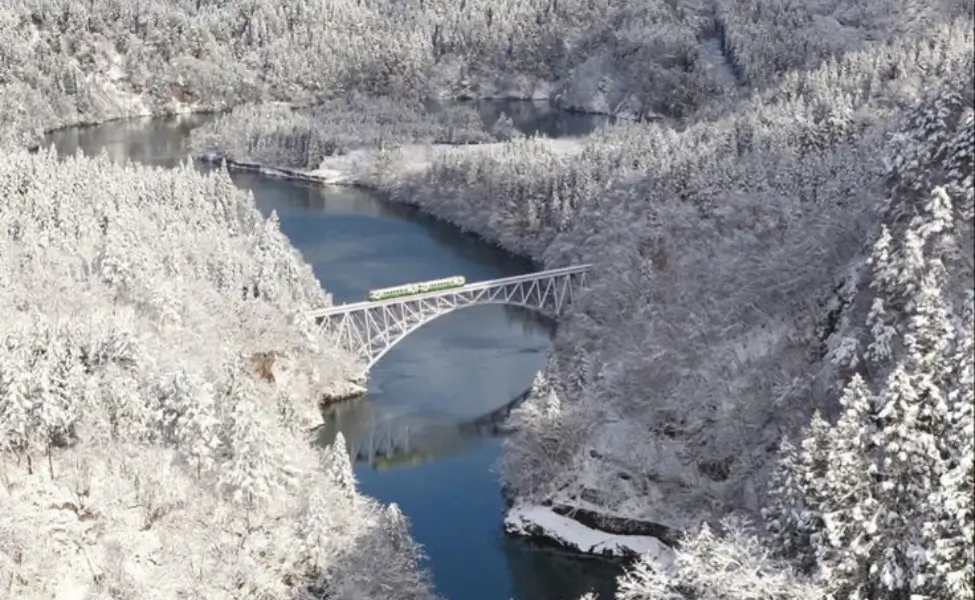
Quiet ryokan stays there have a quality that is hard to match in any warmer season.
Who Fukushima Is Not the Right Call For
Not every itinerary should include it. If this would be an exhausted add-on at the end of an already packed loop, it will not show well.
The prefecture works best with at least two full days of unhurried time.
A rushed overnight does not do it justice.
Three days here will also not suit someone whose priority is maximum famous-icon density.
If the cultural weight of recent tragedy at memorial sites is not something you want to engage with, Hamadori is easy to avoid.
The rest of the prefecture carries that history more quietly.
Two nights in Aizu, ideally three, gives you a trip with something specific to say for itself.
The history is strong, the crowds are thin, and the combination of castle town, onsen, and volcanic landscape covers more than the name suggests.
