
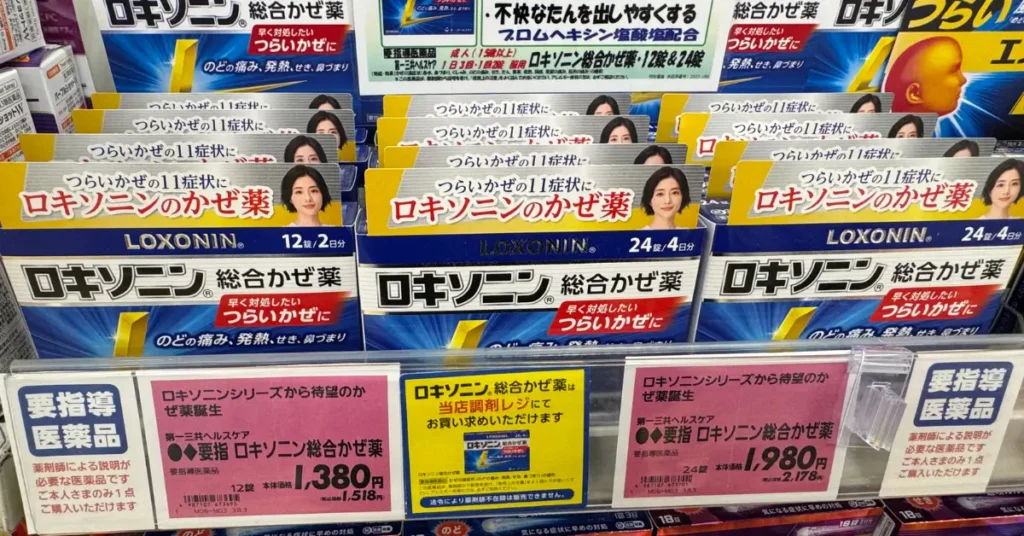
Japan Medicine rules are classified by their active ingredients, not by their brand names and not by whether they are prescription or over-the-counter back home. A cold tablet you have bought at CVS for years might contain pseudoephedrine, which Japan classifies as a Stimulants Raw Material and treats as a serious customs matter. An ADHD prescription you rely on daily might contain amphetamine salts, which Japan bans with no exceptions regardless of whether you carry a prescription or a doctor’s note.
Knowing which category your medicine falls into is all the preparation you actually need. Everything else follows from that.
The Quantity Rules That Most Travellers Get Wrong
The most common piece of incorrect information in travel forums is that a single one-month limit applies to everything. It does not.
| Medicine type | Limit without Import Certificate |
|---|---|
| Prescription medicines | Up to 1-month supply |
| Over-the-counter and quasi-drugs | Up to 2-month supply |
| External-use products (creams, patches, etc.) | Up to 24 units per item |
| Injectable medicines with syringes | Up to 1-month supply |
For most short trips these limits are irrelevant. A week of Advil and a box of antihistamines sits well below any threshold. The limits matter if you are staying longer than a month, managing a chronic condition, or carrying multiple boxes of the same product.

Original packaging removes any ambiguity at customs. A labelled box also helps at a Japanese pharmacy if you run out and need to explain what you were taking.
The Medicines That Are Actually Banned or Restricted
This is where many US travellers get a genuine shock, because the logic that applies back home does not apply in Japan.
ADHD medication
Adderall and Dexedrine contain amphetamine salts. Japan’s Stimulants Control Law classifies these as prohibited. There is no import permit that overrides this, no humanitarian exception at the airport, and a valid US prescription offers zero protection. Carrying Adderall into Japan is a criminal offence with potential arrest and detention as a consequence.
Vyvanse (lisdexamfetamine) sits in a different category, listed as a Stimulants Raw Material rather than a prohibited stimulant. Bringing it is not casually permitted, but it may be possible with advance permission from Japan’s Narcotics Control Department before you travel. This requires planning well ahead of your departure date.
Methylphenidate (Ritalin, Concerta) is classified as a psychotropic rather than a stimulant, and up to approximately 2.16 grams of the active ingredient may be brought in without a permit. Above that threshold, contact the appropriate MHLW bureau before travel.
If you currently take Adderall or Dexedrine, the conversation to have is with your prescriber, and it needs to happen well before you fly.
Cold medicine containing pseudoephedrine
Any medicine containing more than 10 per cent pseudoephedrine is classified as a Stimulants Raw Material and cannot be brought into Japan. This covers many common US cold and sinus products, including some formulations of Sudafed and Actifed.
Because formulas vary by product line, check the active ingredients on your specific box rather than relying on the brand name. A Sudafed product using phenylephrine instead of pseudoephedrine is a different matter, but confirm your formula before packing.
Codeine-containing products are also restricted. If your pain reliever or cough syrup contains codeine, check the permitted quantity rules before bringing it.
Injectables
Insulin, EpiPens, and other injectables are permitted up to a one-month supply. If you carry syringes, they must accompany the medicine they are prescribed for. For quantities above the personal-use limit or for any uncertainty about your specific medication, contact the MHLW or the Narcotics Control Department before travel.

CBD, CBN, and cannabis-derived products
CBN is now a hard ban. From 1 June 2026, Japan prohibits the possession, use, import, sale, and manufacture of CBN products. This covers gummies, oils, vapes, and any supplement where CBN appears as an ingredient, including products legally purchased overseas. CBN has also appeared as a secondary ingredient in products marketed primarily as CBD or hemp supplements, so label-checking matters even if you think you are only carrying CBD.
CBD itself is not banned, but bringing foreign CBD products into Japan is a serious risk. Japan’s rules permit THC-free CBD products, but “THC-free” under Japanese law means meeting strict residue limits: 10 parts per million for oils and powders, and as low as 0.10 parts per million for liquid products. Virtually no foreign CBD product is tested against these thresholds. Customs uses rapid chemical screening at major airports, and the result of a positive test is not a conversation about your certificate of analysis from a US lab.
Two Separate Permission Paths Before You Fly
Most travel articles treat advance permission as a single process. It is not, and applying through the wrong channel will not get you the right authorisation.
Path one covers ordinary medicines above the personal quantity limits. If your prescription medicine exceeds a one-month supply, or your OTC medicine exceeds a two-month supply, you apply for a Yunyu Kakunin-sho through the MHLW’s online Import Confirmation portal.
The process is done entirely online and typically takes a few business days. Apply at least a month before travel.

Path two covers narcotics and Stimulants Raw Materials, including codeine, oxycodone, Vyvanse, and certain products containing pseudoephedrine. This route goes through Japan’s Narcotics Control Department, not the MHLW portal. Applications are submitted by email, fax, or mail, and the official guidance recommends applying at least 14 days before travel.
Identify which path applies to your medicine before you start any paperwork.
What to Carry in Your Medicine Bag
Keep all medicines in their original packaging with the label intact. If you travel with a pill organiser, bring the original bottles or boxes too.
Carry a copy of each prescription or a letter from your doctor on headed paper explaining the medicine, dosage, and your medical need. Write a simple list of medicine names, active ingredients, daily doses, and reasons for use. Keep daily-use medicine in your carry-on, not your checked bag. If you need a Yunyu Kakunin-sho or NCD permission, carry the approved document with the medicine it covers.
What You Can Buy After You Land
Japan’s pharmacy sector is large and well-stocked. For the most common travel ailments, pain, fever, stomach problems, cough, cold, you will almost certainly find something effective.
A 薬局 (yakkyoku) is a proper pharmacy staffed by a licensed pharmacist who can give advice and point you toward the right product. A ドラッグストア (doraggu sutoa) is a retail drugstore where you browse shelves yourself.

Matsumoto Kiyoshi (松本清), Welcia (ウエルシア), and Don Quijote (ドン・キホーテ) are chains where travellers commonly find OTC medicines. For anything beyond a standard shelf purchase, ask to speak to the pharmacist.

Showing your phone screen works reliably at any counter. These terms are the ones that matter most.
Pain, headache, and fever: 頭痛 (zutsuu) headache / 痛み (itami) pain / 熱 (netsu) fever. Common products include イブ (Eve), ibuprofen-based, and ロキソニンS (Loxonin S), which uses loxoprofen.
Cold and cough: 風邪 (kaze) cold / 咳 (seki) cough / のど (nodo) throat. パブロン (Pabron) is one of the most recognised cold and flu brands in Japan and comes in multiple formulas.

Stomach: 腹痛 (fukutsuu) stomach pain / 胃痛 (itsuu) gastric pain / 下痢 (geri) diarrhoea. 正露丸 (Seirogan) is a longstanding remedy for travellers’ stomach issues and is easy to find anywhere.
The Decision You Need to Make Before Your Flight
If your medicine is a standard pain reliever, antihistamine, vitamin supplement, or routine prescription for a non-controlled condition, pack a sensible supply in original packaging with a prescription copy. You are very unlikely to have any problem at customs.
If your medicine contains pseudoephedrine above the 10 per cent threshold, codeine, or any amphetamine compound, do not pack it and expect to sort things out on arrival. These questions need to be resolved with your doctor and, where relevant, Japan’s Narcotics Control Department, several weeks before you leave.
If you are carrying any cannabis-derived product, check the label for every ingredient. CBN is now banned outright. For CBD, the only safe option is a product bought in Japan with verified Japanese-standard lab documentation.
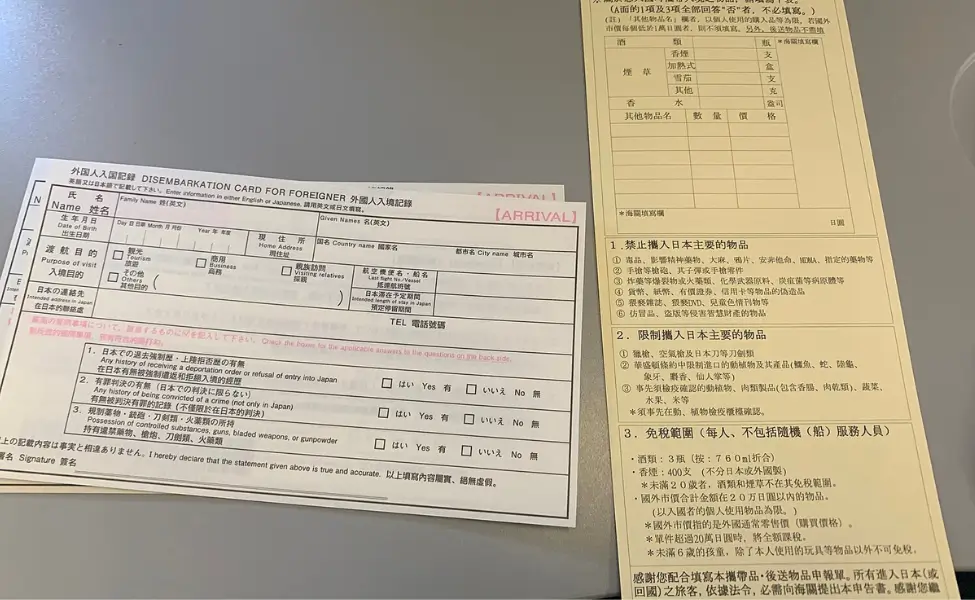
The travellers who have problems at Narita and Haneda are almost always the ones who assumed that legal back home meant legal in Japan.
Frequently Asked Questions
It depends on the formula. Sudafed products containing pseudoephedrine above the 10 per cent threshold are classed as Stimulants Raw Materials and cannot be brought into Japan. If your Sudafed uses phenylephrine as the active ingredient, the rules are different, but confirm this on your specific packaging before you travel.
No. Adderall contains amphetamine salts, which are prohibited under Japan’s Stimulants Control Law with no exceptions. A valid US prescription does not protect you. Carrying Adderall into Japan risks arrest and detention.
The Yunyu Kakunin-sho, applied for online through the MHLW portal, covers ordinary medicines that exceed the standard personal-use quantity limits. The Narcotics Control Department permission process covers narcotics and Stimulants Raw Materials such as Vyvanse, codeine, and oxycodone. Applying through the wrong channel will not get you the right authorisation.
Not reliably. Japan’s permitted THC residue limits are extremely strict, and foreign CBD products are almost never tested against those thresholds. Customs screening can detect trace cannabinoids regardless of what a US lab report says. Buy CBD in Japan from a domestic brand with Japanese-standard lab certification.
For permitted medicines in legal quantities with clear packaging, nothing should happen. For quantities above the personal-use limit without the appropriate certificate, the medicine can be confiscated on the spot. As for banned substances such as Adderall or products containing CBN, the consequences can include arrest and detention
