
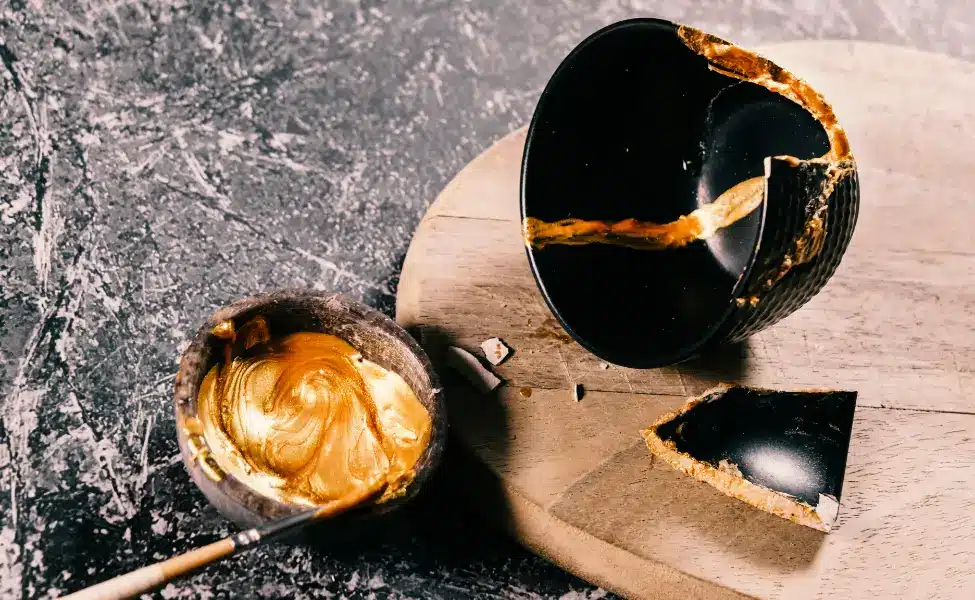
A genuine kintsugi bowl draws the eye straight to the crack running across it. Someone has mended it with lacquer and finished the seam with a dusting of gold, rather than trying to hide it. With kintsugi, you repair the break instead of disguising it, and that single choice sums up the whole craft.
Kintsugi became closely associated with Japan’s tea culture, where age and use could add to an object’s interest rather than diminish it, and it remains a practised craft in Japan today.
If you’re weighing up a workshop during a trip, or a kit at home, it helps to know what separates a traditional repair from a simplified one, and where the two genuinely overlap.
What Kintsugi Is
Kintsugi (金継ぎ) translates literally as “golden joinery.” The name describes the technique with unusual precision, broken ceramic pieces rejoined along a seam of gold. You’ll also see it called kintsukuroi (金繕い), meaning “golden repair.” Both terms describe the same craft, and dealers, artisans and writers use them interchangeably.
Two quite different things now go by the name “kintsugi.” Traditional urushi kintsugi uses natural lacquer and real metal powder, most often gold, and takes weeks or months to complete. Modern or simplified kintsugi uses synthetic adhesive, usually epoxy resin, finished with a gold-coloured imitation powder, and can be finished in a single session.
Where the Craft Came From
Kintsugi developed alongside chanoyu, the Japanese tea ceremony, which has long valued objects that carry visible age and history over anything flawless.

A popular story credits the 15th-century shogun Ashikaga Yoshimasa with prompting the invention of kintsugi, after a damaged Chinese tea bowl came back from repair with metal staples that later retellings often describe as unsightly.
The bowl at the centre of that story survives today. It’s a Southern Song celadon tea bowl known as Bakōhan, held at the Tokyo National Museum. According to a written account from 1727, the bowl developed a crack while in Yoshimasa’s possession, and he sent it to China hoping for a replacement of equal quality.
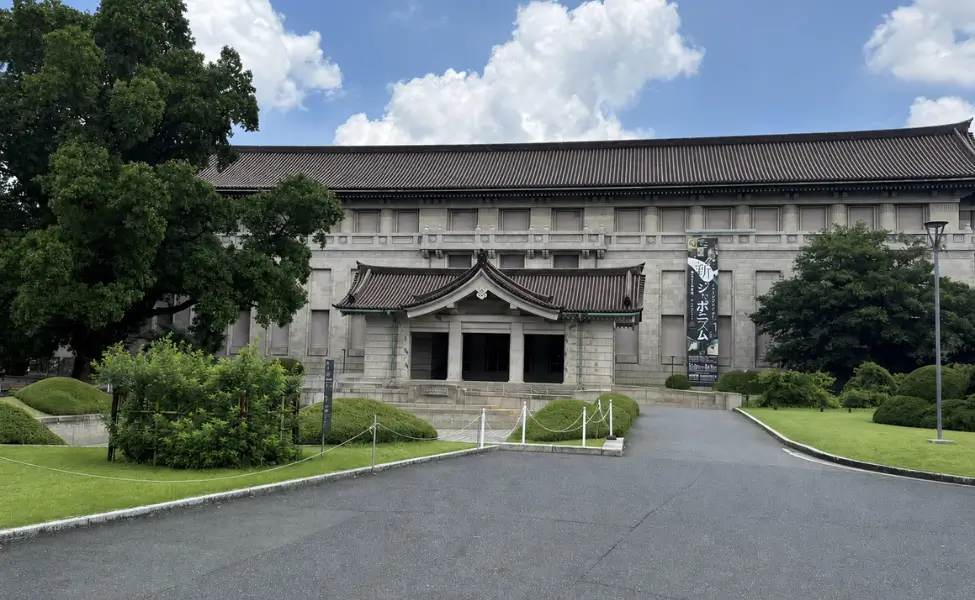
No equivalent bowl existed there any longer, so the Chinese craftsmen stapled the crack and sent it back. The staples were said to resemble a huge locust, which gave the bowl its name. The record doesn’t say Yoshimasa was upset by the repair, and it doesn’t connect the bowl to the invention of kintsugi at all. The surviving account does not support that link.
The 16th-century tea master Sen no Rikyū provides firmer historical ground. Historians credit him with perfecting wabi-cha, the restrained, rustic style of tea ceremony. He also favoured simple, imperfect utensils over ornate or flawless ones. It’s a reasonable connection to draw between that taste and the later appeal of a visibly mended bowl, though it isn’t a documented cause and effect.
How a Traditional Repair Works
Urushi lacquer comes from the sap of Toxicodendron vernicifluum, the Japanese lacquer tree. Before it cures, it contains a compound called urushiol, which can irritate skin much like poison ivy. Practitioners handle it with gloves and work in a ventilated space.
The process starts with mugi-urushi, a paste of wheat flour and raw urushi, used to rejoin the broken edges. Practitioners fill small remaining gaps with sabi-urushi, a mixture of urushi and a fine clay powder called tonoko. For larger gaps, they use kokuso, a coarser paste that combines mugi-urushi with sawdust and hemp fibre. The exact recipe varies between practitioners and schools. They allow each filled area to cure before sanding it smooth.
Why Traditional Kintsugi Takes Time
Curing isn’t simple drying. Urushi hardens through an enzyme-assisted oxidation process that needs warmth and high humidity, generally around 25°C and 70 percent humidity. Practitioners use a controlled space called a muro to hold that environment between stages. Once everything is level and fully cured, the final layer goes on, metal powder dusted onto tacky lacquer, a technique related to maki-e, Japan’s classic lacquer-decorating tradition.

A single stage usually cures over a matter of days. It’s the accumulation of stages, each waiting on the last, that adds up. A complete traditional repair often takes several weeks to a few months, depending on the damage, materials and curing conditions.
Traditional Urushi Versus Modern Kintsugi
| Traditional Urushi Kintsugi | Modern or Simplified Kintsugi | |
|---|---|---|
| Material | Natural urushi lacquer, real gold, silver or platinum powder | Epoxy resin, gold-coloured powder (often brass or mica) |
| Cure time | Weeks to months | Hours to a day |
| Food contact | Often suitable once fully cured, but confirm with the maker rather than assuming | Varies by product. Only use it for food if the maker explicitly confirms that every material is food-contact safe once cured |
| Typical cost | Roughly ¥12,900 to ¥17,900+ for a home kit; upwards of ¥20,000 for a 90-minute workshop using real gold | A small fraction of the traditional kit price; roughly ¥6,000 to ¥7,000 for a short workshop session |
| Best for | Meaningful everyday pieces, once you’ve practised on something unimportant first. Ask a professional before repairing an antique or valuable object | Craft projects, accessories and display pieces |
Prices change and vary by retailer and studio, so treat these as a general guide rather than a quote, and check current listings before booking or buying.
What You Do in a Workshop, and How to Find a Good One
Given how long a full repair takes, a 90-minute tourist workshop clearly can’t start from a fresh break and finish with cured, polished gold. Workshops handle that gap in a few different ways, and it’s worth knowing which one you’re booking.
Here are some recommended workshops:
Many one-day sessions use simplified, resin-based kintsugi specifically because it skips the long curing time. Others genuinely use urushi lacquer and real gold. In these, the studio has usually joined and cured the piece in advance, and you complete the visible finishing step, typically applying gold powder to a prepared seam.
From there, you can often take the piece home in a curing box, or arrange to collect or receive it later once the final layer has fully hardened. A smaller number of fully traditional studios use no shortcuts at all, and ask you to return over several sessions spread across weeks or months.
Questions to Ask Before You Book
Before you book, it’s worth asking a few direct questions:
- Does the session use genuine urushi lacquer, or a resin substitute?
- Is the gold real gold powder, or a gold-coloured imitation such as brass or mica?
- How does the studio handle the gap between a short session and urushi’s long cure time, through a pre-prepared piece or multiple visits?
- If you want to bring your own broken item, can they use it, and will they check its condition first?
- Do you take the piece home the same day, pick it up later once it’s fully cured, or have it shipped, and is there a fee for that?
- Is English support guaranteed for your session, or does it depend on which instructor is on shift that day?
Kintsugi workshops for travellers are currently available in several Japanese cities, including areas of Tokyo, as well as Kyoto, Osaka and Kanazawa, plus smaller studios elsewhere. Sessions typically run from about an hour to a few hours. Prices commonly range from roughly ¥6,000 for a short resin-based session up to ¥20,000 or more for a traditional urushi-and-gold session, depending on materials, length and whether the booking is private.
Food Safety and Caring for a Repaired Piece
It’s tempting to treat this as a simple divide, urushi is food-safe and resin isn’t, but that’s not quite right. Food safety depends on the full combination of adhesive, filler, metal powder and curing, not on one material alone.
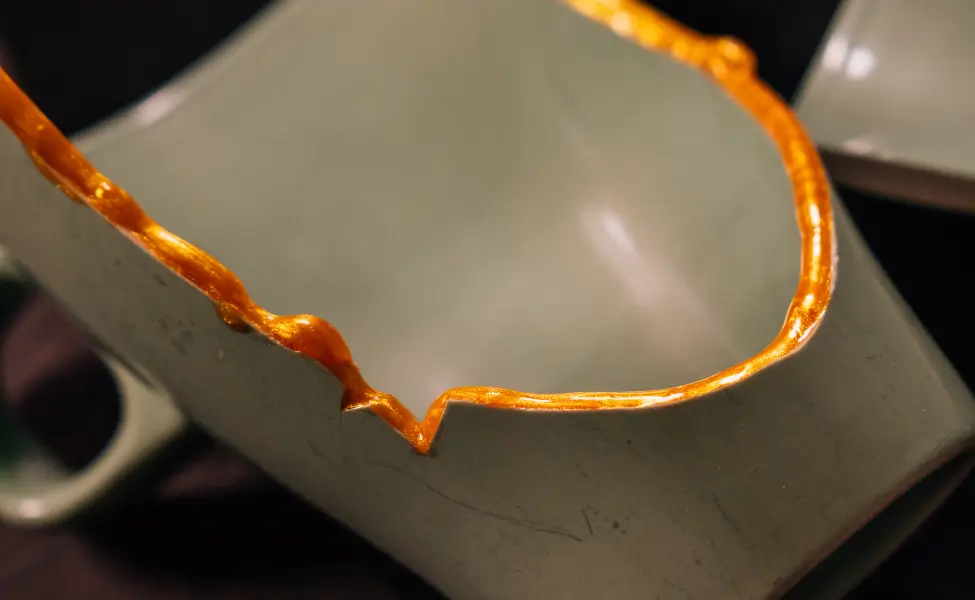
Even studios using real urushi and real gold sometimes stop short of certifying every finish as food-safe. The safest approach is to ask the workshop or maker to confirm plainly, in writing if possible, that the finished piece is suitable for food contact. Don’t assume that from the word “urushi” or “traditional” alone.
With that caveat in place, cured urushi has a long history in Japanese tableware and is broadly treated as suitable for food once fully hardened. Raw or uncured urushi is a different matter, and can irritate skin much like poison ivy.
Research into lacquer allergies also shows that people already sensitised to urushiol can occasionally react even to cured lacquerware. If you’ve reacted to poison ivy or a related plant before, it’s worth mentioning that when you ask about food safety.
Whatever the finish, a repaired piece needs gentler care than it did before it broke:
- Hand-wash it gently rather than putting it in the dishwasher
- Don’t leave it soaking in water
- Keep it out of the microwave, oven and off direct flame
- Avoid sudden temperature changes, such as pouring boiling liquid into a cold piece
- Remember that a repaired piece doesn’t regain its original strength, even once fully cured
Kits and What They Cost
Most home kintsugi kits use epoxy resin with a gold-coloured imitation powder, often brass or mica. They cure in hours rather than months, and manufacturers usually market them for decorative use only. These commonly cost well under $30 to $50.
Genuine urushi-and-gold kits exist too, sold directly by Japanese lacquer suppliers. A basic version with real gold powder runs around ¥12,900, with a fuller kit around ¥17,900. That’s noticeably more accessible than some Western resellers charge, so it’s worth checking a direct Japanese supplier before assuming a genuine kit is out of reach.
It’s fair to say time and skill are the biggest reason traditional kintsugi costs more than a resin kit, but it isn’t only that. Real gold powder is a genuine cost on top of the labour, even if it isn’t the single biggest line item.
What the Gold Line Means
Kintsugi connects closely to wabi-sabi, the Japanese aesthetic that finds beauty in imperfection and impermanence. A repaired crack fits that outlook closely. The gold line doesn’t pretend the object was never broken, it treats the break as part of what makes the piece worth keeping. A related idea, mono no aware, describes a gentle, bittersweet awareness of how temporary all things are, including the objects people use every day.
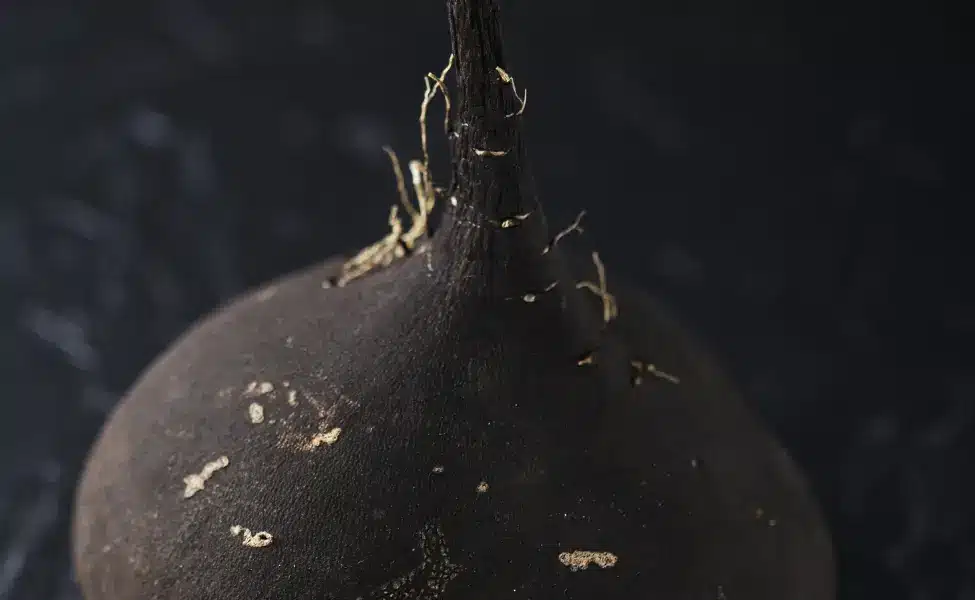
Outside Japan, kintsugi has also become a popular metaphor for personal resilience and healing, an idea that spread widely through museum exhibitions and media coverage from the 2010s onward.
There’s something genuinely useful in that reading, but it sits alongside the older tradition rather than explaining where the craft came from. Knowing the difference between the metaphor and the material craft makes both easier to appreciate on their own terms.
