

You have probably read it in a dozen places already.
Japan is surprisingly accessible for wheelchair users, especially in the major cities.
That is technically true, but it gives you almost nothing to actually plan with.
Knowing Japan is accessible does not tell you which car on the Shinkansen to book as a wheelchair user.
Nor does it prepare you for a station elevator that is out of order, or a temple approach with stone steps and no accessible alternative.
This article works through the specifics those reassurances skip, so you arrive knowing what to expect rather than discovering the gaps on the ground.
Before You Plan a Single Itinerary Day
Japan’s accessibility infrastructure is genuinely good in central urban areas and genuinely patchy outside them.
The useful version of planning is not asking whether Japan is accessible in principle.
It is identifying the specific routes, neighbourhoods, and sites that work for your situation, then building an itinerary around those.
Getting Help
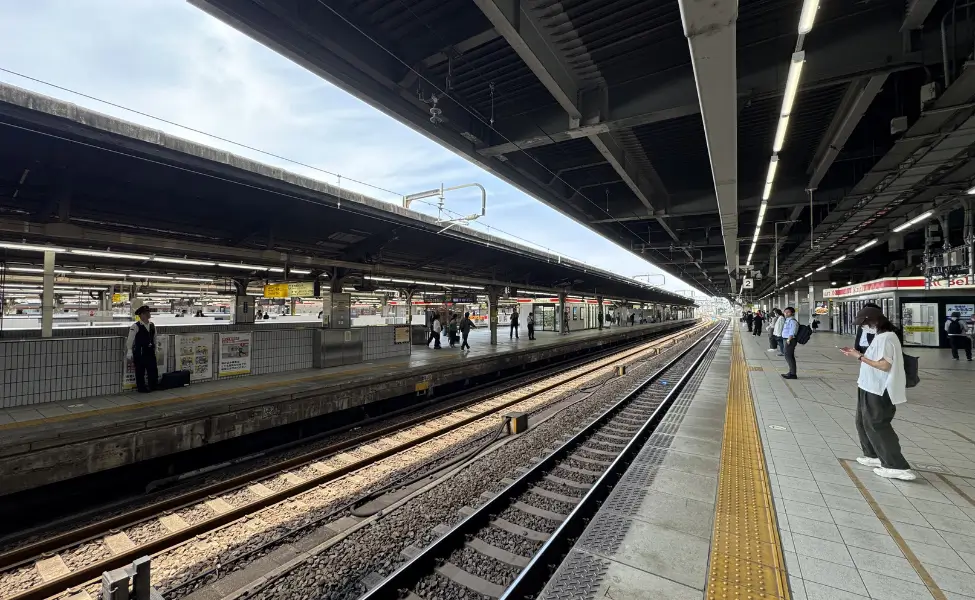
Navigating a major Japanese station by wheelchair takes longer than the timetable suggests, because boarding and alighting with staff assistance adds ten to fifteen minutes to each journey.
First, tell the station staff your destination, so you will be able to get help.
A member of staff will place a platform ramp by one of the carriage’s entrances so you can board.
And a member of staff will be waiting at that same place at your destination station so you can go down a ramp to get off the train.
Then make your way to the lift/elevator.
Start with city and neighbourhood selection at the same time.
Tokyo, Osaka, and Kyoto are the three cities most first-time visitors prioritise, and all three have strong accessible transport in their core areas.
Shinjuku, Ueno, and the area around Tokyo Station are relatively flat, dense with accessible transit, and easy to navigate by wheelchair.

Higashiyama in Kyoto is cobblestoned and hilly despite being home to many of Kyoto’s most famous temples. Basing yourself there creates problems that a more central hotel, closer to Kyoto Station, would largely avoid.
Two or three sights per day is a manageable and genuinely enjoyable pace. Planning more than four will wear you down faster than you expect, and most travellers who try to pack in more regret it by day five.

Japan’s public toilet provision for wheelchair users is among the best in the world. Multipurpose rooms with grab bars, turning space, and emergency call buttons are standard at train stations, shopping centres, major tourist attractions, and parks throughout the country.
Finding an accessible toilet is rarely the difficulty. Maps of accessible toilet locations across Japan are available on the Japan Accessible Tourism Center website, and the tool works in English.
Getting Between Cities
The Shinkansen is well-designed for wheelchair users. Each service on the main routes carries designated wheelchair spaces, a companion seat alongside them, and an accessible toilet in the same car. The detail most articles skip is that the car number varies by route and train model.
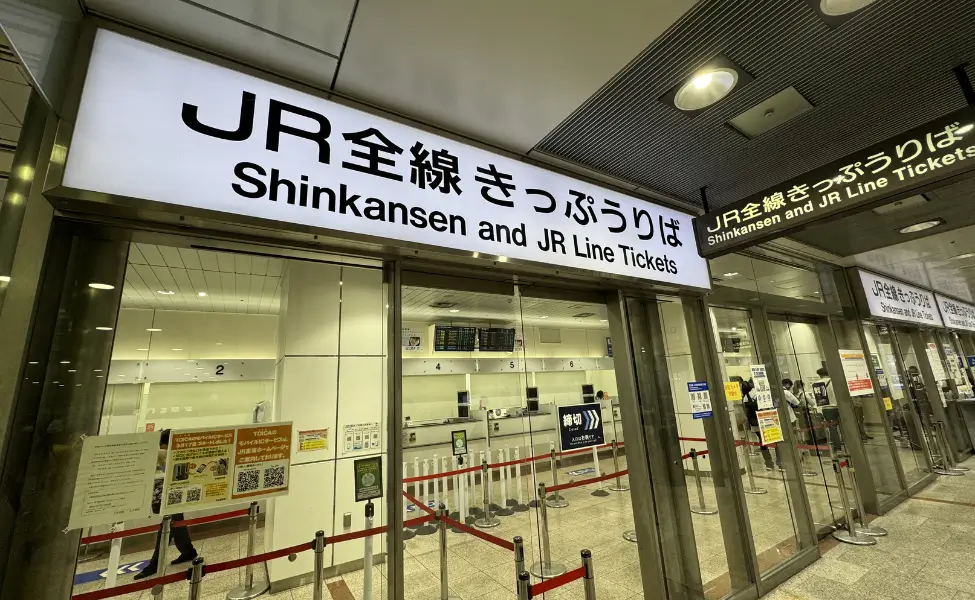
The route-by-car breakdown looks like this.
| Route | Line | Wheelchair car |
| Tokyo to Nagoya, Kyoto, Osaka, Hiroshima | Tokaido/Sanyo (N700 series) | Car 11 |
| Tokyo to Sendai, Aomori, Hokkaido | Tohoku (E5 series) | Car 5 |
| Other lines | Varies | Confirm with JR at booking |
Booking a wheelchair space works differently from booking a standard seat. If you hold a JR Pass, use these steps:
- Visit any JR ticket office (Midori no Madoguchi) and bring your pass and travel dates.
- Tell staff your route, preferred date, and approximate departure time, and state clearly that you need a wheelchair-accessible space.
- Staff will contact a central reservations team to check availability. This takes several minutes, and you may be offered a different departure time if your preferred train is full.
- Confirm whether you will remain in your wheelchair throughout the journey or transfer to a standard seat, as this affects which space you receive.
- Ask staff to reserve the companion seat at the same time if you are travelling with someone.
- Book at least two days before travel. Available wheelchair spaces on popular routes fill quickly.
Without a JR Pass, you can book wheelchair spaces through the SmartEX online service on the Tokaido/Sanyo Shinkansen, or at any JR ticket office on other lines.
The JR Pass covers seven, fourteen, or twenty-one consecutive days of travel on most JR lines. Nozomi services on the Tokaido/Sanyo route, which are the fastest Tokyo-to-Osaka trains, require a supplement for JR Pass holders.
The slightly slower Hikari services are fully covered, take about twenty minutes longer, and run frequently.
The Airport
For airport arrivals, the Narita Express connects Narita Airport directly to Tokyo, Shibuya, Shinjuku, and Yokohama without transfers. The journey to Tokyo Station takes approximately 53 minutes, and the train carries two designated wheelchair spaces and a large accessible restroom.
JR staff provide a portable bridging ramp at boarding on request.

From Haneda Airport, the Tokyo Monorail reaches Hamamatsucho Station in approximately 20 minutes on the local service. The JR Yamanote Line at Hamamatsucho then connects you across the rest of central Tokyo.
Getting Around Each City
Around 90 per cent of Tokyo Metro stations now have elevators, but the remaining ten per cent is concentrated in older sections of the network. Before any urban journey, use Google Maps with the accessible route option, or check the accessibility tab on the Tokyo Metro or JR East website. Both are reliable for current station layouts.

The boarding process at any staffed accessible gate follows a clear sequence. Approach the gate and catch the attention of the staff member. They will position a portable ramp and call ahead, so a second staff member is waiting with another ramp at your destination.
At large interchange stations like Shinjuku, allow an extra ten to fifteen minutes. The accessible route between platforms in major stations is rarely the most direct one, and the layout is complex enough to disorient experienced travellers.
If the elevator at a station is out of order, take these steps.
- Find the nearest station staff member immediately. They carry multilingual communication cards and are trained for this situation.
- Ask whether an alternative accessible route exists within the station. Many large stations have more than one elevator bank serving different sections.
- If no alternative exists, ask staff to arrange an accessible taxi from the street-level exit. Station staff expect to use this as a contingency.
- Save the JR East Infoline number before you travel. It operates in English and can provide real-time alternative routing.
Taxis and Uber
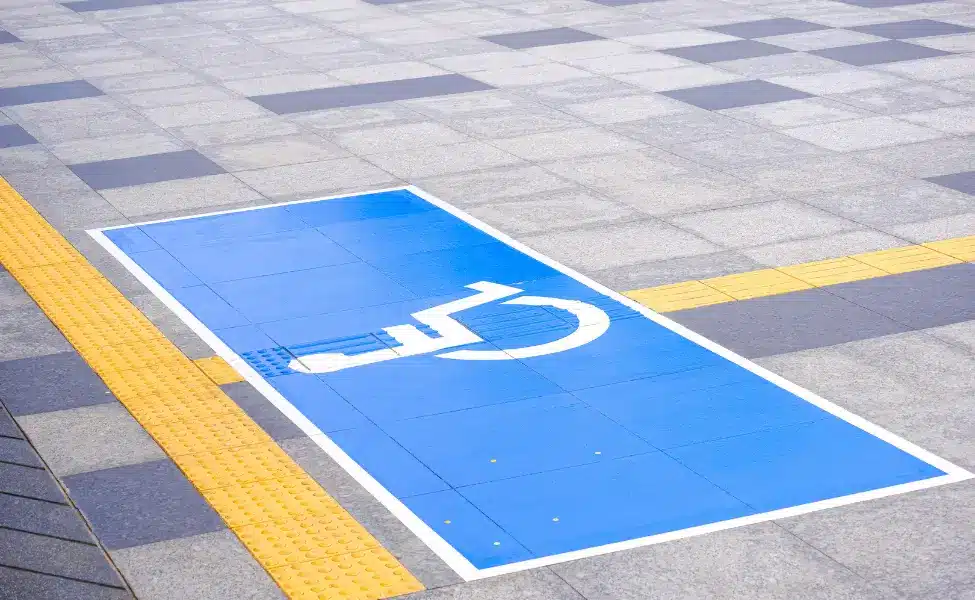
Accessible taxis, known as Universal Design taxis or Welcabs, carry a ramp and accommodate one wheelchair user and a companion. In Tokyo the fleet is large and growing, but you cannot guarantee finding one by walking to a rank.
Book through your hotel concierge, through the GO app in English, or by calling a taxi company in advance. Your hotel is the most reliable point of contact for arranging accessible transport in any city.

Tokyo is the most forgiving city for wheelchair users because its flat central neighbourhoods and dense accessible transit give you genuine options at every point.
Osaka is similarly manageable in the centre. Kyoto is harder, because its historic temple districts involve cobblestones, inclines, and stone stairways, which makes taxis more important there than in the other two cities.
Finding Accommodation
The word “accessible” covers an enormous range of actual room configurations. A hotel that lists accessible facilities may have a room that technically meets a local standard but does not function for your specific situation. Confirming physical details before you finalise any booking is the only reliable way to prevent an unpleasant surprise on arrival.
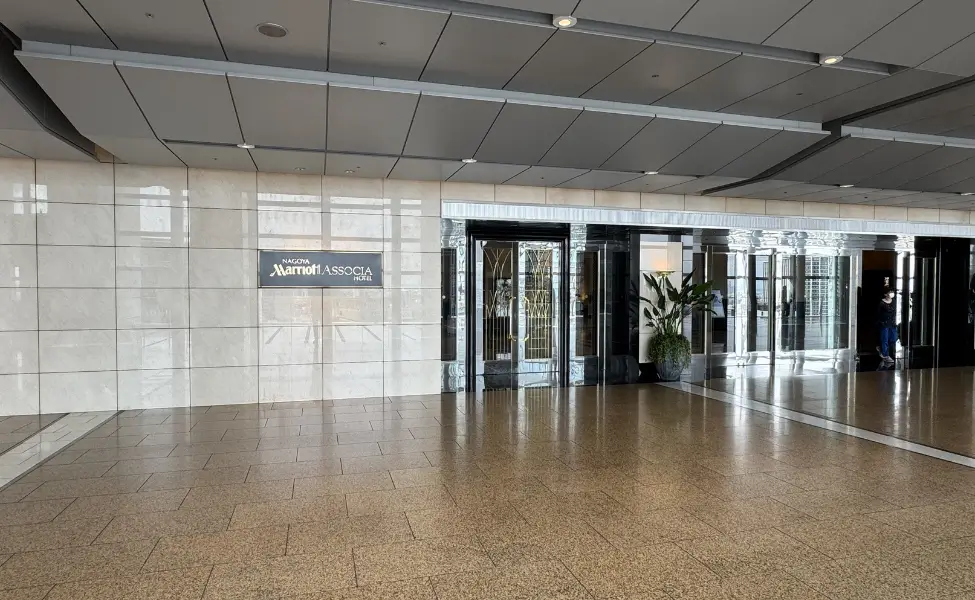
Contact the hotel directly and ask for specifics before you commit. Confirm the bathroom door width in centimetres and whether the shower is a roll-in wet room or a step-in bath.
Ask about the bed height from floor to mattress, whether grab bars are positioned on both sides of the toilet, and the walking distance from the hotel entrance to the nearest accessible station exit. Confirming these details converts assumptions into known quantities.
Major international hotel chains in the big cities follow consistent accessibility standards and are generally the most reliable choice. Business hotels vary considerably. Boutique properties often describe themselves as accessible without much standardisation behind the claim.
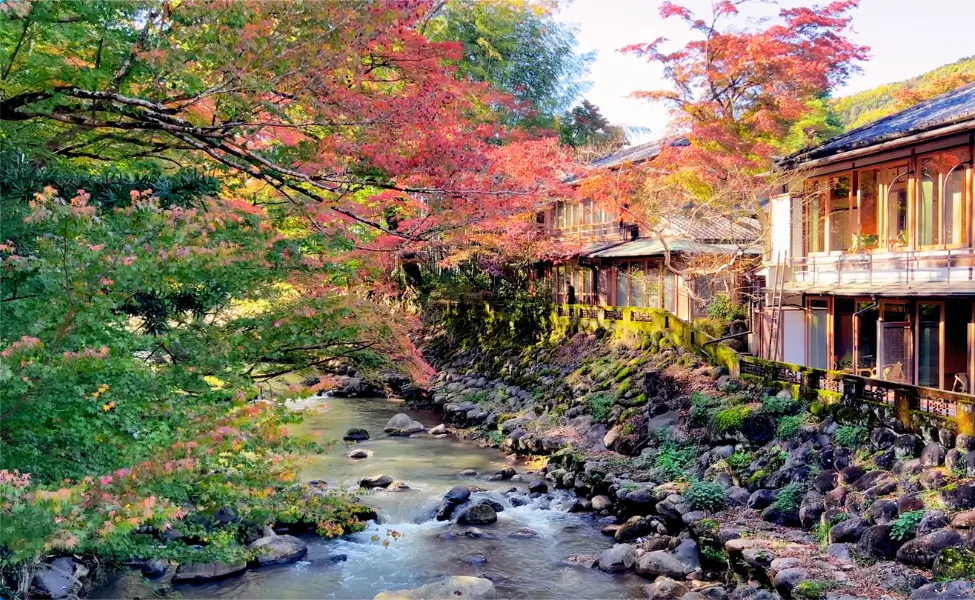
The assumption that ryokans are entirely off-limits is not accurate. A number of traditional inns now offer Western-style beds rather than floor futons, and some have added wet-room bathrooms or roll-in shower access.
Contact any ryokan you are considering and explain your requirements clearly in writing. Some will say no. Others, particularly those that have renovated recently, will offer options that their standard descriptions do not mention.
Kyoto’s Historic Sites: What Actually Works and What Does Not
The belief that all of Kyoto’s historic temples are inaccessible is a misconception. So is the assumption that accessibility is universal. The honest picture sits somewhere between the two.

Visitors and accessibility reviewers have confirmed wheelchair access at these sites.
- Kinkaku-ji (Golden Pavilion). A paved path runs through the main viewing area and is navigable by wheelchair, though portions of the surrounding garden involve gravel.
- Nijo Castle. Wheelchair users can complete the main grounds circuit on paved routes. The castle interior has raised floor sections accessible only by steps.
- Arashiyama (bamboo grove). The path through the grove is accessible by wheelchair. The low-floor Randen tram and accessible taxis both serve the area.
- Fushimi Inari. The lower section of the torii gate path is accessible. The upper mountain trail is not.
- Philosopher’s Path. The canal-side walkway from Nanzenji to Ginkaku-ji covers approximately two kilometres of flat, paved surface.
The Higashiyama temple district, running between Kiyomizudera and Gion, is largely cobblestoned and steep. Kiyomizudera itself has a stone staircase approach to the main hall with no accessible alternative.
A number of travellers with limited mobility have visited the lower sections and found the experience worthwhile even without reaching the main hall.
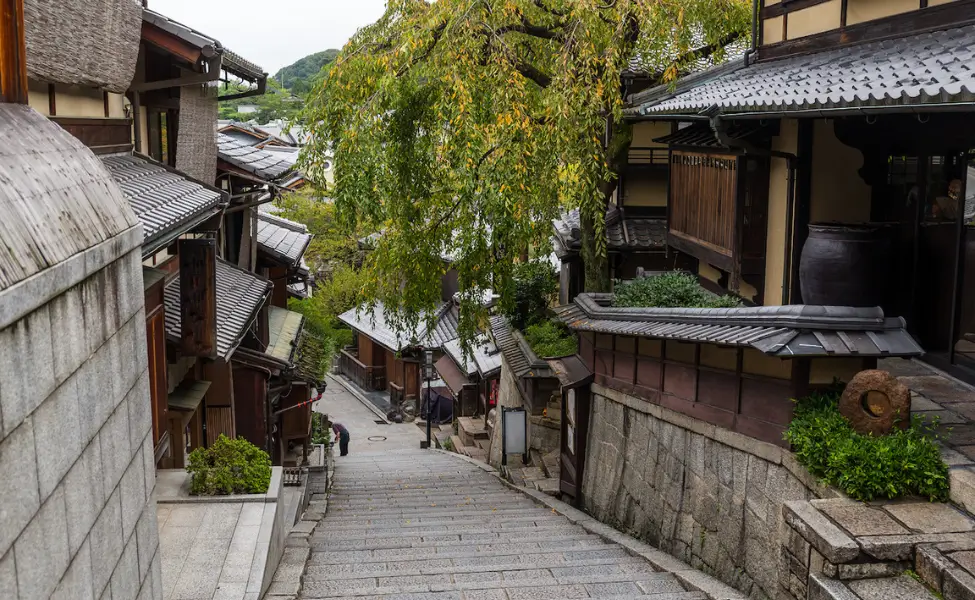
Plan two or three sites per day in Kyoto and use taxis between them rather than attempting public transport on every leg. An accessible sightseeing taxi hired by the hour can cover three or four sites in a half-day. The cost compares reasonably with the individual taxi fares you would pay for the same route in any case.
Planning for the Days When Your Energy Is Lower
Any itinerary built around you performing at your best every day will need revising at some point. Planning for variable capacity from the start gives you genuine choices when a harder day arrives. A forced rest you did not account for disrupts far more than an afternoon you blocked out deliberately.
For the question of whether to bring your own mobility aid or rent one in Japan, the answer depends on how specific your requirements are.
| Equipment type | Approximate daily rate | Minimum booking lead time | Delivery |
| Basic manual wheelchair | From ¥1,500 | 1 to 2 weeks | Hotel delivery nationwide |
| Electric or power wheelchair | From ¥6,000 | 2 weeks minimum | Hotel delivery, Kanto region mainly |
| Mobility scooter (WHILL type) | Contact provider for current rate | 10 days minimum | Hotel delivery, Kanto region mainly |
If your chair has specific dimensions or features that standard rental stock is unlikely to replicate, bringing your own removes that uncertainty entirely.
The Shinkansen accepts wheelchairs within the JIS standard dimensions of up to 120 cm in length, 70 cm in width, and 109 cm in height. Chairs larger than this require direct confirmation with the JR company operating your route before you finalise tickets.
Final Words
For communication on the ground, most station staff in tourist areas carry multilingual communication cards that cover common accessibility requests. Google Translate’s camera function reads Japanese signage accurately and is worth installing before you leave home.
The Japan Accessible Tourism Center accepts inquiries in English by phone and email, and can help confirm specific routes or facilities before you leave home.
On timing, the most manageable seasons are late March to mid-April and mid-September to mid-November. Avoid the cherry blossom peak weekends in late March, when popular sites are at their most congested. Both periods bring mild temperatures and reduce the heat that makes long days outdoors difficult in July and August.
Avoid the Golden Week period running from the end of April into early May, when trains and popular sites reach their highest annual congestion.
