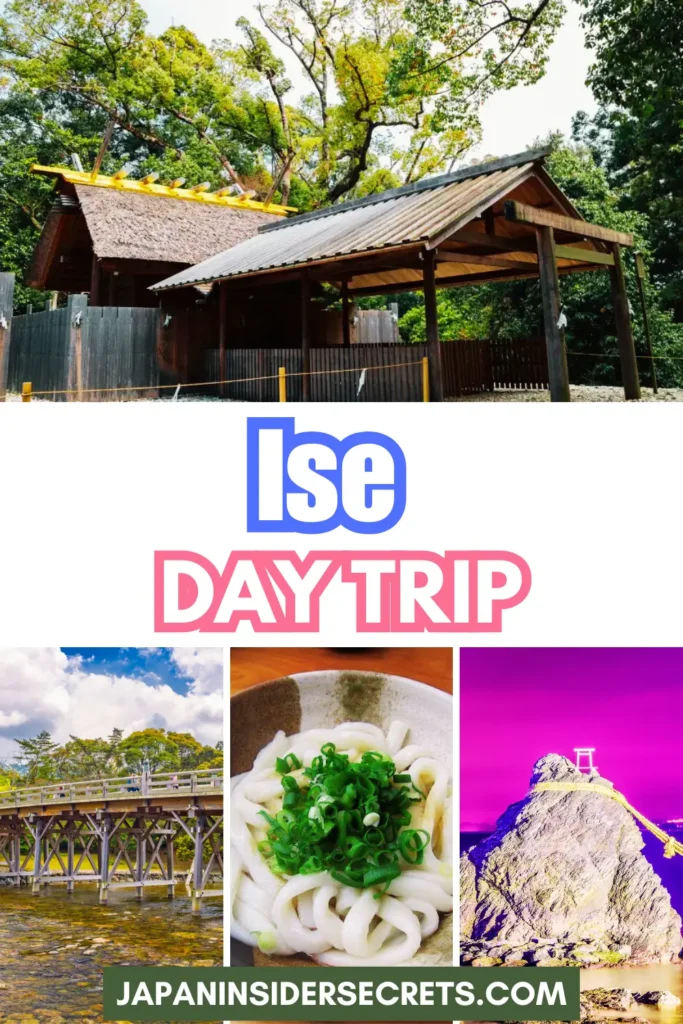
You have found Ise while planning your Japan trip, and now you are stuck on the question everyone gets stuck on. Does it deserve a full day, or is it one of those places that photographs well but leaves you wondering what the fuss was about? The confusion is not your fault. Most articles talk about Ise Jingu as though it is a single building you can tick off in twenty minutes. In reality, it is a sprawling complex spread across two separate areas that stand nowhere near each other.
This piece starts at Geku, moves on to Naiku, and finishes in the food streets around Okage Yokocho. Along the way, it covers the transport choices that trip people up, Kintetsu against JR, and what to do with the rest of your trip if Ise deserves more than a single afternoon.
| Prefecture | Mie |
| Main draw | Geku and Naiku, two shrine areas several kilometres apart |
| Time needed | A full day |
| Starting station | Iseshi Station |
| Journey from Nagoya | About 80 to 90 minutes by Kintetsu or JR |
| Getting between the shrines | Local bus, about 15 to 20 minutes |
| Best for | Shinto history, traditional streets and regional food |
| Worth adding | Futami, or an overnight stay if you want Ise-Shima too |
Two Shrines, Not One
Ise Jingu is officially just called Jingu, and it is not a single shrine at all. The complex contains 125 individual shrines. Almost everyone who visits concentrates on the two main ones, Geku and Naiku.

Geku, the Outer Shrine, honours Toyo’uke-no-Omikami, the deity linked to food, clothing and shelter. She was enshrined here around 1,500 years ago. Naiku, the Inner Shrine, honours Amaterasu-Omikami, the sun deity and ancestor of the Imperial family, enshrined for roughly 2,000 years.
The two sit several kilometres apart, further than most first-time visitors expect. You cannot simply wander from one to the other, and getting between them takes a bus, a taxi or a genuinely long walk. Tradition, and the shrine’s own guidance, points to visiting Geku first and Naiku second.
Why the Buildings Look Freshly Built
One detail catches almost everyone off guard the first time they see photos of Ise. The wood looks pale and new, nothing like the weathered temples you might picture from Kyoto or Nara. That is because it genuinely is new.
Ise Jingu follows a tradition called Shikinen Sengu. Every 20 years, the main buildings are taken down and rebuilt from scratch on a neighbouring plot, using the same techniques and materials as always.
The last rebuild happened in 2013, and the next one is scheduled for 2033. Preparations for each cycle take place over several years and involve a series of ceremonies and rituals.
The tradition has run for more than 1,300 years, interrupted only occasionally by war. Part of the point is to pass the building skills on before anyone forgets how it is done. Walk around either shrine and you will notice an empty gravel plot beside the current sanctuary. That is not unused land. It is where the next version of the building will stand.
Why It Will Not Feel Like Kyoto
If you have already spent time among Kyoto’s gilded temples and elaborate gates, Ise can come as a surprise. It helps to know that before you arrive rather than after.
The architecture here is deliberately plain. Both main sanctuaries use a style called shinmei-zukuri, built from unpainted cypress with thatched roofs, and both sit behind four rows of wooden fencing that block the inner courtyard from view entirely.
Instead of an ornate gate leading into a painted hall, you get an outer gate, a glimpse of a thatched roofline above the fences, and a spot to worship from there. That restraint is the point rather than a shortcoming.
Ise is less about a striking building and more about the forest approach, the gravel paths and the sound of the river. You are standing somewhere Japan has treated as sacred for two thousand years.
The Route From Geku to Naiku
Starting at Geku
If you arrive at Iseshi Station, Geku is the obvious first stop. The walk takes five to ten minutes depending on your pace. It leads through a large torii gate and into wooded grounds with broad, well-signed paths.
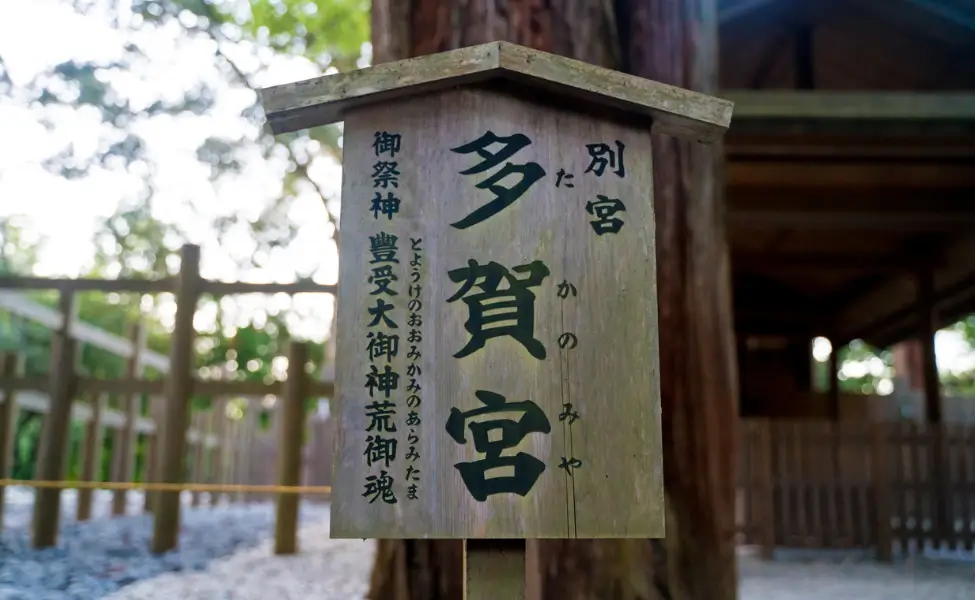
The main sanctuary, called Shogu, is where you will do most of your worshipping. You approach the outer gate, pay your respects, and move on. The inner courtyard stays off limits, and photography is restricted right around that area.
Several smaller shrines sit within the same grounds, including Taka-no-miya, Tsuchi-no-miya and Kaze-no-miya. You do not need to visit every one of them. The walk between them gives a better sense of how the wider complex fits together than heading straight for the main sanctuary and leaving.
If you want more context on the rebuilding tradition, the Sengukan Museum near the entrance is worth 30 to 45 minutes. It holds a life-size replica of the main pavilion that explains the construction techniques far better than any description can.
Budget 45 to 60 minutes for Geku overall, longer if the museum appeals to you.
Getting to Naiku
Walking to Naiku is possible but impractical for a day trip, since the distance runs to several kilometres. The standard move is to catch the bus from the Geku-mae stop toward Naiku-mae. The ride generally takes 15 to 20 minutes.
Major nationwide transport IC cards are accepted on many local services. Tap on when you board and tap again when you leave, and the fare comes off automatically.
Paying cash works too, though it takes an extra step. Take a numbered ticket as you board. Then feed both the ticket and the correct cash into the machine by the driver as you get off. Keep in mind that onboard change machines generally only break smaller notes, so it is sensible to carry coins or a 1,000 yen note.
If you are planning to add Futami, or expect to hop on and off buses more than once, look at the Michikusa Pass instead. Check the current price and coverage before travelling, then compare it against what your individual rides would cost.
Weekends, public holidays and shrine events can slow the bus down with traffic. Build in a little extra time on those days.
Crossing Into Naiku
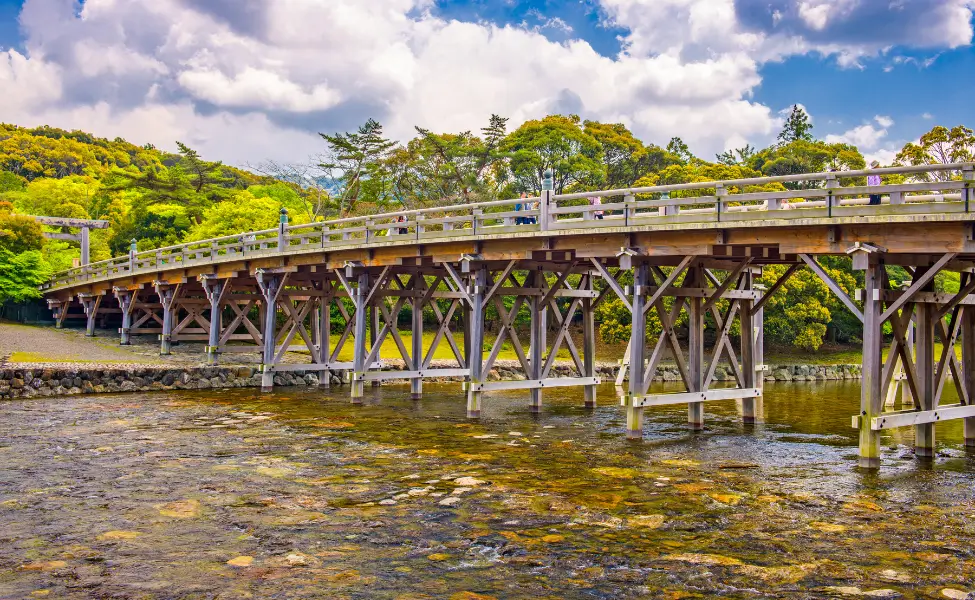
Uji Bridge marks the entrance to Naiku, stretching just over 100 metres across the Isuzu River. Like the main sanctuary, it gets rebuilt as part of the Shikinen Sengu cycle.
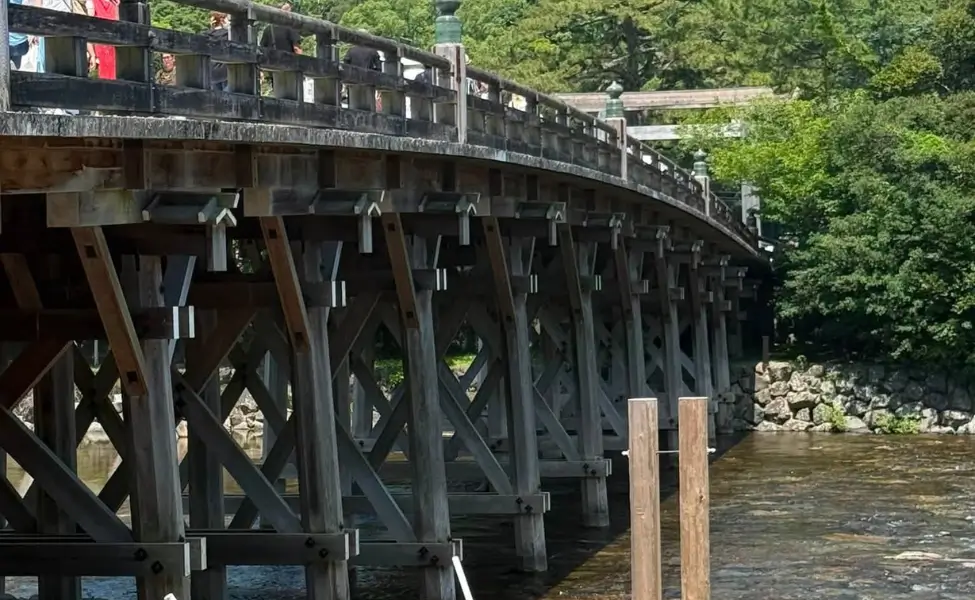
Custom has visitors keep to the right when crossing toward Naiku, the opposite of the left-hand flow at Geku. Nobody will scold you for getting it wrong. Following the local flow just makes the walk easier once the shrine fills up later in the day.
Past the bridge, the path threads through landscaped grounds before opening onto a stretch of the Isuzu River at a spot called Mitarashi. Pilgrims traditionally purified themselves here before continuing.
Purification basins exist elsewhere on the grounds now, but plenty of visitors still stop here anyway. The stones can be slippery, especially after rain. Keep a firm grip on children and stay clear of the water’s edge if the river looks high.
Reaching the Main Sanctuary
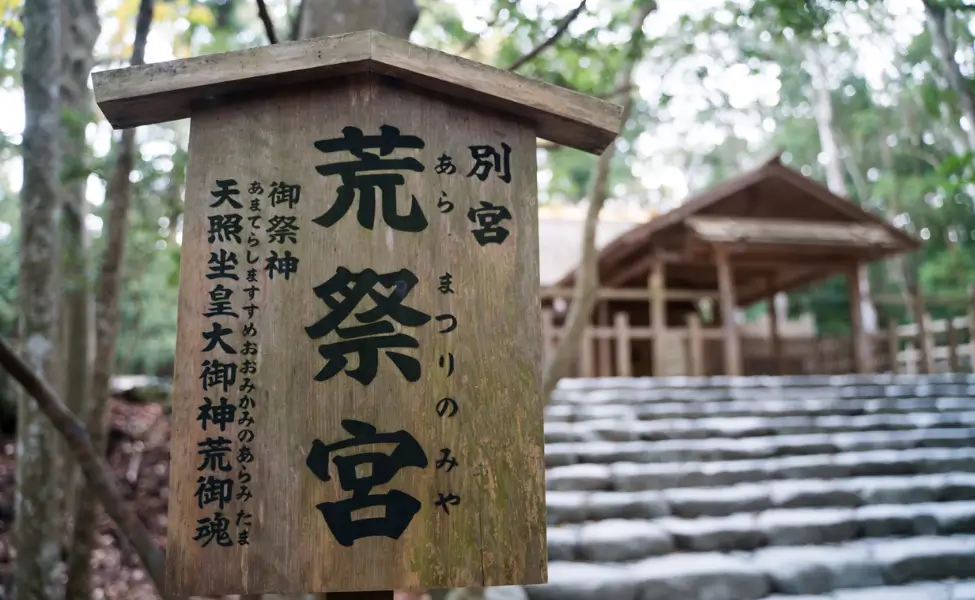
The main path then climbs a set of stone steps to the sanctuary of Amaterasu-Omikami, the most sacred spot in the entire complex.
As at Geku, you will only ever see the outer section. Visitors climb the steps, pass through the outer gate and worship in front of the next barrier. Photography is not allowed once you reach that point.
If you want to worship the standard way, the sequence runs like this:
- Bow twice.
- Clap twice.
- Offer a silent prayer.
- Bow once more.
You are welcome to simply observe instead. Stay quiet, keep your distance from anyone praying, and avoid blocking the entrance while you look around.
Give yourself 60 to 90 minutes here. That leaves time for the main sanctuary, the riverside stop and a couple of the smaller shrines, without trying to see the entire complex in one pass.
Oharaimachi, Okage Yokocho and What to Eat
The Street Itself
Oharaimachi begins near the Naiku entrance and runs for roughly 800 metres alongside the Isuzu River. Pilgrims have walked this stretch for centuries.
Many of the buildings keep a traditional look, but it is a working commercial street rather than a preserved museum piece, packed with restaurants, food stalls and craft shops built around the needs of shrine visitors.
Lunchtime, particularly at weekends, turns it genuinely crowded. Visiting Naiku before you eat tends to work far better than eating first, then trying to enter the shrine during the busiest stretch of the afternoon.
Okage Yokocho
Roughly halfway along Oharaimachi, opposite the main Akafuku shop, is Okage Yokocho. It is a compact network of lanes built to recreate the look of the Edo and Meiji periods. Entry is free.

The area is often mistaken for the whole of Oharaimachi, when it is really just one section within it.
Most shops operate during daytime hours, but opening times vary by business and season. Do not leave your visit until the evening expecting everything to still be open. Check the current hours of any particular shop or restaurant that you do not want to miss.
Give yourself one to two hours here for lunch, a wander and some snacking.
Ise Udon and Tekone Sushi
Ise udon breaks most people’s expectations of Japanese noodles. The noodles are thick and notably soft rather than firm. Instead of sitting in a big bowl of broth, they arrive with a small amount of dark, soy-based sauce.
If you go in expecting the chewy texture served elsewhere in Japan, the softness can throw you. That is simply how the dish is meant to be.
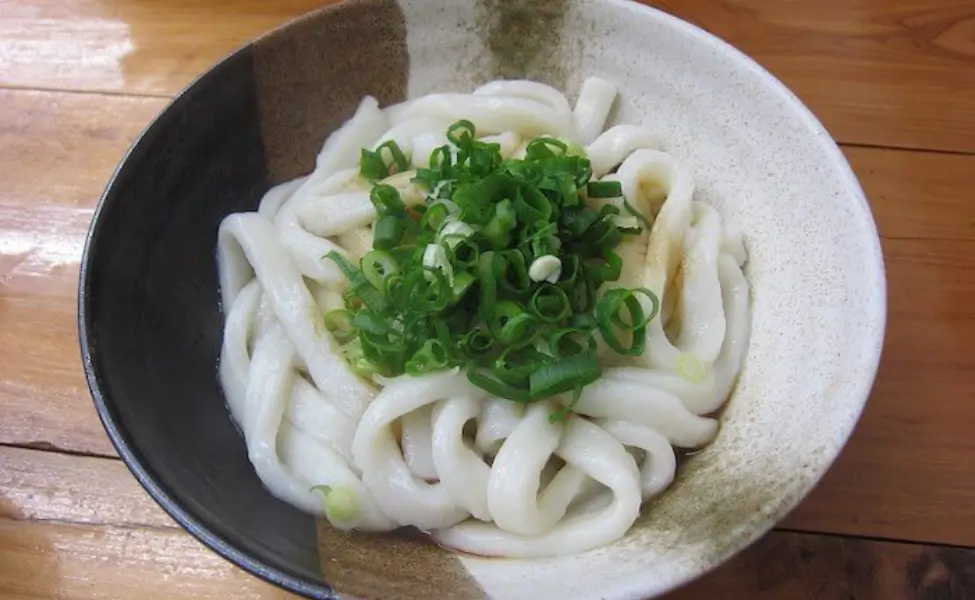
Fukusuke, in Okage Yokocho, is one of the better-known spots to try it, though queues build fast during peak hours.
Tekone sushi is another regional dish worth trying, made from slices of marinated bonito or tuna served over vinegared rice. Fishermen first put it together as something they could prepare and eat while still working.
Plenty of restaurants sell tekone sushi and Ise udon as a combined set, a convenient way to try both without ordering two full meals.
Ise Ebi and Akafuku Mochi
If your budget stretches further, Ise ebi, the local spiny lobster, shows up sashimi-style, grilled, boiled or in soup. It costs considerably more than the other dishes here, and not every restaurant serves it, since availability shifts with the season and the day’s catch.
For dessert, Akafuku mochi is the dish everyone mentions, soft rice cake wrapped in smooth red bean paste shaped to represent the ripples of the Isuzu River.
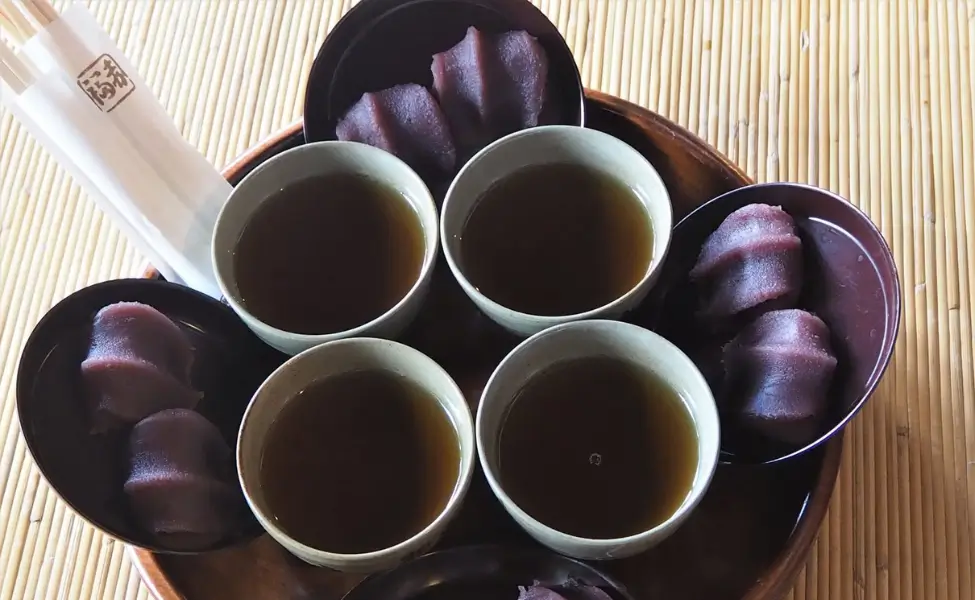
The main Akafuku shop sits right on Oharaimachi and serves it with tea, plus a shaved-ice version called Akafuku Gori through the warmer months and a warm sweet soup version called Zenzai in winter.
Sarutahiko Shrine, If You Have Time
Sarutahiko Shrine is near the northern end of Oharaimachi, about a 12-minute walk from Uji Bridge. It is dedicated to Sarutahiko Okami, a deity linked with guidance and choosing the right path.
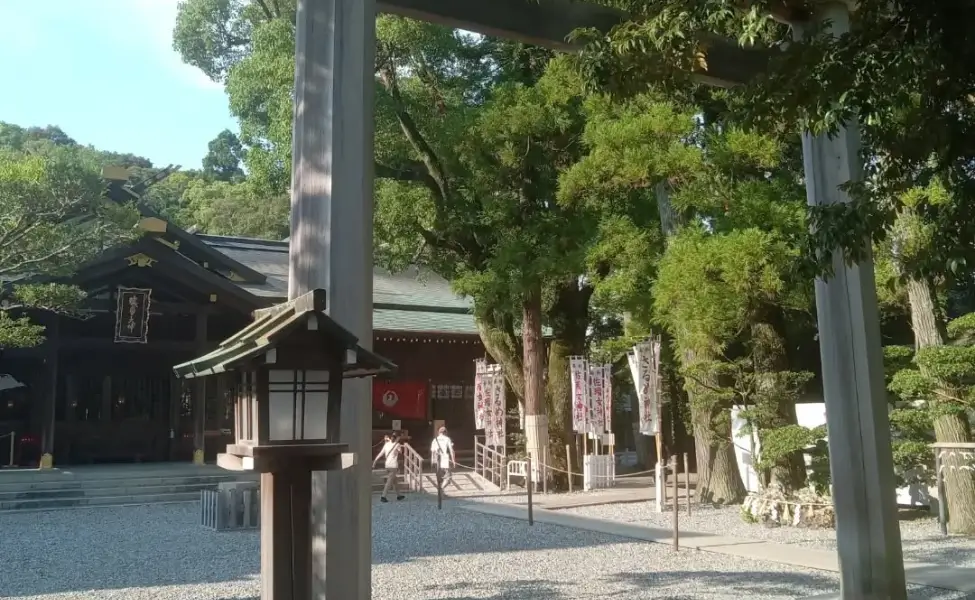
Sarume Shrine, connected to performing arts, shares the same grounds.
It makes a reasonable extra stop since it costs so little extra travel, but it should never replace Geku or Naiku on a first visit. Twenty to 30 minutes covers it comfortably.
Getting There, Getting Around and Timing the Day
Kintetsu or JR
| Factor | Kintetsu Limited Express | JR Rapid Mie |
|---|---|---|
| Journey time from Nagoya | About 1 hour 20 minutes | About 90 minutes |
| Seating | All seats reserved | Mostly unreserved, some reserved |
| Tickets needed | Basic fare plus a Limited Express ticket. Depending on the booking method, these may be purchased together online | Standard JR fare, plus a surcharge for Japan Rail Pass holders on the private Ise Railway section |
| IC card coverage | Covers the basic fare, while the Limited Express charge still needs a separate ticket or reservation | Not accepted for the full journey south of the JR Central IC card area, so buy the appropriate ticket before departure |
| Best if | You want a guaranteed seat and a slightly faster ride | You are using a Japan Rail Pass or want the cheaper option |
For most day trippers, Kintetsu is the easier choice, simply because it is faster and every seat is guaranteed.
Whichever you pick, check the timetable for your actual travel date, since services on both lines shift depending on the day of the week.
If you are set on Kintetsu, Limited Express reservations generally open one month before your travel date. Popular services can fill up on weekends and public holidays, so it is worth booking early if your date is fixed.
A Full Day, Mapped Out
| Approximate time | Activity |
|---|---|
| 7:30am | Leave Nagoya |
| 9:00am | Arrive at Iseshi Station |
| 9:10am | Walk to Geku |
| 9:20am to 10:20am | Visit Geku |
| 10:20am | Optional stop at the Sengukan Museum |
| 11:00am | Bus to Naiku |
| 11:30am to 1:00pm | Visit Naiku |
| 1:00pm to 3:30pm | Lunch, Oharaimachi and Okage Yokocho |
| 3:30pm | Optional stop at Sarutahiko Shrine |
| 4:15pm | Bus back to Iseshi or Ujiyamada Station |
| Late afternoon | Return to Nagoya |
Treat these times as a rough shape rather than a fixed schedule. Bus traffic, restaurant queues and your own pace will all push things around.
If food matters more to you than the museum, give Oharaimachi extra time and skip the Sengukan. Should the rebuilding tradition genuinely interest you instead, leave Nagoya a little earlier so the museum does not eat into your Naiku time.
Getting Around Once You Are There
You will not need a car anywhere on this route. Geku is within easy walking distance of Iseshi Station, and buses link Geku, Naiku, Iseshi Station, Ujiyamada Station and most of the surrounding attractions.
The main services include:
- Local buses running between Geku and Naiku.
- The Ise-Futami-Toba CAN Bus, useful if you are extending the day towards Futami or Toba.
- Regular services connecting Iseshi Station and Ujiyamada Station with Naiku.
Buses heading back from Naiku generally leave from the Naiku-mae or Jingu Kaikan-mae stops.
Services towards Iseshi and Ujiyamada run frequently through the main part of the day, though they thin out later. It is worth saving a screenshot of the return timetable before you go into the shrine, particularly if you are aiming for a specific train back to Nagoya.
Shrine Hours and Etiquette
| Period | Visiting hours |
|---|---|
| January to April | 5:00am to 6:00pm |
| May to August | 5:00am to 7:00pm |
| September | 5:00am to 6:00pm |
| October to December | 5:00am to 5:00pm |
Naiku and Geku open at 5:00am every day of the year. Hours can shift around the New Year period and during special events, so it is worth checking the shrine’s own announcements if you are travelling then.
Oharaimachi and Okage Yokocho do not follow the same early schedule. An early shrine visit sometimes means waiting a while before breakfast options open up.
Etiquette here is straightforward, and you do not need any specialist knowledge to visit respectfully.
- Bow once before passing through a torii gate.
- Walk to the side of the main path rather than straight through the centre.
- Use the purification basin before approaching the sanctuary.
- Keep your voice down.
- Follow every photography restriction you see posted.
- Skip eating or drinking inside the precincts outside designated spots.
- Bow twice, clap twice and bow once more when you worship.
- Stay out of any area marked as restricted.
Should You Add Futami, Toba or an Overnight Stay
Adding Futami
Futami lies east of central Ise and centres on Futami Okitama Shrine and Meoto Iwa, the paired rocks bound together with a thick sacred rope.

Pilgrims once purified themselves in the sea here before continuing on to Ise Jingu, and some visitors still start their day at Futami for that reason.
Folding all three areas into a single day trip from Nagoya makes for a considerably busier schedule. You can reach Futami by JR train or the CAN Bus, with a short walk from Futaminoura Station to the shrine and rocks.
Adding Futami makes the most sense if:
- You are staying overnight in Ise.
- You are arriving unusually early.
- You have already visited Ise Jingu on a previous trip.
- Meoto Iwa is one of your main reasons for coming to the area.
For a first visit, Geku, Naiku and Oharaimachi should take priority, with Futami left for a second trip if time runs short.
Should You Stay Overnight
You do not need to stay overnight to cover Geku, Naiku and Okage Yokocho from Nagoya in a single day.
An overnight stay is worth it its keep if any of these appeal to you:
- Visiting the shrines early in the morning before the crowds arrive.
- Adding Futami and Meoto Iwa without rushing.
- Sitting down to a proper seafood dinner instead of a quick lunch.
- Continuing on into Shima the following day.
- Moving through the whole day at a slower pace.
- Skipping the return trip to Nagoya after a long day on your feet.
If you do stay, central Ise near Iseshi or Ujiyamada Station keeps you close to the trains, buses and Geku itself.
For sea views, resort hotels and seafood-focused menus, look further south towards Toba or Shima instead.
A Second Day in Ise-Shima
Ise-Shima is the wider region that takes in Ise, Toba, Shima and the coast around them, and a second day opens up a few directions worth considering.

Staying within Ise City, Futami and Meoto Iwa make an easy add-on before heading back to Nagoya.
Heading further out, Shima offers the coastal scenery most people picture when they hear Ise-Shima. Kashikojima acts as the main transport hub for sightseeing cruises around Ago Bay, and Yokoyama Observatory offers one of the better free viewpoints over the bay.
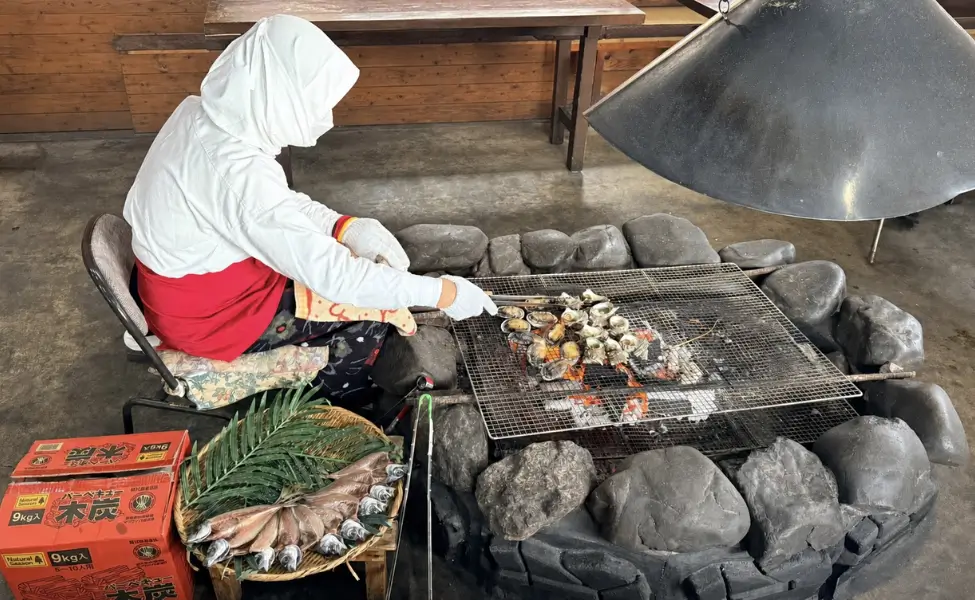
The region also has a long connection with ama, the traditional free-diving women who harvest shellfish by hand. Several organised experiences let you meet active or retired divers and eat seafood in an ama hut, though these usually need booking in advance.
Toba itself, with its aquarium, pearl sites and island trips, has enough going on to justify its own separate day. Treat it as its own trip rather than a quick add-on after a full day at the shrine.
When to Go
Spring and autumn give you the most comfortable walking weather. Summer brings real heat and humidity, though the forested paths at both shrines offer some shade.
Winter runs cooler with shorter daylight, but crowds thin out noticeably outside the New Year period. The first few days of January get genuinely busy, since many people make their first shrine visit of the year then.
Weekdays beat weekends for a quieter visit, and arriving before the tour groups makes a real difference around Naiku and Okage Yokocho.
One day is enough for a first visit if you keep your focus tight:
- Geku.
- Naiku.
- Oharaimachi.
- Okage Yokocho.
- One or two local dishes.
Adding Sarutahiko Shrine stays realistic as long as you keep moving. Futami is possible too, though it turns the day into a tighter schedule than the one above.
If you want Futami without the rush, a full seafood dinner, or a run into Shima, two days will serve you far better than one.
Common Questions About Visiting Ise
No. It is a complex of 125 shrines built around Geku and Naiku, and those two main areas sit several kilometres apart from each other.
Tradition, and the shrine’s own guidance, both point to Geku first, followed by Naiku.
You can, but the distance makes it impractical for most day trippers. The local bus saves both time and energy for a walk that offers little scenery of its own.
Budget around an hour for Geku and one to two hours for Naiku. Add another one to two hours for Oharaimachi, Okage Yokocho and lunch on top.
Yes, there is no general admission charge for the Geku or Naiku grounds. Museums, personal prayer offerings and a handful of other services carry separate fees.
Photography is fine across most of the outdoor grounds, but it is banned around the main worship areas at both shrines. Watch for the posted signs and put your camera away before you reach the inner sanctuary.
Yes. Direct trains take around 80 to 90 minutes each way. That makes an Ise day trip practical from Nagoya rather than a stretch.
Ise udon, tekone sushi, Ise ebi and Akafuku mochi cover the essentials. You can realistically try all four in a single afternoon around Oharaimachi.
Not if you know what you are walking into. Kyoto’s temples aim for visual impact, while Ise aims for restraint and atmosphere instead. The two experiences do not really compete with each other. Go in expecting plain wood and quiet forest paths rather than gold leaf and painted halls. Ise tends to land well even for visitors who have already covered Kyoto thoroughly.
If your travel date is fixed, yes, especially for weekends or holidays. Reservations generally open one month before travel. Online booking is available, but check whether your purchase includes both the basic fare and the Limited Express ticket, or only the Limited Express portion.