
JR pricing changes regularly. Always check your specific routes before buying anything.
For most visitors to Japan, the answer is no. That is not a provocative opener designed to be softened later. It is arithmetic. After a 70% price increase in October 2023 and another increase arriving this October, the Japan Rail Pass has moved from an automatic purchase to something that needs to earn its place in your budget. For a lot of itineraries, it no longer does.
The Quick Answer Before the Detail
Buy the 7-day JR Pass if your trip crosses multiple regions by Shinkansen within a single week, for example Tokyo followed by Hiroshima and then Kyushu, or a long northern route through Tohoku.
Skip the JR Pass and buy individual tickets if you are visiting Tokyo, Kyoto and Osaka only. You will spend significantly less.
Look at a regional pass first if your trip focuses on one part of Japan, whether that is Kansai, Hokuriku, Tohoku, Kyushu or Hokkaido. Regional passes cost far less than the national pass and often cover exactly what you need.
If none of those three situations matches your itinerary clearly, the breakdown below will help you work it out.
What the JR Pass Actually Is
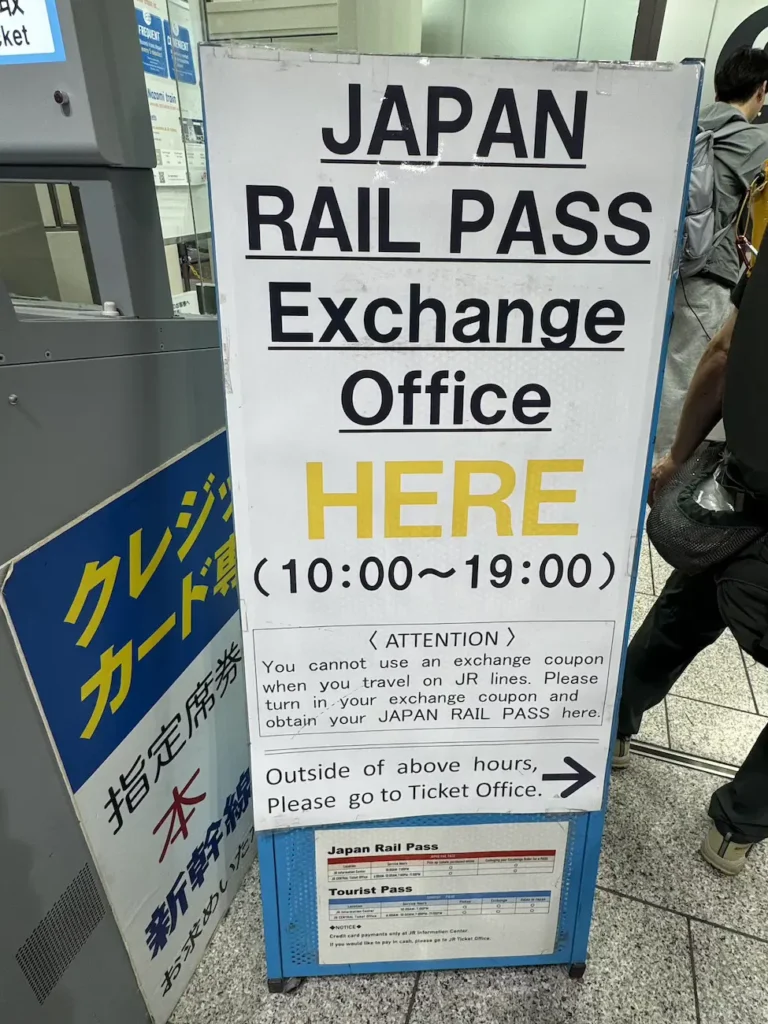
The pass gives foreign tourists on a temporary visitor visa unlimited travel on most JR Group trains for 7, 14 or 21 consecutive days.
Coverage includes the Shinkansen bullet train network, limited express trains, rapid and local JR lines, certain JR buses, and the JR ferry to Miyajima.
It does not cover Tokyo Metro, Osaka Metro, the Kyoto city bus network or any private railway.
You will need a Suica or Pasmo IC card for city travel regardless of whether you hold a pass, so factor that cost in separately.
The Price That Changed Everything
In October 2023 the JR Group raised the pass price by approximately 70%. The 7-day Ordinary Pass jumped from ¥29,650 to ¥50,000.
Before that increase, the maths were straightforward in the pass’s favour.
A reserved seat on the Hikari Shinkansen between Tokyo and Kyoto costs around ¥13,850 one way, putting a return trip at roughly ¥27,700.
At the old price of ¥29,650, the pass almost paid for itself with a single Kyoto round trip before you took another train in Japan.
At ¥50,000, that same round trip covers barely 55% of the pass cost. The 14-day pass currently costs ¥80,000 and the 21-day costs ¥100,000, with Green Car versions running around 40% higher across all durations.
There is more to come. From 1 October 2026, overseas agencies will charge higher prices, with the 7-day Ordinary Pass rising to ¥53,000, the 14-day to ¥84,000 and the 21-day to ¥105,000.
The official JR Pass website will hold current prices for a limited period after that date, though JR has not yet confirmed when that window closes.
The Nozomi Situation Is Not What It Sounds
Many travel sites frame Nozomi coverage as a meaningful new benefit of the pass. Read the detail before you celebrate.
Pass holders can board Nozomi and Mizuho services, but only by purchasing a separate supplement on top of their pass.

That supplement runs to around ¥4,960 each way between Tokyo and Kyoto, and around ¥6,500 each way between Tokyo and Hiroshima.
A return Kyoto trip on the Nozomi therefore adds roughly ¥9,920 to your costs beyond the pass itself. The Hikari, which the pass covers without any supplement, takes around 2 hours and 40 minutes between Tokyo and Kyoto compared to the Nozomi’s 2 hours and 15 minutes.
Paying close to ¥10,000 to save 25 minutes each way makes no financial sense for most leisure travellers. Take the Hikari and spend the difference on dinner in Kyoto.
What Kind of Trip Are You Actually Taking?
This is the question most JR Pass articles skip entirely, and it matters as much as the fare maths. Japan is a large, varied country, and the right transport strategy depends entirely on how you plan to move through it. Three types of visitor emerge fairly consistently.
The first is the classic first-timer. Tokyo for a few days, then Kyoto or Osaka, sometimes with a day in Nara or Hiroshima. This is the most common Japan trip pattern and it is also the pattern where the national JR Pass performs worst. Individual Shinkansen tickets cover this itinerary cleanly, city passes handle local travel, and nothing gets wasted.
The second is the wide-ranging explorer. Multiple regions across seven or fourteen days, moving frequently, perhaps combining Tohoku with the Kansai corridor, or crossing from Tokyo to Kyushu.
This traveller genuinely benefits from the pass because the cumulative Shinkansen costs climb quickly and the flexibility to board any covered train without buying a ticket each time has real practical value.
The third is the regional specialist. A fortnight split between Kansai and western Japan, or a deep dive into Hokkaido, or a Kyushu loop. For this traveller, a targeted regional pass almost always beats the national pass on both price and practical coverage, because the national pass charges for the whole country when you only need a part of it.
Work out which category fits your trip before you compare any prices.
The Numbers by Route
Fares vary by season and seat type. The figures below use reserved ordinary seats on Hikari services during regular season.
Tokyo and Kyoto return. Individual tickets run around ¥27,700 against a ¥50,000 pass. You lose roughly ¥22,000 before you touch a city subway. Do not buy the pass for this trip.
Tokyo, Kyoto and Osaka return. Osaka sits 15 minutes beyond Kyoto on the same line. Individual tickets for the full loop still come in well below ¥50,000. The pass loses again.
Tokyo, Kyoto, Osaka and Hiroshima in seven days. The pass saves somewhere between ¥5,000 and ¥15,000 here, and the JR ferry to Miyajima falls inside the coverage too.

Worth noting though: this itinerary is financially efficient but physically demanding. Saving ¥10,000 is not worth building a rushed trip around.
Multi-region trips reaching Kanazawa, Tohoku or Kyushu. A Tokyo to Kanazawa return costs around ¥26,000 by itself. Add a Kyoto or Hiroshima leg in the same window and the pass pays off clearly, at a comfortable pace.

When the Pass Still Makes Genuine Sense
The pass works well for travellers covering large distances across multiple regions within one validity window.
It also suits people who value flexibility.
You can board any covered JR train without planning every leg in advance.
Families with children aged six to eleven may also benefit, as children pay half the adult pass price.
For a 14 day or 21 day trip across three or more regions, the pass can still make sense.
In that case, it remains a legitimate choice rather than an expensive convenience.
The Smarter Alternatives
Regional passes deserve far more prominence than the national pass conversation usually gives them, and for many visitors to Japan they represent the smarter buy by a considerable margin.
The Hokuriku Arch Pass covers seven days between Tokyo and Osaka via Kanazawa for ¥30,000.
That is ¥20,000 less than the national pass.
The Kanazawa, Kyoto, and Osaka corridor is one of Japan’s most rewarding routes.

It offers strong scenery, culture, and variety.
The JR East Pass covers Tokyo and the Tohoku region.
It costs between ¥30,000 and ¥35,000, depending on the season.
This suits visitors whose itinerary runs north rather than west.
If you plan to focus on Kansai, the Kansai Area Pass starts at ¥2,800 for one day.
It covers JR lines throughout Kyoto, Nara, Osaka, and Kobe.
JR Kyushu also offers island specific passes for travellers spending serious time in the south.
For individual Shinkansen journeys, SmartEX and the official booking website make ticket buying much easier.
You can buy and cancel tickets with a QR code until just before departure.
You pay no extra cost beyond the standard fare.
So the old argument that individual tickets are complicated no longer really holds.
Overnight highway buses between Tokyo and Osaka or Kyoto usually cost between ¥3,000 and ¥6,000 one way.
They leave in the evening and arrive in the morning.
That also folds one night of accommodation into your transport cost.
Budget airlines, including Peach and Jetstar Japan, often sell cheap fares when booked ahead.
Tokyo to Fukuoka and Tokyo to Sapporo fares can drop below ¥10,000.
That substantially undercuts Shinkansen prices on those longer routes.
Do This Before You Spend Anything
Map your specific itinerary and add up every JR journey you plan to take. The fare calculator at jrpass.com handles this well, or you can check individual routes directly on the JR Central and JR East websites.
The calculation takes around fifteen minutes and produces a clear answer about whether a pass saves you money on your actual trip.

Japan’s trains remain one of the great experiences of visiting this country. They run precisely, they are comfortable, and travelling between cities here beats almost anywhere else in the world. The JR Pass, at its current price, simply does not deserve automatic trust any longer.
Run the numbers, make the call that suits your actual trip, and spend what you save on the things that will stay with you long after the journey ends.
Frequently Asked Questions
Yes, but you will pay more than buying in advance through the official JR website or an authorised overseas agent. Buy before you travel.
Yes. The Narita Express runs on JR tracks and falls within pass coverage. A one-way adult ticket costs around ¥3,070, so if you activate your pass on arrival at Narita, this leg counts towards your break-even total immediately.
No. The pass covers JR lines within Tokyo, including the Yamanote Line, but Tokyo Metro and the Toei Subway are separate networks. Load a Suica or Pasmo card for subway travel regardless of whether you hold a pass.
Not always, but you should on busy routes and during peak seasons. Seat reservations cost nothing extra for pass holders and you can book them before you arrive if you buy through the official JR website.
Only if your itinerary crosses multiple regions across the full two weeks. A trip that spends most of its time in Tokyo, Kyoto and Osaka will not break even. Run the same fare calculation you would for the 7-day pass and let your actual routes answer it.
For most leisure travellers, no. The 7-day Green Car pass costs ¥70,000, which raises the break-even point considerably. Standard reserved seats on the Shinkansen are already comfortable for the journey lengths most visitors take.
Wait until the day you first need it. The pass runs on consecutive calendar days, so activating on arrival and then spending two days in Tokyo burns your window unnecessarily. Activate on the morning you first board a covered long-distance train.
Children aged six to eleven pay half the adult price, which improves the value calculation for families. Children under six travel free without occupying a separate seat and do not need a pass.
