
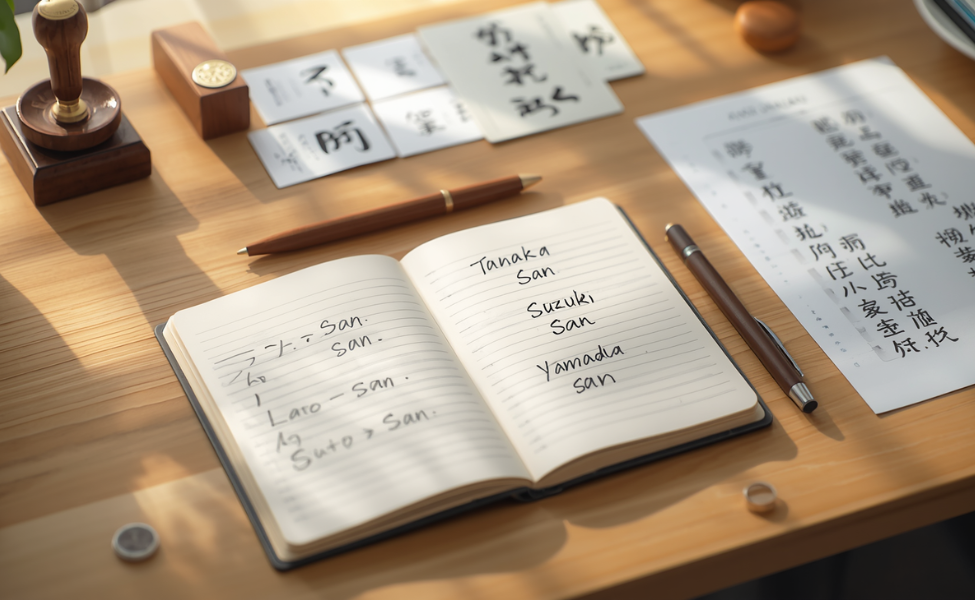
The short version. Japanese surnames come first in Japan, followed by the given name. As a visitor, use the family name plus san, such as Tanaka-san, unless the person you are speaking with specifically invites you to use their first name. That one habit handles almost every situation you will face.
Most visitors planning a Japan trip have a moment where they suddenly realise they do not know how Japanese surnames work or how to address people politely.
That feeling tends to arrive somewhere between booking accommodation and reading up on etiquette, sitting quietly in the background as departure day gets closer.
Having spent three decades living in Japan, I can say with confidence that one clear habit covers almost every situation you will face.
Why Japanese Surnames Confuse First-Time Visitors
Japanese names follow a different structure from English names.
The family name comes first, followed by the given name, so someone introduced as Tanaka Yuki in Japanese has Tanaka as the family name and Yuki as the given name.
That single difference sits behind most of the confusion visitors run into.
English-language sources, travel booking platforms, and international media often reverse this order to match Western conventions.
The same person might then appear as Yuki Tanaka in English materials.
That switch makes it hard to tell which name is which on hotel bookings, name tags, and arrival forms. In Japanese text, the family name almost always comes first.
Roman letters are less predictable, so building a simple awareness of the pattern before you arrive goes a long way.
Why English Sources Changed the Order, and Why Japan Is Changing It Back
Japan adopted Western name order for international use around 150 years ago.
The change was part of a broader push to modernise and connect with the outside world.
In 2019, the Japanese government formally announced a return to family-name-first order for official English documents.
The Ministry of Education had already been encouraging universities to follow the same approach.
That shift is worth knowing as a visitor, because you may now encounter Japanese names in family-name-first order even in English-language materials.
If a government website or official document lists someone as Tanaka Yuki rather than Yuki Tanaka, that is intentional rather than a formatting error.
The Simple Rule That Works in Almost Every Situation
Use the family name, add san, and you have a polite form of address for hotels, tours, shops, and most everyday interactions.
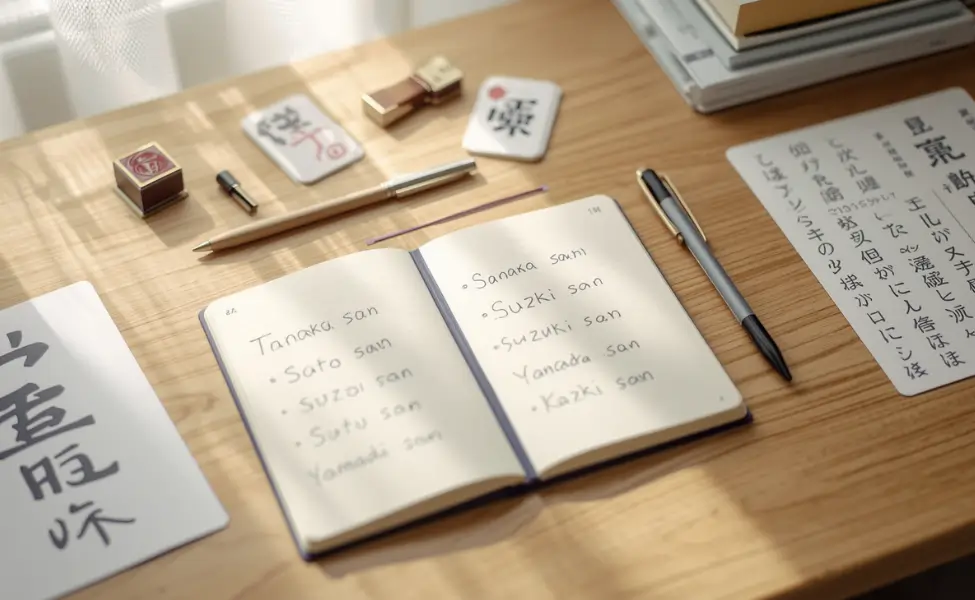
- Tanaka-san
- Suzuki-san
- Yamada-san.
That form is respectful, neutral, and entirely appropriate across a wide range of settings without sounding stiff or theatrical.
San is not a ceremony but simply the everyday way to address someone politely in Japanese.
It carries no gender distinction and requires no particular level of formality.
The form works whether the conversation is relaxed or businesslike, whether you are on a walking tour or at dinner with a host.
One important point is that san is only added to other people’s names, never your own.
Japanese people do not attach san to their own name when they introduce themselves, and doing so sounds awkward.
When you introduce yourself, your name alone is completely correct.
When First Names Are Fine and When to Hold Back
Most Japanese people reserve first-name address for close friends, family, and people they have known well over time.
A friendly atmosphere or a relaxed conversation does not automatically open that door. If someone says “please call me Yuki,” accept the invitation.
When the invitation does not come, the family name and san remain the right choice throughout.
One misconception that trips visitors up is the idea that san is only for business settings. It is not.
San works just as naturally at a casual lunch or on an afternoon walk as it does in a formal introduction.
Thinking of san as a special occasion form will make you hesitate in exactly the moments when using it naturally would serve you best.
What This Looks Like in Real Situations
The moments that make visitors nervous are usually entirely ordinary ones.
Checking in at a hotel, meeting the person leading your tour, and reading a staff name tag all call for exactly the same habit.
Walking through each in advance removes most of the uncertainty before it arises.
At the hotel:
Reception staff often introduce themselves by family name.
If a member of staff mentions their name is Yamada, Yamada-san works naturally from that moment.
You may also notice your own name recorded on your booking in Japanese style, with the family name first.
That can happen even if you wrote it the other way round and requires no adjustment on your part.
With your tour leader:
Tour leaders tend to introduce themselves early in the day.
Some give both names, others offer a preferred English nickname, and some simply invite you to use their given name.
If the person says “I am Hayashi Kenji,” then Hayashi-san fits smoothly.
The tour leader who says “please call me Ken” is offering an invitation worth following.
Reading name tags:
Many staff at hotels, restaurants, and attractions wear name tags.
In Japanese, the family name comes first.
A tag showing Nakamura means Nakamura-san is the right address.
When you are genuinely unsure which part of a name you are looking at, a brief and polite moment of orientation is entirely acceptable.
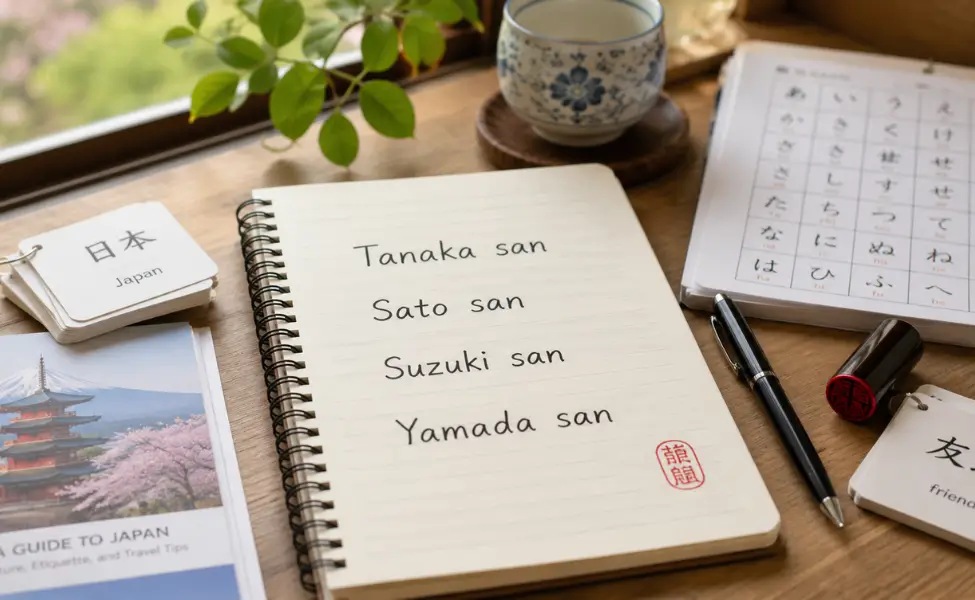
If Someone Gives You a Business Card:
If someone offers you a business card, accept it with both hands.
Take a genuine moment to look at it before placing it carefully on the table or in a card holder.
Pocketing it immediately signals that you did not consider it worth attention.
The name on the card typically places the family name first in Japanese characters.
Treating the card with care matters as much as getting the address right.
Names You Are Likely to Notice on Your Trip
Japan has around 100,000 distinct surnames, but a small number appear so often that recognising them helps you spot the family name quickly.
You will encounter the following names on name tags, booking forms, and introductions throughout your travels.
- Sato is Japan’s most common surname, with approximately 2 million people bearing it. Seeing it on a hotel receipt, a name tag, or a booking confirmation is entirely ordinary.
- Suzuki is the second most common. Its roots trace to the Kumano region of Wakayama Prefecture and ritual rice harvest offerings. The name spread eastward over centuries and is today most prevalent in Tokyo and the surrounding prefectures.
- Takahashi combines the characters for tall and bridge, giving it the literal meaning of high bridge. It is the third most common surname and entirely ordinary in daily Japanese life despite sounding distinctive in English.
- Tanaka combines rice paddy and middle, reflecting Japan’s agricultural past, and appears consistently across the country.
- Yamada pairs mountain and rice paddy, a combination typical of the landscape-based naming patterns common throughout Japan.
A common surname carries no reliable information about a person’s status, personality, or background.
Sato is Japan’s equivalent of Smith in English, widespread and everyday, and there is nothing useful to read into it beyond the name itself.
The Misunderstandings That Catch Visitors Out
A few patterns come up again and again among first-time visitors, and most are easy to sidestep once you know they exist.
Assuming friendliness means first names are welcome.
Japanese communication can feel genuinely warm and personal while remaining formally polite.
A tour leader who laughs easily or a receptionist who remembers your preferences is not signalling that first names are now appropriate.
Warmth and formality sit comfortably together in Japan in a way that surprises many Western visitors, and the family name plus san remains appropriate throughout.
Expecting Western name order everywhere
Many travel apps, English-language booking systems, and overseas media still reverse Japanese names.
Checking whether you are looking at a Japanese source or an English-formatted one before deciding which name is the family name saves real confusion.
When the source is Japanese, the first name listed is almost certainly the family name.
Feeling that san is too stiff or performative
Visitors sometimes hold back from using san because it feels like making a show of politeness rather than simply being themselves.
San does not feel that way to Japanese speakers, and everyday use of it is not a theatrical gesture.
Reaching for it naturally is far more comfortable for everyone than avoiding it out of self-consciousness.
Prioritising pronunciation over address.
Many visitors spend anxious energy worrying about how to say a name perfectly, and less on whether to use the family name at all.
Japanese people in hospitality and service roles do not expect perfect pronunciation from foreign visitors.
A careful, respectful attempt is what registers as considerate.
Asking gently whether you got the pronunciation right is entirely natural.
What If You Are Not Sure Which Name Is the Family Name
This happens, and it is not a problem.
A few simple approaches will get you through it without any awkwardness.
The clearest signal is often how the person introduces themselves.
In Japanese introductions, the family name comes first, so the first name you hear or see is usually the one to use with san.
If the introduction is in English and you genuinely cannot tell, the next most reliable option is to look at any name tag or printed material and use the name displayed most prominently.
When neither of those resolves it, asking is always the right move.
A simple “What should I call you?” is warm and direct, and Japanese people in hospitality and tourism settings are entirely accustomed to it.
No one will think less of a visitor who asks politely rather than guesses badly.
The question itself shows consideration, which is the quality that matters far more than getting every detail right on the first attempt.
If you are in a group and others have already addressed the person by name, pay attention to how they do it.
That gives you a quiet, natural cue without requiring any explanation.
The Habit That Actually Makes a Difference
The visitors who feel most at ease with Japanese names are rarely the ones who studied hardest.
They are the ones who picked up one clear habit before they left home and trusted it consistently.
Family name, then san.
Accept any invitation to use a given name when it arrives.
Return to the family name and san when it does not.
That single habit handles almost everything you will face across hotels, tours, restaurants, and introductions throughout your trip.
What Japanese people notice is not whether your pronunciation is perfect or your knowledge of naming history is comprehensive.
They notice whether you made an effort to be respectful, and the family name plus san is exactly that effort made visible.
A Tanaka-san said with a genuine attempt sounds better than a perfectly pronounced given name used too soon.
Save that one rule before your trip.
Use it when you check in, when you meet your tour leader, over a meal, when a host welcomes you.
You will not need to think about it twice after the first time.
Frequently Asked Questions
You are not required to use san, but doing so makes a genuinely positive impression. It signals that you paid attention to how Japanese address works, and it removes any risk of accidentally sounding too casual with someone you have just met. The effort costs nothing and goes a long way.
Using a first name too early can feel overfamiliar, even if the conversation is friendly. Japanese people generally reserve first names for close relationships, and a warm tone does not automatically mean first names are welcome. Staying with the family name and san is the safe default unless someone specifically invites you to do otherwise.
Use their family name with san. If your guide introduces themselves as Hayashi Kenji, Hayashi-san is the right address throughout the day. Some guides who work regularly with English-speaking visitors will offer a first name or nickname themselves, and that invitation is worth accepting when it comes.
In Japan, yes. The family name comes before the given name in standard Japanese usage. That order applies in schools, offices, introductions, and official documents. English-language materials sometimes reverse the order to match Western conventions, which is where the confusion for visitors tends to start.
San is a polite title added to someone’s name, roughly equivalent to Mr, Mrs, or Ms in English. It carries no gender, requires no particular formality level, and works across almost any social setting. The key point for visitors is that san is only ever added to other people’s names, never your own.
Many do, particularly in international or tourist-facing contexts, presenting their given name first to match Western expectations. That habit is gradually changing as Japan moves toward keeping the family name first even in English materials. If you are unsure which name is which, asking “What should I call you?” is always appropriate.
Not at all. Japanese people in hotels, tour contexts, restaurants, and shops are entirely comfortable hearing san used by foreign visitors. It sounds respectful rather than awkward, and the small effort it represents tends to be noticed positively. There is no need to hold back from using it out of worry that it will come across as forced.
It varies depending on the platform. Japanese booking systems typically record names in Japanese order, family name first. International platforms often reverse the order. If your name appears differently from how you wrote it, that is a formatting difference rather than an error, and hotel staff are accustomed to it.
