
Japanese supermarkets are cheaper than convenience stores, better for real meals, and far easier to use than most tourists expect. Once you know a few basics, you’ll wonder why you ever paid conbini prices. Most visitors to Japan discover the discount sticker system entirely by accident.
They wander into a supermarket around 7:30 PM looking for something cheap to eat, spot a bright yellow sticker on a bento box, and realise they’ve just found one of the best-value meals in the country. If you learn nothing else from this article, learn that.
What to Expect in a Japanese Grocery Store
Japanese supermarkets are cheaper than convenience stores, better for real meals, and far easier to use than most tourists expect.
Once you know a few basics, you’ll wonder why you ever paid conbini prices.
The Layout
Japanese supermarkets follow a consistent layout.
Once you’ve been in two or three of them, you’ll feel at home in almost any one across the country.
Produce sits right at the entrance, so you’ll pass beautifully arranged seasonal fruit and vegetables the moment you step through the door.
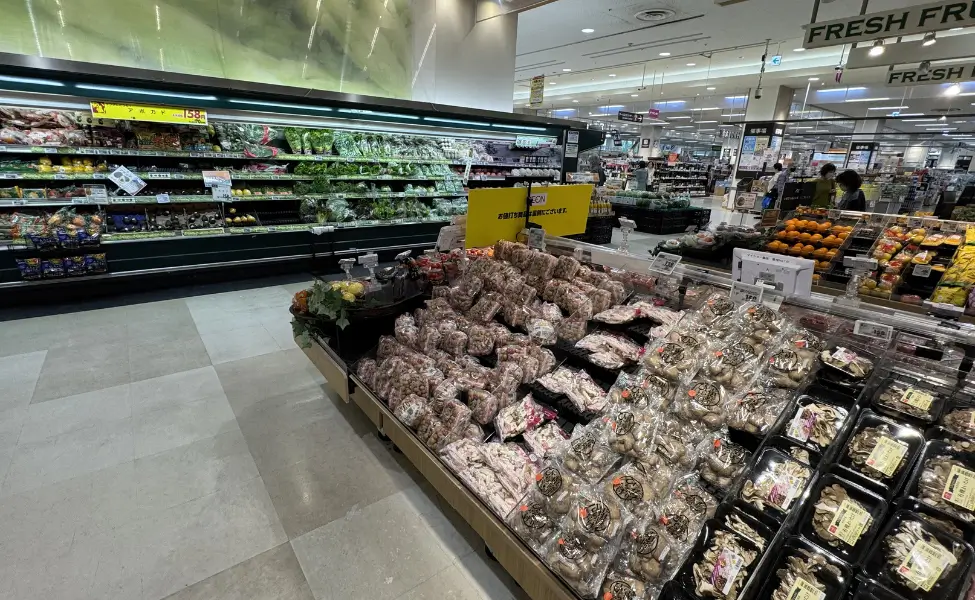
From there, the store moves into fish and seafood.
This section is far more prominent than anything you’d find in a Western supermarket.
Whole fresh fish, sashimi-grade cuts, shellfish, and prepared seafood are all considered standard daily stock.
After the seafood comes meat, then dry goods and pantry staples.
But it’s the back of the store that most visitors overlook completely.
That’s where you’ll find the 惣菜 (souzai) section, packed with hot and cold ready-to-eat dishes, freshly made bentos, sushi trays, and seasonal prepared food.
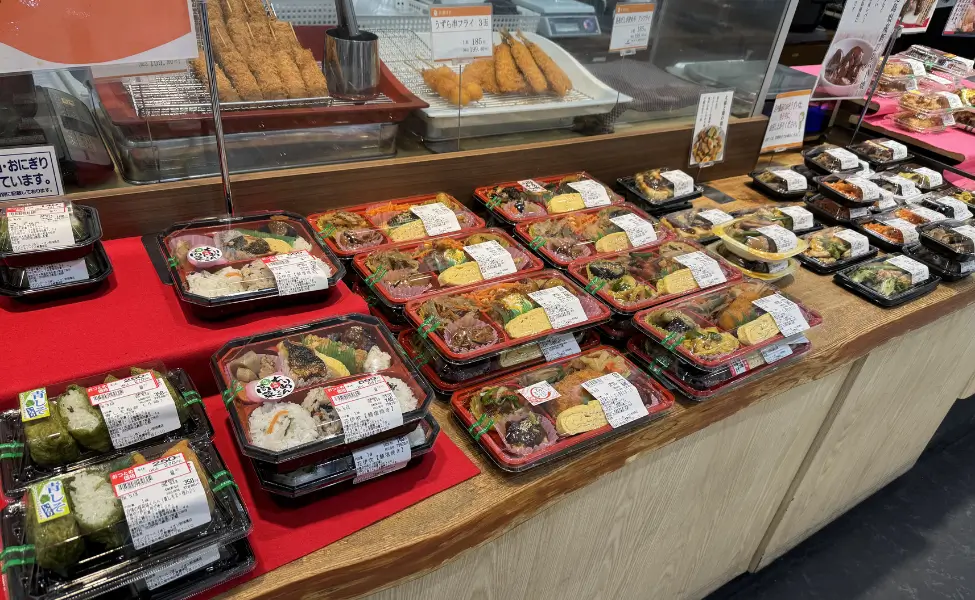
It’s genuinely one of the best-value sections in any Japanese supermarket and worth spending proper time in.
The Discount Sticker System (How to Eat Cheap)
This is the section that turns a regular supermarket run into something worth planning your evening around.
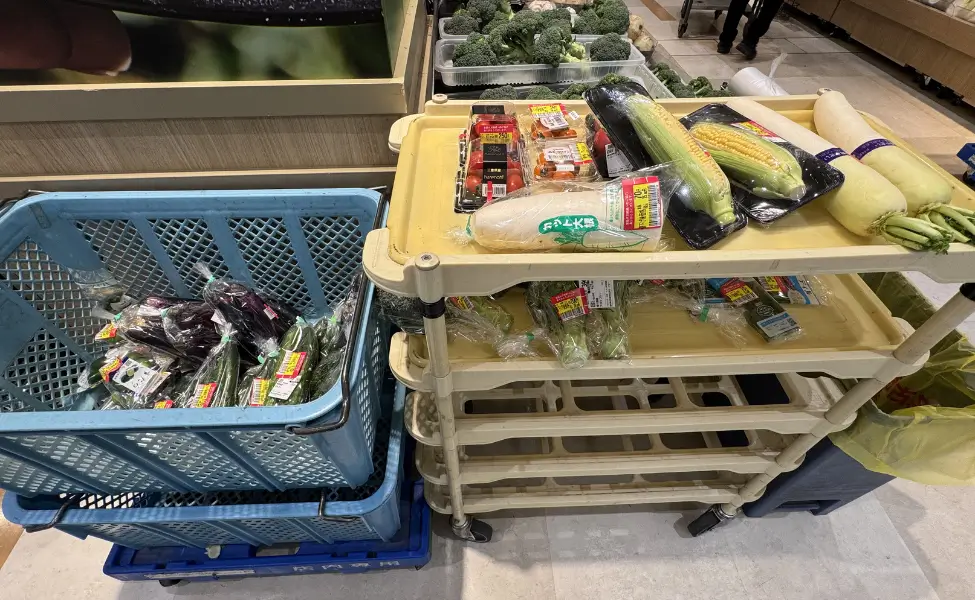
And once you’re in the habit, you’ll use it on every trip.
Japanese supermarkets apply discount stickers to perishable items that need to be sold the same day. There are two key terms worth knowing.
| Japanese Term | Kanji | What It Means |
|---|---|---|
| Waribiki | 割引 | A percentage discount, typically 10%, 20%, or 30% off |
| Hangaku | 半額 | Half price, a full 50% off |
Hangaku is the one you’re hoping to spot.
Half-price stickers on sashimi, bento boxes, and premium prepared food represent remarkable value, and plenty of long-term residents in Japan plan their evenings specifically around catching them.
When Do the Stickers Appear?
Discount stickers generally start appearing between 7:00 PM and 8:00 PM, though this varies slightly by store.
The first wave tends to be the smaller percentage discounts.
Deeper markdowns follow as closing time approaches.
Arriving around 7:30 PM tends to be the sweet spot if you want a decent selection.
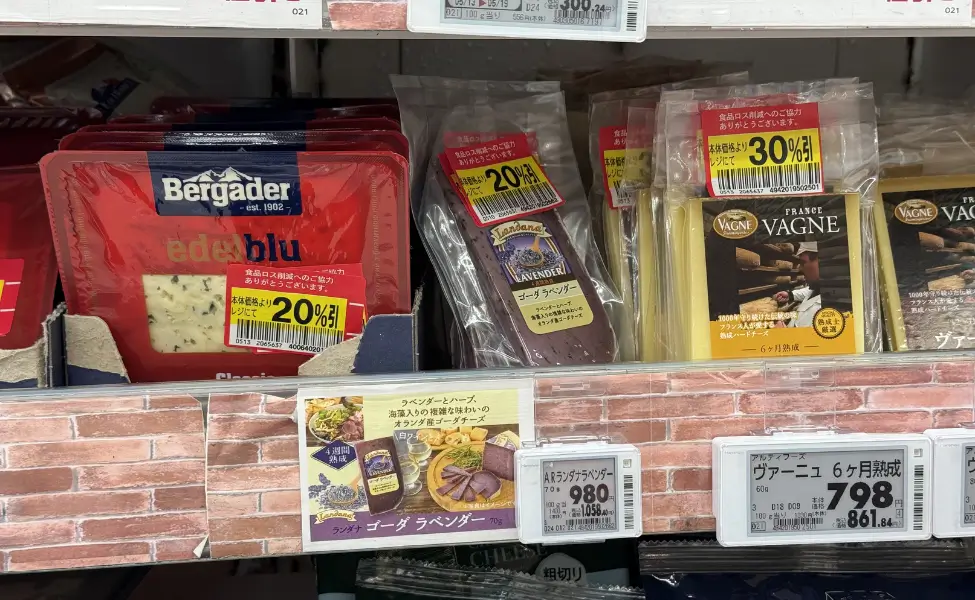
But if you want the absolute cheapest price and don’t mind limited choice, go in the last thirty minutes before closing.
Just be prepared for fairly bare shelves by that point.
What Gets Discounted?
- Sashimi and fresh sushi trays
- Bento boxes and onigiri
- Bakery items approaching their sell-by date
- Hot and cold souzai dishes
- Premium prepared seafood
Finding a hangaku sticker on decent sashimi and eating it back at your hotel is one of the cheapest and most satisfying meals you can have in Japan.
It’s completely normal behaviour here, and I’d encourage you to make it a habit.
High-End vs. Budget Supermarkets in Japan
Not all Japanese supermarkets are the same, and choosing the wrong one for your needs wastes both time and money.
Here’s the simplest way to think about it.
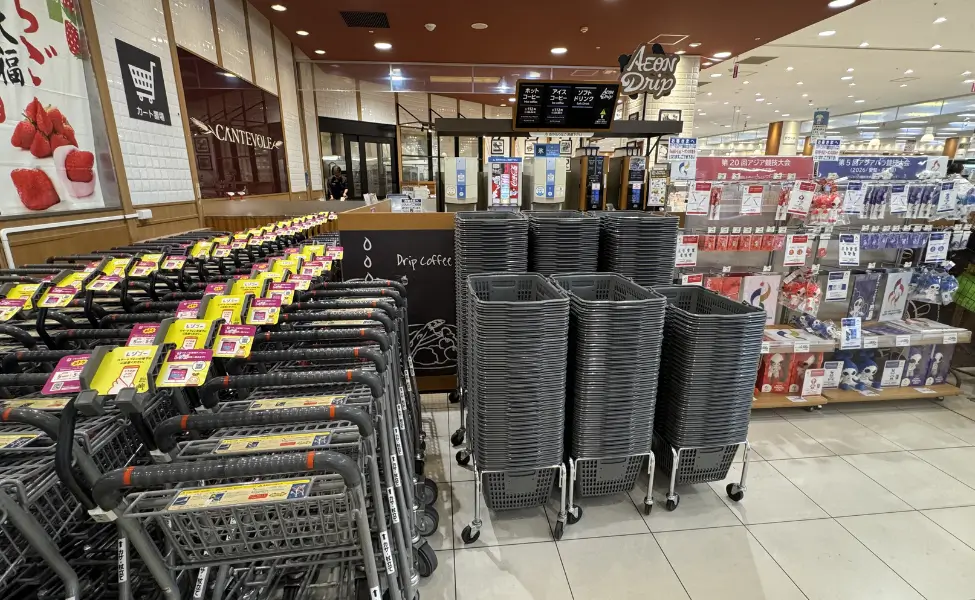
For most visitors, start with Aeon or Ito-Yokado. These are the everyday mid-range chains where prices are fair, produce is consistent, and the souzai section reliably delivers. They’re also the stores where the discount sticker system runs most predictably.
Use Seijo Ishii, Kinokuniya, or Meidi-Ya if you want imported food, nicer wine, cheese, or quality food souvenirs. These stores aren’t designed for budget shopping, but they carry things you won’t find elsewhere, and they’re genuinely enjoyable to browse.
Head to Gyomu Super, OK Store, or Mega Donki if low prices are the priority. Gyomu Super imports directly and sells in bulk, with prices that are genuinely hard to beat. OK Store operates mainly in the greater Tokyo area and is known among residents as the go-to for rock-bottom prices without sacrificing quality.
Don Quijote is simultaneously a discount store, novelty shop, pharmacy, and supermarket all crammed into one building, and the grocery section at larger Mega Donki locations tends to be strong on snacks and drinks.

| Store Type | Examples | Best For |
|---|---|---|
| High-end and import | Seijo Ishii, Kinokuniya, Meidi-Ya | Imported food, specialty items, souvenirs |
| Standard everyday | Aeon, Ito-Yokado, Life, Summit | Daily shopping, fresh produce, souzai |
| Budget and discount | Gyomu Super, OK Store, Don Quijote | Low prices, bulk buying, snacks |
How to Checkout at a Japanese Supermarket
Checkout is the moment that causes the most anxiety for many visitors, and that’s understandable.
The process has become less standardised in recent years, and what you encounter can vary quite a bit from one store to the next.
Types of Checkout
Staffed checkout is still common in older or smaller supermarkets. A cashier scans everything and you pay directly at the register. It’s the most straightforward option and the easiest to navigate.
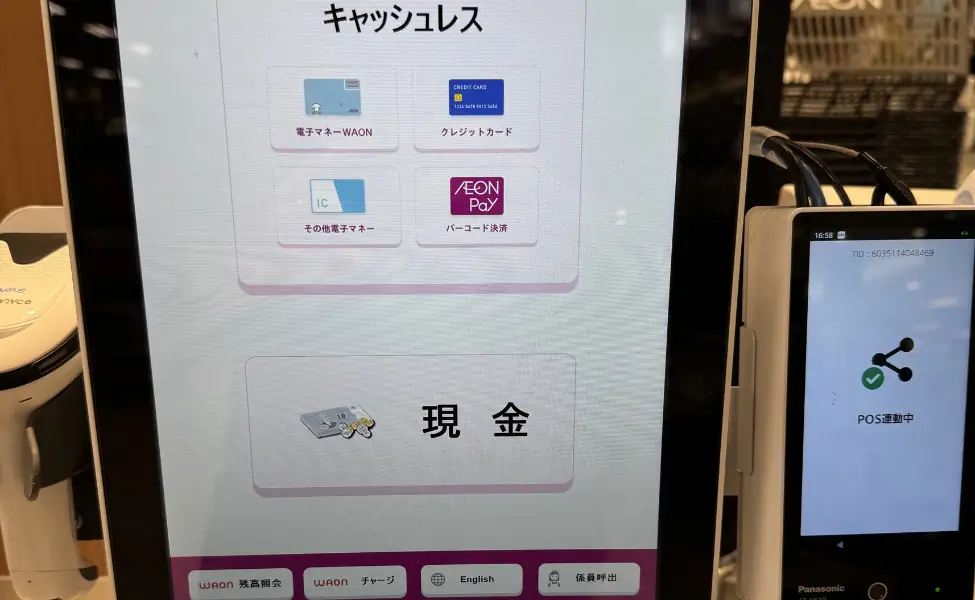
Split checkout is increasingly common across mid-size chains. A cashier scans your items but directs you to a separate payment machine at the end of the counter. You follow the on-screen prompts, pay by card or cash, and collect your receipt. It sounds more complicated than it actually is.
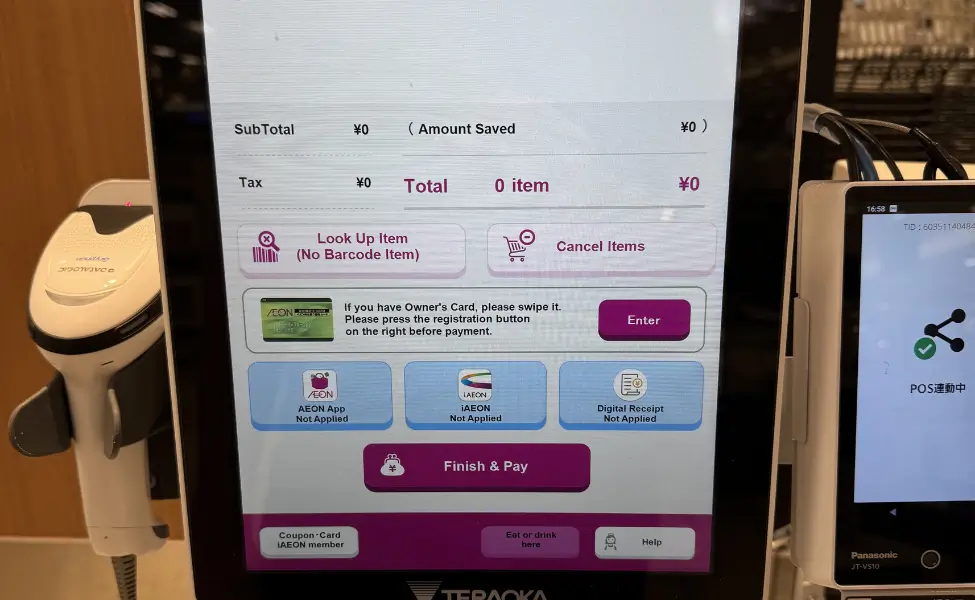
Full self-checkout is now available in most larger Aeon and Ito-Yokado stores. You scan and pay for everything yourself. These machines often have an English-language option, which you can activate by looking for the language toggle or flag icon on the screen.
Plastic Bags
Japan made plastic bag charges mandatory in July 2020, and all supermarkets now charge 3 to 5 yen per bag.
At checkout, the cashier will ask “Fukuro wa irimasu ka?” which means “Do you need a bag?” Saying “Hai” gets you one for a small fee. Saying “Irimasen” means you’re declining.
Many shoppers carry a reusable tote, and you’ll find attractive, inexpensive ones sold near the checkout in most stores.
Picking one up on your first visit is worth doing if you plan to shop more than once.
Chopsticks and Spoons
This catches people out more often than you’d expect.
Unlike convenience stores, where chopsticks or a spoon are often popped in your bag automatically, Japanese supermarkets don’t include utensils unless you ask.
If you’re buying a bento, a sushi tray, or any prepared dish and you need chopsticks, you need to request them at the register.
Holding up your food and miming eating works every time and requires no Japanese at all.
Or try saying “O-hashi wa arimasu ka?” which means “Do you have chopsticks?” Most cashiers will understand immediately.
What to Buy at a Japanese Supermarket if You’re Travelling
These aren’t novelty purchases for the sake of ticking a box.
Each one offers quality or value that’s genuinely difficult to replicate outside Japan.
1. Pre-made Bento Boxes and Souzai
The prepared foods section is arguably the single best reason to choose a supermarket over a convenience store.
A bento from a mid-range chain like Aeon is noticeably better quality than its conbini equivalent.
And the individual souzai dishes, including tamagoyaki, hijiki salad, karaage, simmered vegetables, and gyoza, let you put together a varied and filling meal at very low cost.
Most of these dishes come in packaging that’s easy to eat straight from.
If your hotel room has no microwave, cold souzai and onigiri work perfectly well.
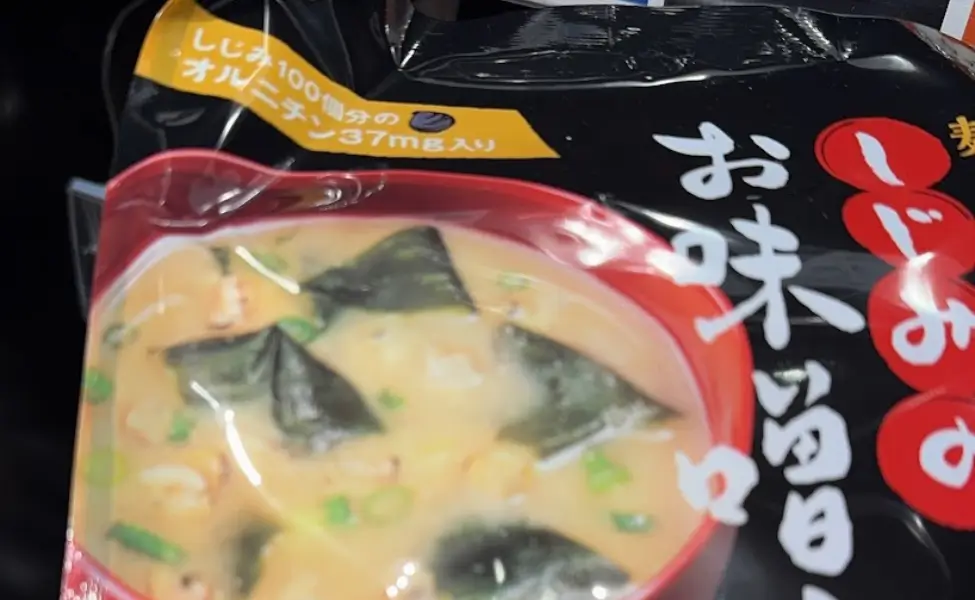
And if all you have is a kettle, instant miso soup from the dry goods aisle pairs well with whatever you’ve picked up from the souzai counter.
Visit during the discount sticker window from around 7:30 PM onwards and the value becomes exceptional.
2. Kit-Kats and Japanese Snacks
Japan’s Kit-Kat range is well known by now, but what’s far less discussed is that the supermarket is consistently the cheapest place to buy them.
Airport shops, Donki, and stores in tourist areas all charge significantly more for the same regional and seasonal varieties sitting in the snack aisle at a regular super.
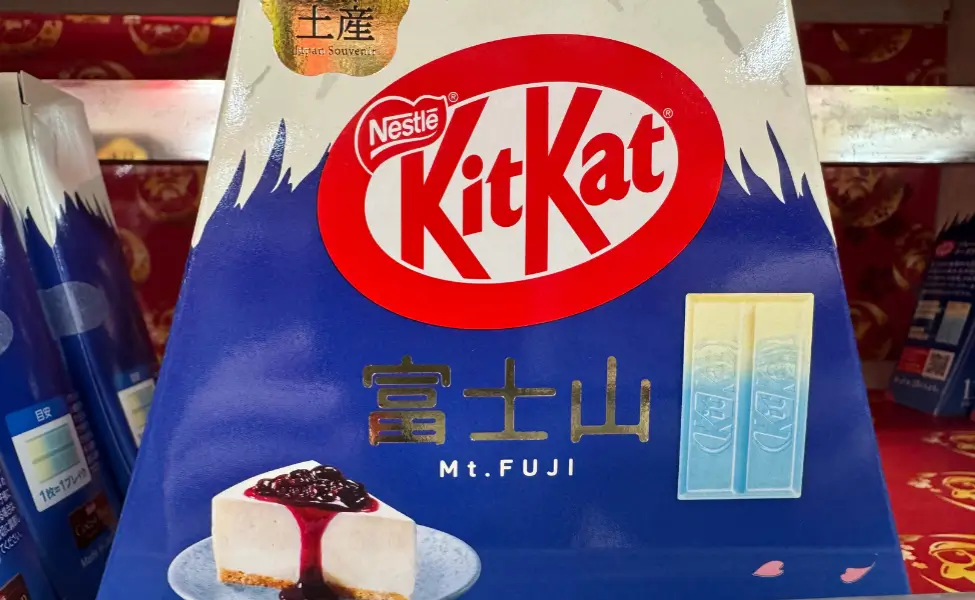
The same logic applies to most Japanese confectionery.
And if you’re planning to take snacks home, buying at the supermarket well before your departure date is the sensible approach.
3. Bottled Green Tea
Japan produces bottled green tea across a wide range of styles, and a two-litre bottle of unsweetened ryokucha or hojicha from a supermarket costs a fraction of what you’d pay for smaller bottles at a vending machine or conbini.
If your accommodation has a fridge, picking up a large bottle on arrival and decanting into a smaller bottle each day is a small habit that saves real money across a longer trip.
Even the budget own-brand versions are genuinely good.
FAQ: Shopping at Japanese Grocery Stores
Most major supermarket chains in cities accept Visa and Mastercard, including many foreign issued cards. Smaller neighbourhood stores, older shops, and some discount supermarkets may still be more cash based, so it is worth carrying a few thousand yen just in case.
Most major supermarket chains in cities accept Visa and Mastercard, including many foreign issued cards. Smaller neighbourhood stores, older shops, and some discount supermarkets may still be more cash based, so it is worth carrying a few thousand yen just in case.
Usually, no. Unlike convenience stores which sometimes have a small seating area, most Japanese supermarkets don’t have eat-in spaces. You’re expected to take your food back to your hotel, accommodation, or a public park to eat. Don’t eat while walking through the store or immediately outside the entrance, as this is considered poor manners in Japan.
Yes, most Japanese supermarkets sell a wide variety of alcohol including beer, chu-hi (canned cocktails), sake, shochu, and wine. The alcohol section is usually located near the drinks or dry goods aisle. Unlike in some countries, there are no restricted hours for buying alcohol in supermarkets, though you’ll need to tap a button on the register screen confirming you’re over 20 years old, which is the legal drinking age in Japan.
Final Words
Japanese supermarkets are one of the easiest ways to save money, eat better, and see a more ordinary side of daily life in Japan.
Once you know how the baskets, stickers, bags, and checkout machines work, they stop feeling confusing very quickly.
