
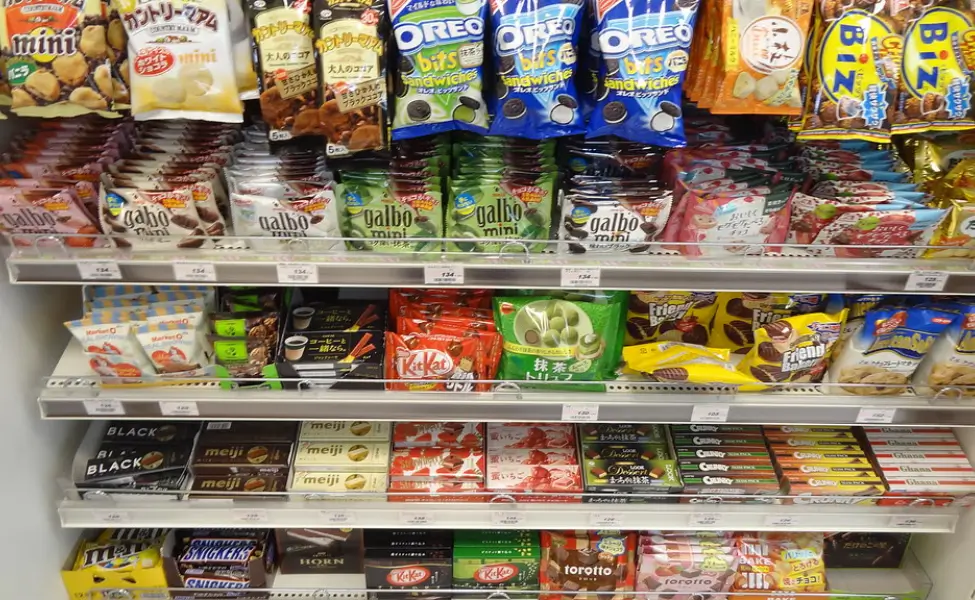
So what’s the deal with Japanese chocolate?
Why does it taste different?
Japanese chocolatiers are obsessive about their ingredients.
They’ll source specific cacao beans, use only Hokkaido dairy (which is famously rich), and control temperatures during production down to the degree.
The chocolate that results has this incredibly smooth texture and a sweetness that never feels overwhelming, whether you’re grabbing a quick snack or treating yourself to something special.
I’m going to walk you through the major brands, show you what’s worth buying, and give you practical tips for shopping whether you’re visiting Japan or ordering from overseas.
Fun fact: The Japanese word for chocolate is chokoreeto (チョコレート), borrowed from English and adapted to Japanese pronunciation.

Understanding Japanese Chocolate Culture
Valentine’s Day in Japan flips the script completely.
Women give chocolate to men, including colleagues, friends, and yes, romantic interests.
A month later on White Day (14 March), men reciprocate with chocolate gifts of their own.
During exam season, students exchange chocolate with encouraging messages written on the packaging.
Manufacturers design special products with blank spaces specifically for these personal notes.
Japanese chocolate generally contains less sugar than American varieties and emphasises subtle flavours over intense sweetness.
Many products incorporate regional ingredients like matcha from Uji, strawberries from Tochigi, or dairy from Hokkaido.
Meiji: Japan’s Chocolate Pioneer
Company Background
Meiji started in 1916 as Tokyo Confectionery Company, launching its first chocolate products in 1918.
The company released Meiji Milk Chocolate in 1926, and this flagship product remains largely unchanged nearly a century later.
Today, Meiji produces approximately 130 different chocolate products, ranging from simple chocolate bars to premium bean-to-bar creations.
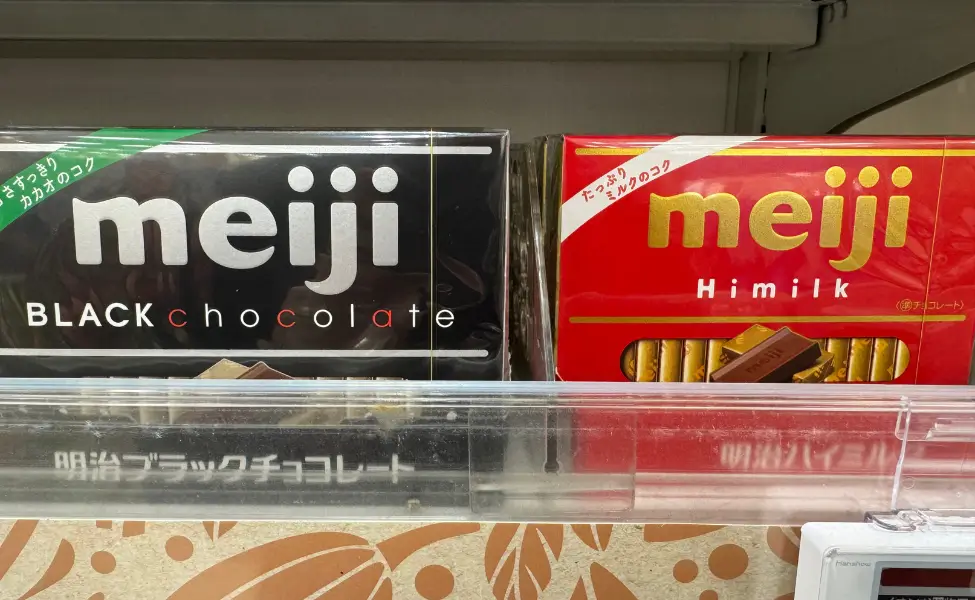
Original Meiji Chocolate Bars
The classic Meiji chocolate bar comes in a distinctive brown cardboard wrapper with gold printing.
Inside, you’ll find smooth milk chocolate with a creamy texture and mellow sweetness.
Available varieties include Hi-Milk chocolate, white chocolate, bitter black chocolate, marble chocolate, and strawberry-filled chocolate.
The milk chocolate remains the most popular, offering a balanced flavour that avoids excessive sweetness.
Meiji THE Chocolate
Launched in September 2016, THE Chocolate represents Meiji’s premium bean-to-bar range.
The product sold 30 million bars in its first year despite costing roughly twice as much as standard chocolate bars.
The packaging stands vertically on shelves, a design choice that made it instantly recognisable among horizontally-displayed competitors.
Each bar is divided into differently shaped pieces with varied patterns, so you get different textures as you work your way through.
The dark chocolate options pack more cacao and have found a following among people who want chocolate they can feel slightly less guilty about eating.
Flavours are determined by cacao bean origin, with options including:
- Sunny Milk
- Brilliant Milk
- Velvet Milk
- Elegant Bitter
- Comfort Bitter
- and Blossom Bitter.
Meiji Meltykiss
You can only get them from October to March.
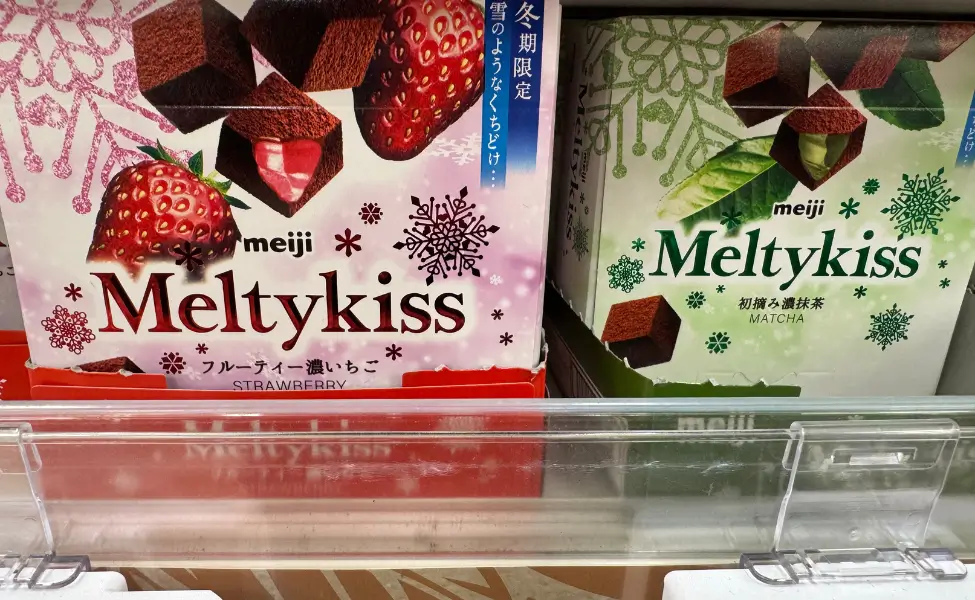
They’re so soft and delicate that they literally can’t survive in temperatures above 23°C.
When you pop one in your mouth, it dissolves almost instantly.
Flavours include dark rum, green tea, fruity strawberry, macadamia chocolate, caramel, creamy raisin, kinako (roasted soybean), and creamy milk.
The seasonal availability makes them popular gifts during winter months.
Popular Meiji Chocolate Snacks
Meiji Almond Chocolate pairs roasted almonds with Meiji’s signature milk chocolate coating.
The small packets make excellent lightweight souvenirs for travellers with luggage restrictions.
Meiji Apollo Strawberry Chocolate features tiny cone-shaped chocolates with fluted sides.
Each piece contains strawberry-flavoured white chocolate cream inside a chocolate shell.
They look almost too cute to eat.
But eat them anyway.
Hello Panda biscuits have a crisp cookie shell with creamy chocolate filling inside.
The panda illustrations printed on each biscuit add to their appeal, particularly with children.
Kinoko no Yama literally translates to “mushroom mountain.”
These biscuits are shaped like mushrooms (or toadstools, depending on your perspective) with chocolate tops and cookie stems.
The combination of textures makes them highly addictive.
Takenoko no Sato, the sister product to Kinoko no Yama, resembles bamboo shoots.

The biscuit base differs slightly from Kinoko no Yama, incorporating eggs and almonds for a richer flavour.
Royce: Hokkaido’s Premium Chocolate Brand
Why Hokkaido Chocolate Stands Out
Royce chocolate is made exclusively in Hokkaido, Japan’s northernmost island.
The region is renowned for rich dairy products, including full-flavoured cheese, creamy milk, and thick butter.
The cool climate and clean air create ideal conditions for chocolate production.
Royce Nama Chocolate
Nama means “raw” or “fresh” in Japanese, and these chocolates deliver exactly that sensation.
The chocolate melts in your mouth instantly, releasing rich, thick flavours.
Words like velvety, silky, and moist accurately describe the experience.
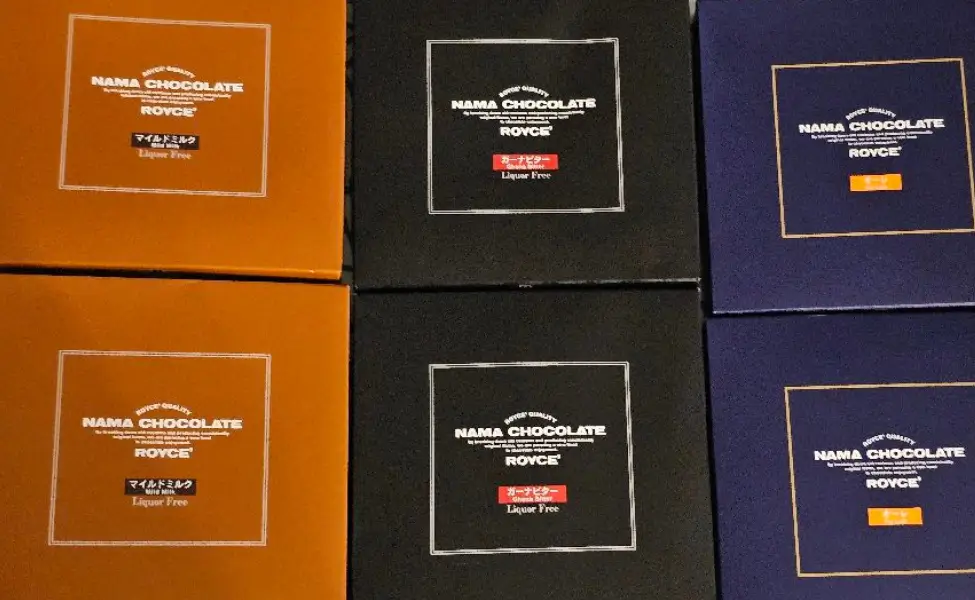
Nama chocolate is produced in limited batches and requires refrigeration.
It’s expensive compared to other Japanese chocolate, but the quality justifies the price.
Royce Matcha Products
Matcha chocolates make unique gifts that combine Japanese tea culture with Western confectionery.
Options include matcha and chocolate-covered almonds, chocolate wafers in matcha flavour, matcha truffles, tiny squares of Nama chocolate in matcha, and boxes of handcrafted matcha pralines.
Where to Buy Royce Chocolate
You’ll find Royce at airports, souvenir shops, and the company’s own retail locations across Hokkaido.
In Tokyo, the best locations are Narita Airport and Haneda Airport, both of which have multiple duty-free outlets.
Most airports in Japan stock Royce chocolates in their duty-free shops.
Morinaga: Classic Japanese Chocolate
Morinaga DARS Chocolate Bars
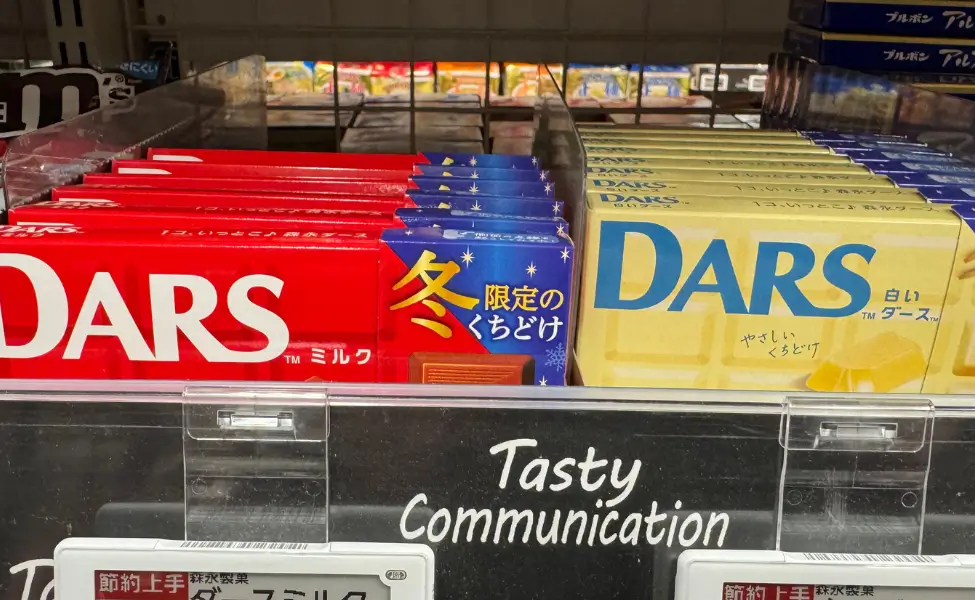
DARS bars come in multiple flavours including:
- milk chocolate
- chocolate rum raisin
- chocolate strawberry
- white chocolate
- raspberry
- white strawberry
- dark bitter chocolate,
- and mint.
The bars are widely available in convenience stores throughout Japan.
Lotte: Korean-Japanese Chocolate Giant
Lotte Ghana Chocolate
Ghana milk chocolate bars have an exceptionally creamy texture.
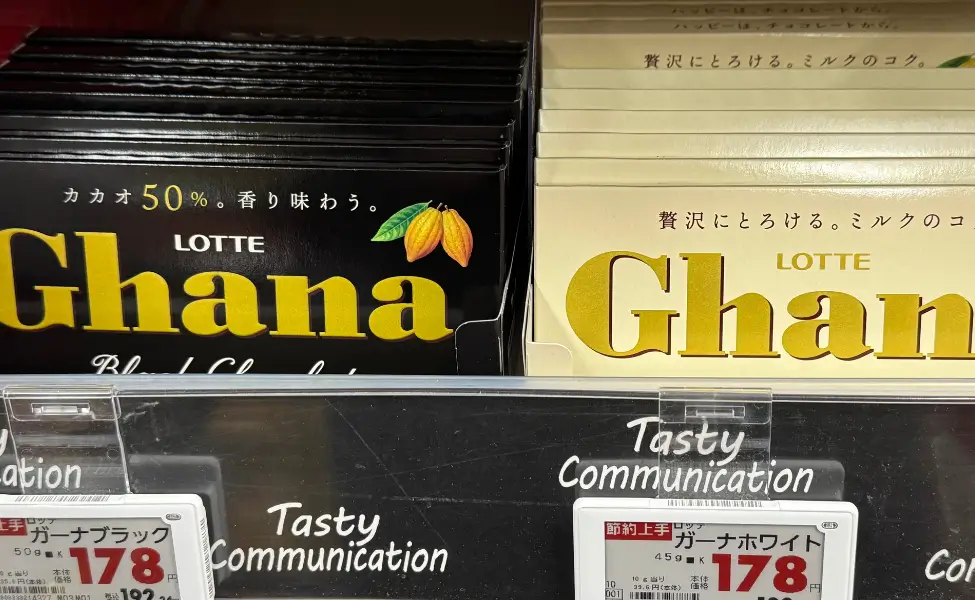
The chocolate tastes rich and full-bodied, as if you can almost hear the cows.
Japanese home cooks frequently use Ghana chocolate in homemade cakes and desserts.
Lotte Crunky Chocolate
First made in September 1974, Crunky chocolate has proven its staying power.
The bar contains puffed wheat that creates a biscuity texture, though the taste differs noticeably from Nestlé Crunch.
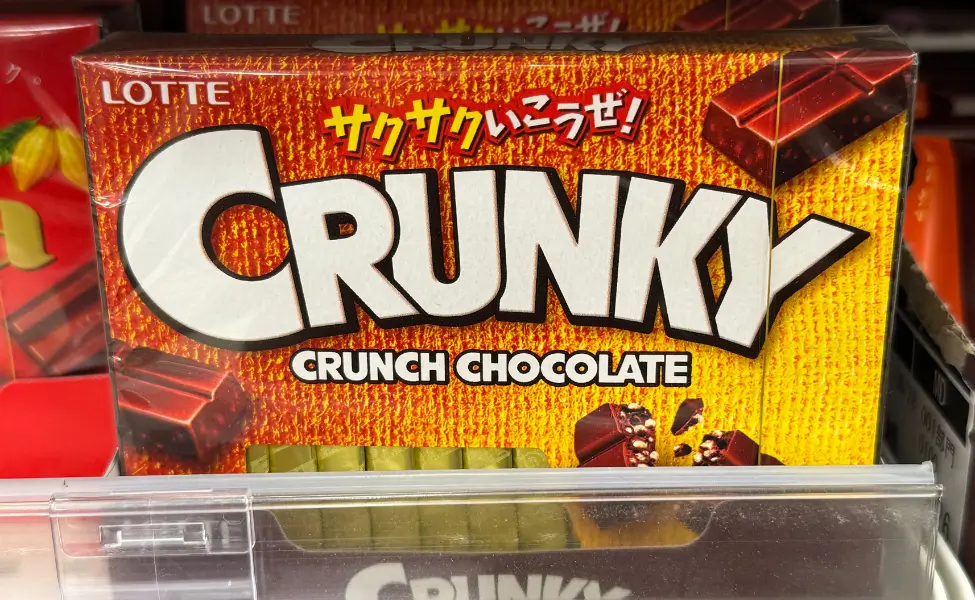
The combination of light, crunchy texture and smooth milk chocolate creates an addictive eating experience.
Crunky ranks among Japan’s favourite chocolate bars for families.
Lotte Crunky Balls deserve special mention.
These spherical chocolates combine the same crunchy texture with a convenient ball shape.
Seasonal flavours like caramel and cereal appear regularly.
If you spot these in a convenience store, grab them immediately.
Lotte Choco Pie
Lotte Choco Pie resembles a wagon wheel with a thick chocolate shell covering soft cake.
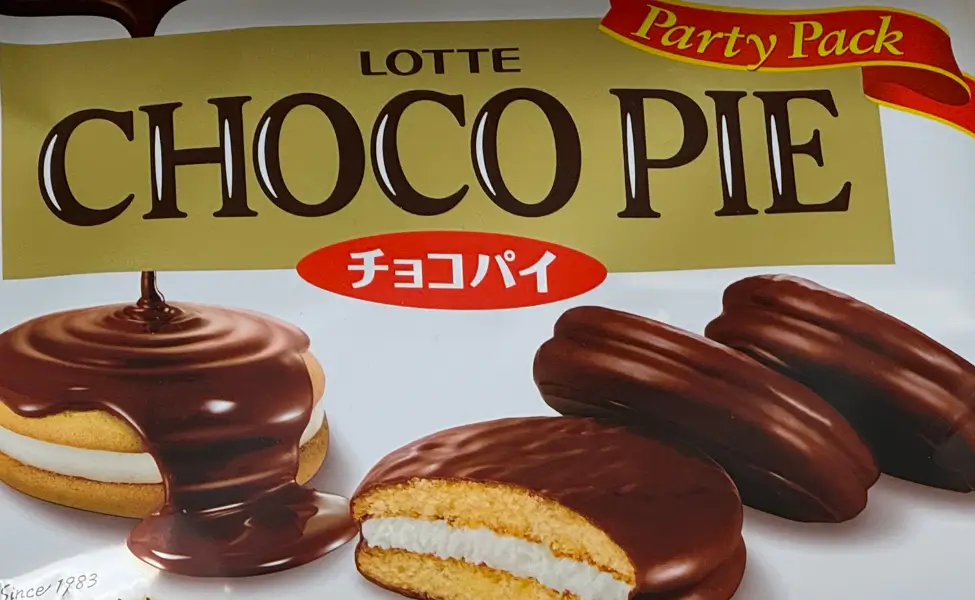
The cream filling inside is the real highlight.
Each bite delivers a satisfying combination of chocolate, cake, and cream that delights children and nostalgic adults alike.
Lotte Toppo and Pai no Mi
Toppo are cream-filled pretzel sticks available in chocolate, strawberry, and matcha flavours.
The filling is contained inside the pretzel rather than coating the outside.
Pai no Mi are miniature flaky pastries filled with chocolate cream.
Think miniature pastries with crispy, flaky layers and chocolate cream tucked inside.
The squirrel mascot on the packaging helps you identify them quickly.
Pocky: The Iconic Chocolate Sticks
Pocky History and Appeal
Made by Glico chocolates, Pocky was released in Japan in 1966.
The sticks deliver creamy chocolate coating over a crisp biscuit base in perfect proportion.
The name comes from the Japanese onomatopoeia “pokkiri,” which mimics the snapping sound the sticks make when eaten.
By coating only part of each stick, Glico created a snack that’s easy to eat without messy fingers.
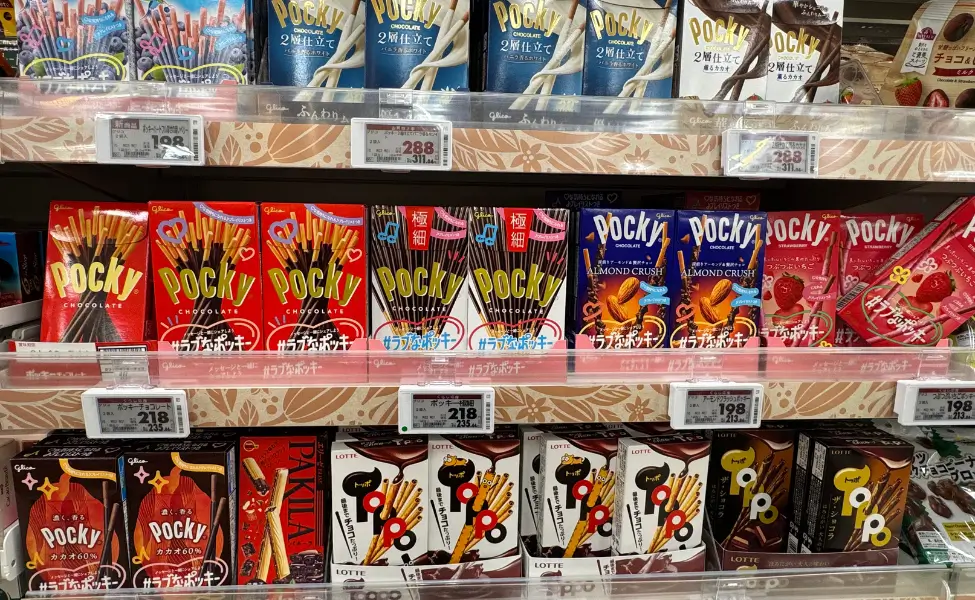
Pocky comes in an enormous range of flavours, making it easy to find varieties you enjoy.
Regular Pocky Flavours
Classic options include:
- rich milk Pocky
- strawberry heartful
- almond crush Pocky
- luxury chocolate Pocky
- matcha green tea Pocky
- strawberry Pocky
- cookies and cream Pocky
- cocoa-powered chocolate sticks
- and chocolate banana Pocky.
You’ll also find fruit-based versions like orange, grape, melon, and cherry, plus regional specialties like Kintoki sweet potato.
Kit Kat: Japan’s Most Famous Chocolate Souvenir
Japanese Kit Kats have become legendary among travellers.
The crunchy chocolate wafer biscuits come in flavours you won’t find anywhere else in the world.
Why are Kit Kats such popular Tokyo souvenirs?
The variety of flavours plays a major role.
Japanese supermarkets, convenience stores, souvenir shops, and duty-free shops all stock multiple Kit Kat varieties.
Nestlé rotates the available Kit Kat flavours throughout the year, releasing limited editions tied to seasons and regions.
Classic Japanese Kit Kat Flavours
Regular options include:
- matcha green tea (the most famous)
- classic chocolate
- raspberry
- adzuki sweet red bean
- sakura matcha latte
- royal milk tea
- dark chocolate
- salt and caramel
- and premium mint.
Unique and Regional Kit Kat Flavours

More adventurous varieties include:
- sakura kinako (cherry blossom and roasted soybean)
- banana
- cantaloupe
- peach
- maple
- sake
- sweet potato
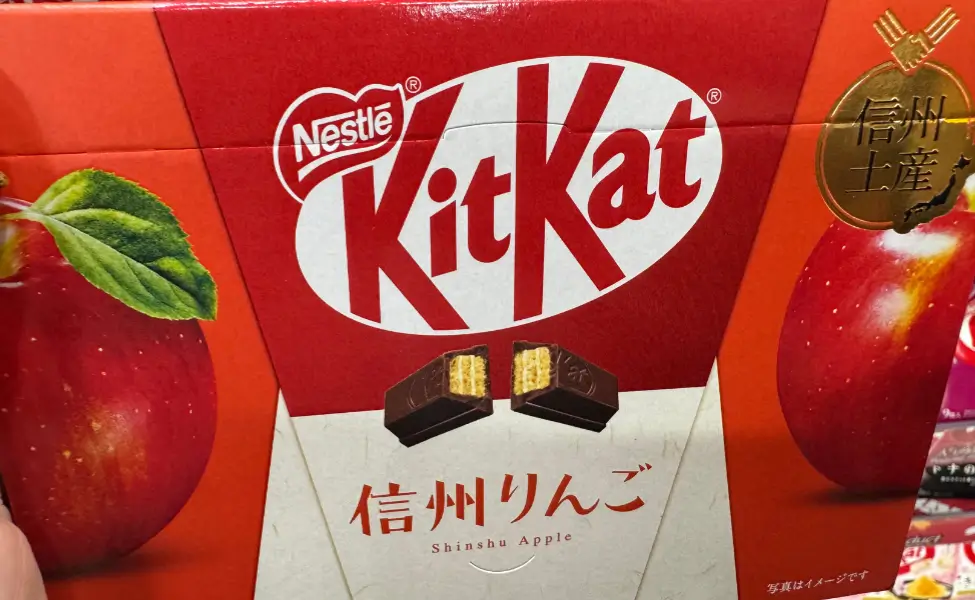
- Shinshu apple
- Hokkaido melon
- wasabi, purple sweet potato, and hojicha (roasted green tea).
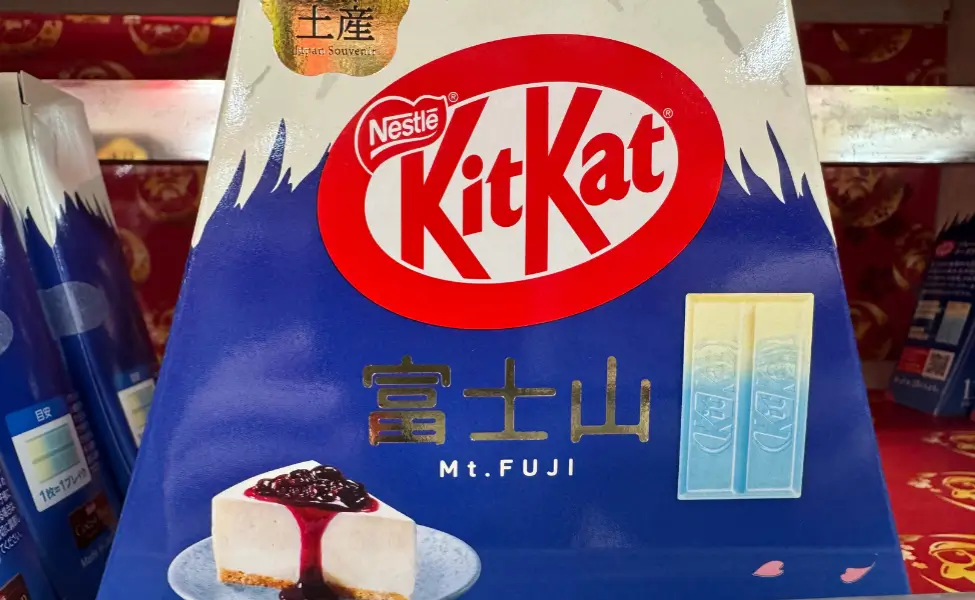
Regional specialties worth seeking out include Mount Fuji blueberry cheesecake, Kyoto matcha, Okinawa brown sugar, Nagoya azuki (red bean sandwich), and Yokohama strawberry cheesecake.
Limited Edition and Seasonal Flavours
Seasonal releases like:
- pumpkin pie
- autumn chestnut
- strawberry cheesecake
- cherry blossom
- Mont Blanc (chestnut cream)
- and Christmas pudding appear for limited periods.
The packaging often features beautiful seasonal designs that make them particularly appealing as gifts.
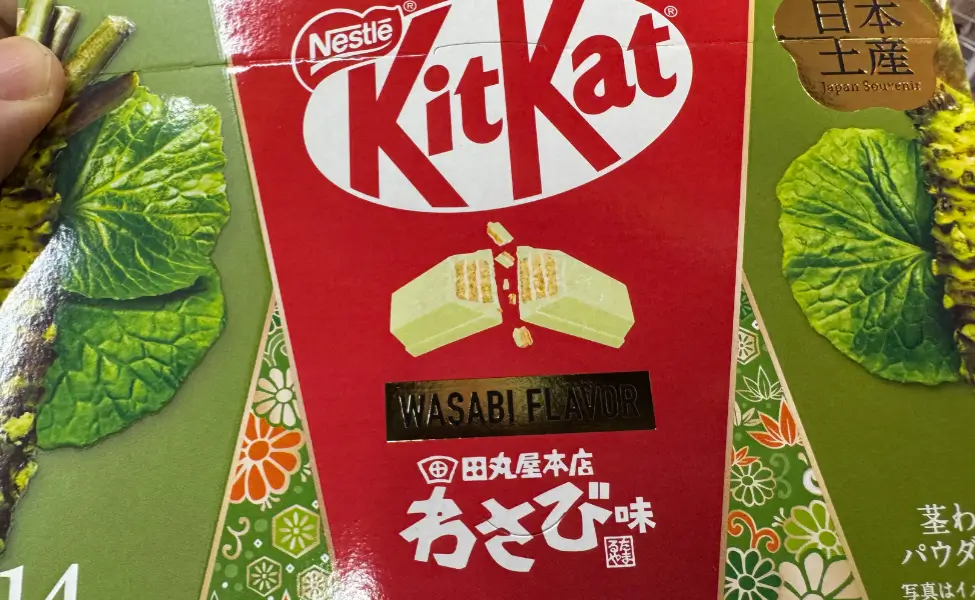
Check Japanese supermarkets to see which flavours are currently available, as the selection rotates frequently throughout the year.
Other Notable Japanese Chocolates
Black Thunder
Black Thunder bars pack cocoa cookie bits and puffed rice into a dark milk chocolate coating.
These bars have built a cult following among Japanese chocolate enthusiasts despite their budget-friendly price.
Alfort
Alfort biscuits are one of those products that seem simple until you try them.
Each biscuit has a ship embossed on top (the brand name comes from a Swedish port), and the chocolate coating is thick enough to matter.
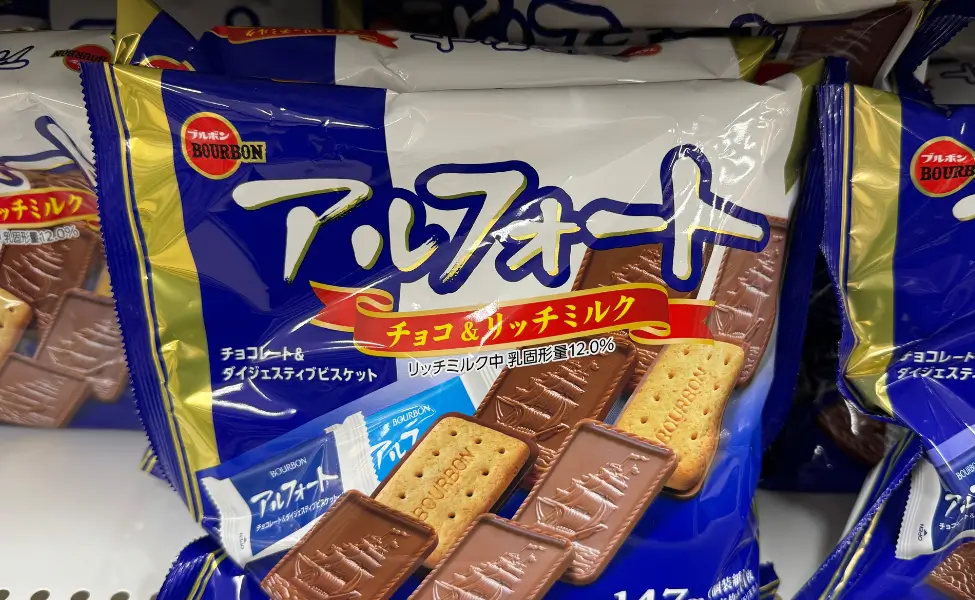
The standard milk chocolate version is the most common, but you’ll also find white chocolate, dark chocolate, and seasonal varieties like matcha or strawberry.
Fujiya Chocolate
Fujiya produces Look chocolate, Peko chocolate, and Peko Poko chocolate sticks, all featuring their signature Peko-chan character.
The cute packaging makes these products popular gifts.
Koala no March Biscuits
These adorable koala-shaped biscuits are filled with sweet cream in vanilla, chocolate, and strawberry flavours.
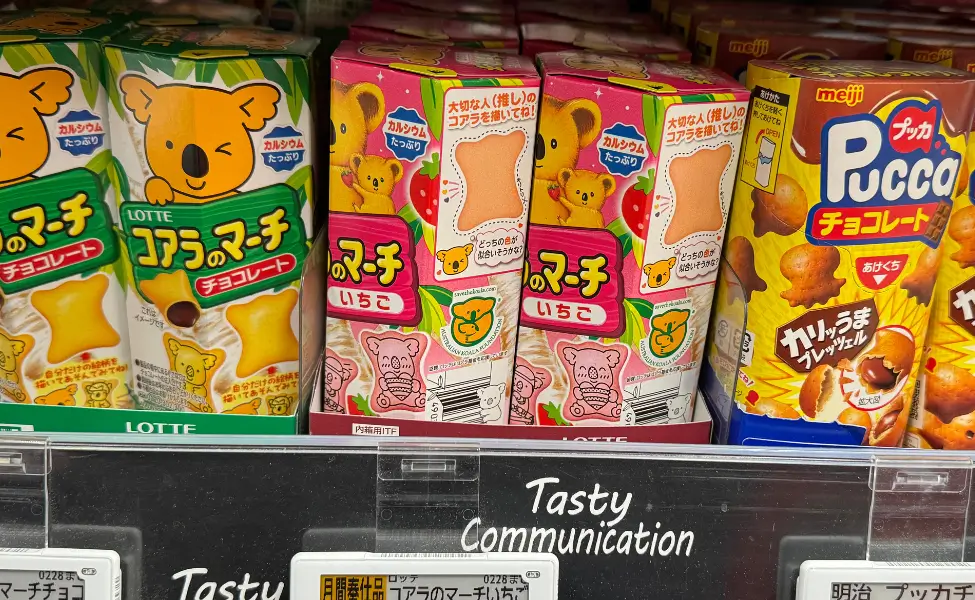
Each biscuit features a different koala illustration, adding to their collectible appeal.
Practical Shopping Guide
Where to Buy Japanese Chocolate in Japan
Japanese Supermarkets offer the best prices on chocolate.
You’ll find the widest variety at the lowest cost.
Major chains include Aeon, Ito Yokado, and Life.
Convenience Stores (konbini) stock popular chocolate brands 24 hours daily.

Prices are slightly higher than supermarkets but the convenience is unmatched.
Major chains include 7-Eleven, Lawson, and FamilyMart.
Department Store Food Halls (depachika) sell premium chocolate brands and beautifully packaged gift sets.
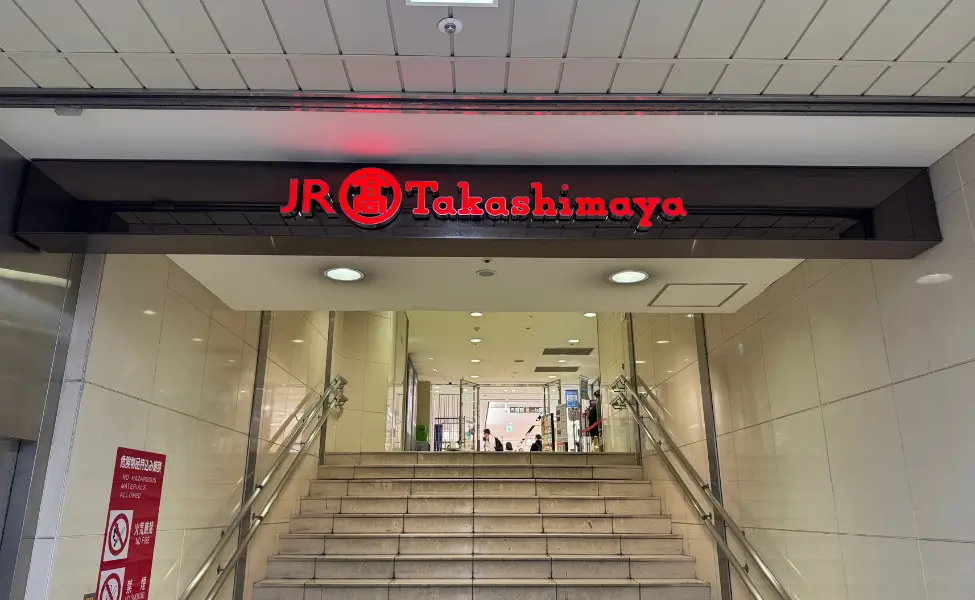
Prices are higher but the presentation is impeccable.
Airport Duty-Free Shops offer tax-free shopping and exclusive products.
Arrive early to browse without rushing.
Souvenir Shops in tourist areas stock chocolate specifically packaged for gifts.
Expect to pay premium prices for the convenience and presentation.
Tax-Free Shopping
If you’re visiting from overseas, look for tax-free shopping signs at stores.
You’ll need your passport and a minimum purchase of 5,000 yen.
Staff will attach documentation to your passport, which customs may check when you depart Japan.
Seasonal Availability
Some chocolates are only available during specific seasons.
Meiji Meltykiss appears from October to March.
Limited edition flavours of Kit Kat, Pocky, and other brands rotate throughout the year.
If you see a flavour you want, buy it immediately as it may disappear by your next visit.
Allergen Information
Most Japanese chocolate contains milk, soy, and wheat.
Matcha-flavoured products may contain traces of caffeine.
Kinoko no Yama and Takenoko no Sato contain eggs and almonds.
Always check ingredient labels if you have allergies, as Japanese chocolate often includes ingredients not found in Western varieties.
Gift-Giving Etiquette
Japanese culture places high importance on gift presentation.
If buying chocolate as gifts, look for products with attractive packaging.
Department stores offer gift-wrapping services.
Individual snack packs work well for distributing multiple small gifts.
Making the Most of Your Chocolate Shopping
Japanese chocolate offers something for everyone, from budget-friendly snacks to premium artisan products.
The key is knowing what to look for and where to shop.
Focus on trying brands and flavours unavailable in your home country.
Don’t hesitate to buy multiples of products you love, as they may be difficult to find again.
Most importantly, enjoy the experience of discovering new favourites in one of the world’s most chocolate-obsessed countries.
