
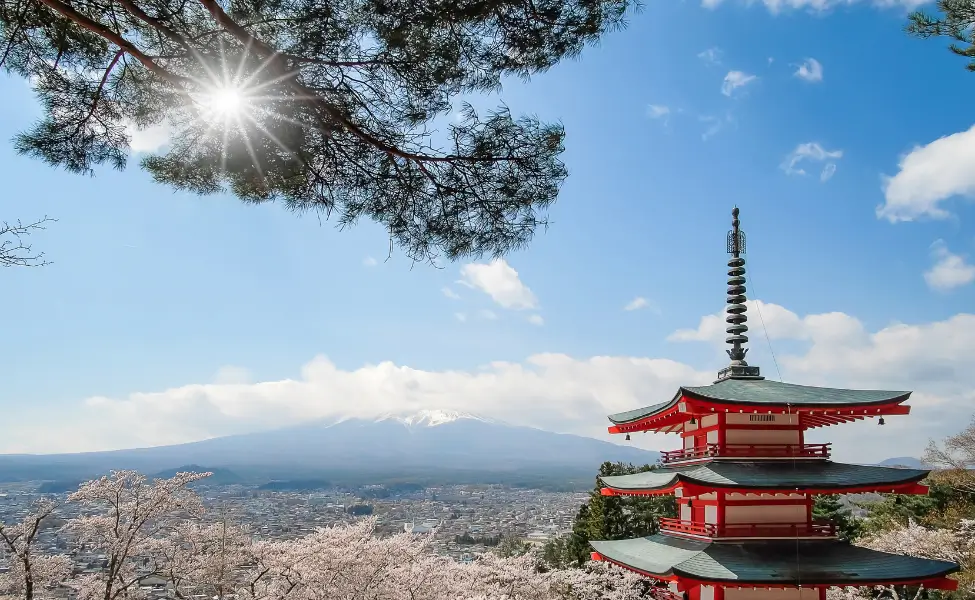
If you are planning a Japan spring trip around the famous Mount Fuji cherry blossom festival, this change could affect everything.
On February 3, 2026, officials in Fujiyoshida announced the cancellation of the cherry blossom festival at Arakurayama Sengen Park.
The decision ended a ten year tradition that had drawn visitors from around the world.
The festival turned into one of the most photographed events in Japan.
People came for the postcard view of the five tiered Chureito Pagoda framed by cherry blossoms with Mount Fuji rising behind it.
Would you still plan your trip the same way knowing the festival is gone?

Why the Festival Was Cancelled
Fujiyoshida has a population of under fifty thousand people.
During peak cherry blossom season, the observation deck at Arakurayama Sengen Park received up to ten thousand visitors per day.
Over the full season, the festival attracted roughly two hundred thousand people.
Those numbers seem manageable at first. The reality for local residents was far more difficult.
Complaints increased each year.
Residents reported trespassing on private property, littering, and visitors entering residential gardens while searching for better camera angles.
In some cases, confrontations followed when locals asked people to leave.
Emergency vehicles struggled to move through streets blocked by tour buses and private cars.
Parents worried about their children walking to school through dense crowds.
Mayor Shigeru Horiuchi explained the decision clearly.
For Fujiyoshida City, Mount Fuji is not just a tourist attraction.

It is part of everyday life.
The festival has officially ended.
What This Means for Visitors in 2026
So what does this actually mean for your plans this spring?
Arakurayama Sengen Park remains open.
The cherry blossoms will still bloom and Mount Fuji will still dominate the skyline.
What has disappeared is the organised festival itself.
There will be no food stalls, no performances, and no official tourism promotion.
City authorities added security staff and portable toilets to handle the crowds they still expect.

During previous festival years, queues at the observation deck stretched up to three hours.
Similar wait times are still possible in 2026.
Peak bloom in Fujiyoshida is forecast between April 8 and April 15.
The higher elevation means blossoms arrive later than in Tokyo or Kyoto.
That timing can work in your favour if you plan to move north after the main city blooms.
That shift opens the door to better options nearby.
Cherry Blossom Alternatives Near Mount Fuji
What if the better experience is no longer the famous one?
Lake Kawaguchiko North Shore
This area offers one of the best Mount Fuji views without the Arakurayama congestion.
Cherry trees line the lakeside path, with Fuji reflected in the water on clear mornings.

The Kawaguchiko Sakura Festival continues in 2026.
Food stalls and evening illuminations are still part of the experience.
Peak bloom is forecast from April 7 to April 13.
Ubuyagasaki Peninsula and the Music Forest area offer the strongest views.
Arrive early or stay for evening illuminations.
Renting a bicycle from Kawaguchiko Station helps you avoid road congestion.
Oshino Hakkai
Oshino Hakkai is a UNESCO World Heritage site known for eight clear spring ponds fed by Mount Fuji snowmelt.
Traditional thatched roof houses surround the area.
Around six hundred cherry trees line a four hundred metre stretch of the Shinnasho River.
The best photography spot is Omiya Bridge near Oshino Sengen Shrine.
Bloom usually peaks a few days after Kawaguchiko, making it a strong follow up stop.
Local kusa dango grilled on site is a spring staple worth trying.
Saiko Iyashi no Sato Nenba
This reconstructed village on the western shore of Lake Saiko receives far fewer visitors than Kawaguchiko.

Over twenty thatched roof houses sit beneath weeping cherry trees that bloom slightly later than standard varieties.
From the upper part of the village, you can frame rooftops, blossoms, and Mount Fuji in a single shot.
Fuji Omuro Sengen Shrine
One of the oldest shrines connected to Mount Fuji, this site offers a quieter atmosphere and far fewer crowds.
A stone lined approach passes beneath cherry trees with clear views of the mountain. For photographers, fewer people mean fewer interruptions.
The shrine sits about fifteen minutes by car from Kawaguchiko Station.
Fuji Shibazakura Festival
This is not a cherry blossom event, but it is worth noting.

From mid April to late May, over eight hundred thousand moss phlox flowers bloom at the base of Mount Fuji. Pink, white, and purple fields stretch across the landscape.
The festival continues in 2026 and draws fewer visitors than Arakurayama ever did.
Skipping Mount Fuji Altogether
Overtourism at Mount Fuji reflects a wider pattern across Japan.
If you prefer to avoid congestion entirely, several destinations still offer exceptional cherry blossom experiences.
Hirosaki in Aomori Prefecture features over two thousand five hundred trees surrounding a historic castle.
Peak bloom arrives in late April.

Hanamiyama Park in Fukushima combines rugged hillsides with mixed blossom varieties.
The scenery feels natural rather than manicured.
Kawazu in Shizuoka blooms early, often in late January or February, with deep pink blossoms lining the river.
Hokkaido offers late season blooms from late April into May.
Moerenuma Park in Sapporo is a standout location.
Practical Planning Notes for 2026
Several details are important to know before finalising your plans.
Bloom in 2026 is forecast earlier than average due to warmer spring temperatures.
Tokyo and Nagoya may reach first bloom around March 19 or 20, with full bloom near March 26 or 27. Kyoto and Osaka are expected to peak around March 31.
Fujiyoshida blooms later due to elevation, making it a natural second stop.
Book accommodation at least three months in advance.
Demand remains high and the weak yen continues to attract record visitor numbers.
In the Mount Fuji area, use the Fujikyuko Line rather than driving.
Roads around the Fuji Five Lakes are not designed for heavy private traffic.
If you want the Chureito Pagoda view, arrive very early in mid April and expect a wait.
Visiting With Awareness
The Mount Fuji cherry blossom festival cancellation signals a broader shift across Japan.
Kyoto has introduced access restrictions in some districts.
Mount Fuji now has hiking caps and entrance fees.
Fujiyoshida has cancelled its most famous annual event.
These places stay accessible only when visitors act with basic awareness.
Stay on marked paths and carry rubbish with you.
Use public transport when possible.
Remember that daily life continues around the places you visit.
Japan offers cherry blossoms from Okinawa in January to Hokkaido in May.
Many of the best locations remain calm, beautiful, and welcoming.
That is something worth appreciating.
