

Walk into almost any Japanese home and you’ll spot an ofuda.
These are small paper or wooden tablets tucked above doorways, sitting on kitchen shelves, or displayed in little household shrines.
And they’re doing something most visitors never realize: protecting the family from harm.
For over a thousand years, these sacred charms have been spiritual bodyguards in Japanese homes. They’re not decorations or cultural curiosities.
To millions of Japanese people, ofuda are direct connections to powerful deities who watch over their daily lives.
Quick Answer: What is an Ofuda
- Definition A sacred paper or wooden talisman issued by Shinto shrines and Buddhist temples.
- Purpose Protects the household from harm, wards off bad luck, and invites spiritual protection.
- Placement Usually placed in a home shrine (kamidana) or high on a north or west facing wall.
An ofuda (お札) is a sacred paper or wooden talisman issued by Japanese Shinto shrines and Buddhist temples to protect a household from harm.
Families place these charms in home shrines (kamidana) or high on walls to ward off bad luck, prevent illness, and invite spiritual protection from deities.
The Spiritual Meaning Behind the Charm
While they might look like simple paper tags to visitors, ofuda represent a direct connection to powerful deities.
Families place these charms in home shrines (kamidana) or high on walls to actively ward off bad luck, prevent illness, and invite spiritual protection into their daily lives.
What Makes Ofuda Special
An ofuda looks simple enough.
Usually just a strip of paper with Japanese characters written on it.
But inside that humble appearance lies something profound.
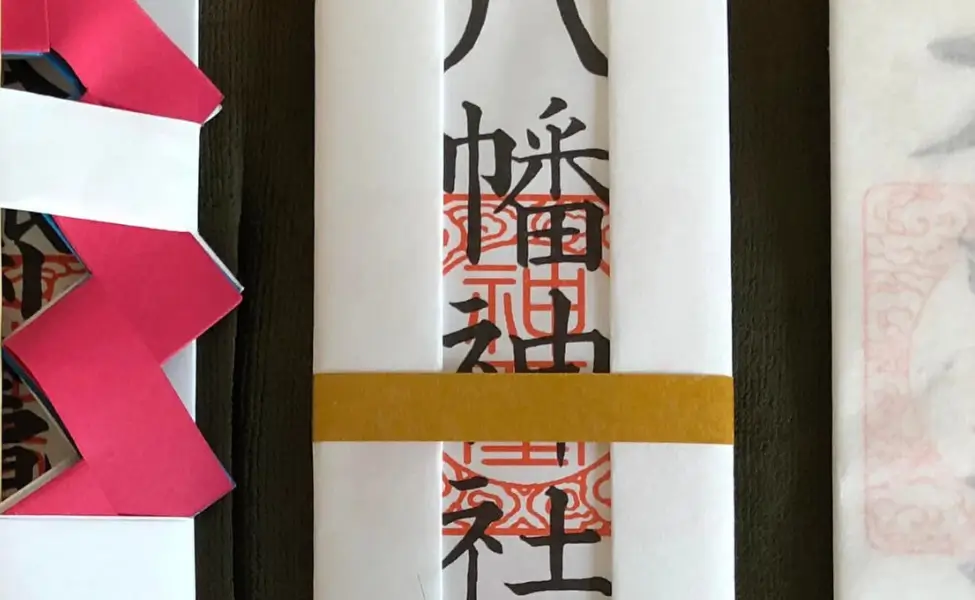
Each one is blessed at a Shinto shrine or Buddhist temple.
Believers see this as carrying real spiritual power from gods and protective spirits.
I’ve watched Japanese friends treat these charms with genuine reverence.
They bow before placing new ones in their kamidana (home shrines).
They make daily offerings of rice, salt, and water.
When the year ends, they carefully wrap the old ofuda and return them to shrines for ceremonial burning.
This isn’t superstition or tradition for tradition’s sake.
In Japan, the spiritual world sits right alongside the practical one.
You might see an one protecting a modern apartment kitchen or a tech company’s office space.
The ancient and contemporary exist together without contradiction.
The Different Types You’ll See
Paper ofuda are everywhere.
Thin sheets with printed prayers and deity names, often wrapped in translucent paper to keep them clean.
These kamifuda represent most of what you’ll encounter in homes and businesses.
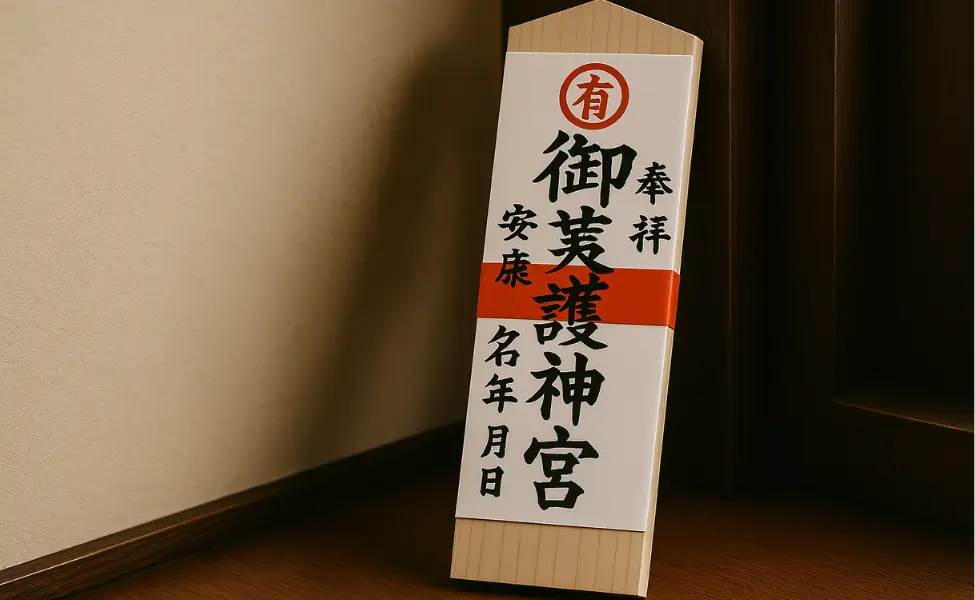
Wooden ofuda feel more substantial.
They look like small rectangles.
The famous ones from Ise Shrine have real cedar wood slivers wrapped in printed paper.

These carry extra weight because they connect directly to Amaterasu, the sun goddess and most important deity in Shinto.
Buddhist temples make their own versions featuring bodhisattvas and Buddhist protective figures.
They cost less than elaborate statues but offer the same spiritual benefits to believers.
How Japanese Families Actually Use Them
The placement matters more than you might think.
Most families put ofuda in kamidana or stick them high on north or west-facing walls.
If someone lives in the apartment above, they write the kanji for “cloud” on the ceiling above the charm.
This prevents the upstairs neighbor from accidentally stepping over sacred space.
Daily care involves simple offerings.
Fresh rice, a pinch of salt, clean water.
Nothing elaborate, but the consistency shows respect.
Japanese people don’t treat ofuda like lucky charms you rub for good fortune.
They’re more like honored guests in the home who deserve regular acknowledgment.
The yearly replacement ritual fascinates me every time I watch it.
Families approach their kamidana with clean clothes and washed hands.
They bow twice, clap twice, thank the kami for protection, and carefully remove the old ofuda.
The new one goes in with gratitude, and the old one gets returned to a shrine for proper burning during New Year ceremonies.
Getting Your Own Ofuda
You don’t buy ofuda like souvenirs.
You receive them by making donations at shrines, usually between 1500 and 3000 yen depending on the type.
The shrine office staff will explain what each one does and how to care for it properly.
Local shrines provide ofuda connected to regional kami, and many people also get ones from shrines they personally admire or have visited.
Some shrines now offer postal services for people who can’t visit in person.
You fill out forms, send donations through secure bank transfers, and receive your ofuda by mail with care instructions.
Different Protection for Different Needs
General household protection covers the basics.
Family safety, protection from illness, warding off bad luck and negative spiritual influences.
But ofuda get much more specific than that.
Business owners get ofuda for commercial success and customer safety.
Students pick up academic achievement charms before major exams.
Travelers buy protection for safe journeys. New mothers seek charms for healthy children and easy childbirth.
People in yakudoshi (unlucky years based on age and gender) often get special yakunan ofuda for extra protection.
Many modern, educated Japanese people still take these precautions seriously.
Ofuda vs Omamori
Tourists often confuse ofuda with omamori, those small fabric pouches sold at shrines.
The difference is practical.
Ofuda stay in your home or workplace providing stationary protection.
Omamori travel with you in pockets, purses, or cars for mobile protection.
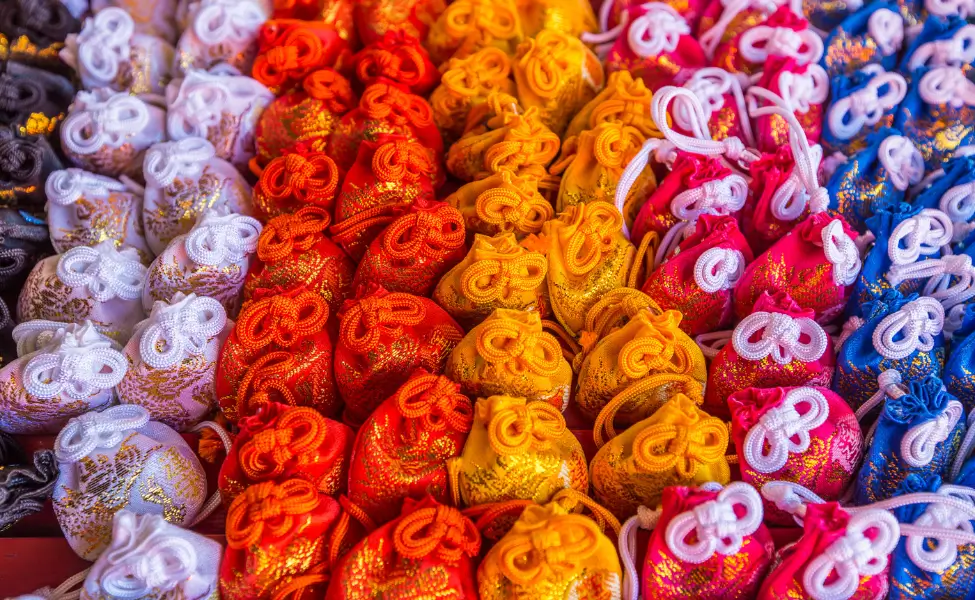
Ofuda show their writing and imagery openly.
Omamori hide their sacred contents inside decorative fabric pouches that you should never open.
Both get replaced yearly and returned to shrines for ceremonial disposal.
Setting Up at Home
You need a kamidana shelf and at least one ofuda to start.
The ofuda contains the kami’s spirit, making it the essential element.
Place your kamidana on a high, clean shelf facing north or west.
Daily offerings of rice, salt, and water keep the spiritual connection active.
Keep the area spotless and treat it with genuine respect.
This isn’t interior decoration or cultural cosplay.
You’re creating sacred space that practicing Japanese people consider spiritually active and meaningful.
Respect Without Appropriation
Living in Japan for nearly three decades, I’ve seen how ofuda function in real families.
They’re not unusual artifacts or conversation pieces.
They represent living faith traditions that millions of people practice daily.
To understand Japan deeply, look at ofuda.
They reveal how spirituality influences daily life.
The key is approaching them with the same seriousness you’d show any religious practice.
Know the right etiquette, use traditional care methods, and respect the faith tradition you’re part of.
Start by visiting legitimate shrines if possible.
The experience of receiving an ofuda properly teaches respect that reading about it cannot.
Focus on cleanliness and gratitude in your daily life.
These core Shinto values you can practice anywhere, and they prepare you for deeper understanding.
The Real Meaning
Ofuda represent something bigger than individual protection charms.
They show how Japanese culture integrates spiritual and practical life without conflict.
Ancient beliefs adapt to modern circumstances while maintaining their essential power and meaning.
Whether you share these beliefs or not, understanding ofuda helps you see Japan more clearly.
They’re windows into a worldview where spiritual forces influence daily life.
Respect for these unseen powers shapes how people act.
