
Japan’s foreigner fatigue is a real problem
Recently, the country has seen the atmosphere has shift, quietly but unmistakably.
Where Japanese society once regarded foreigners with curiosity and goodwill, it now directs a growing list of grievances at them.
Overcrowded public spaces, deteriorating manners, noise, congestion, the sense that something precious is slipping away.
When people need somewhere to point their frustration, they increasingly point it at the gaijin.
Some of that frustration makes sense.
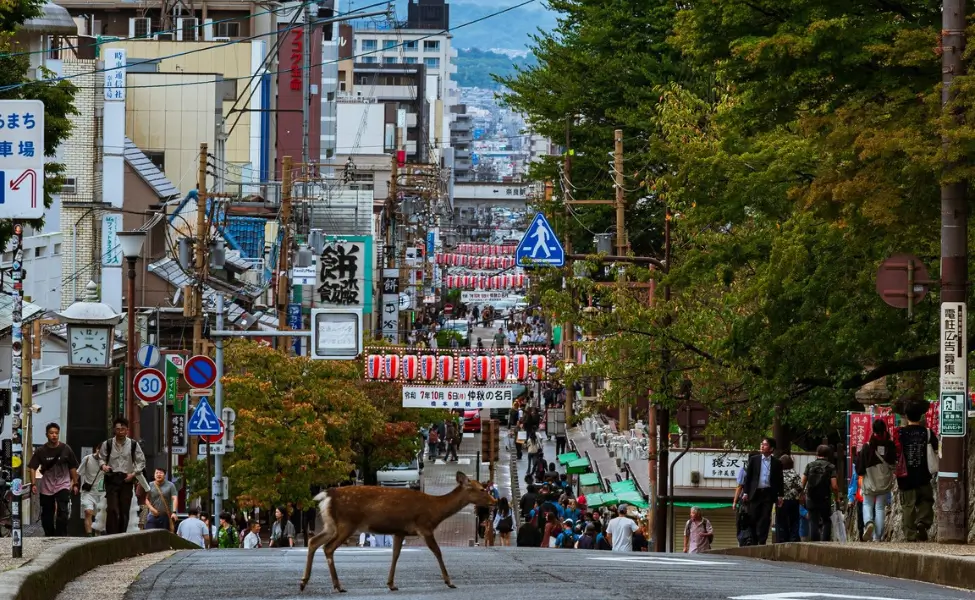
Mass tourism has created real and visible pressure.
But the direction that frustration is taking raises a question worth sitting with.
Why are people who have spent decades building their lives in Japan carrying the same blame as someone who stepped off a plane at Narita last Tuesday?
Trace it back far enough and the answer becomes clear.
Japan created this situation deliberately.
The crowds did not simply materialise.
Japan invited them.
The Strategy Behind the Boom
In the early 2000s, Japan’s leadership was confronting a demographic outlook that offered little comfort.
An ageing population, emptying rural towns, and an economy that had spent more than a decade struggling to find momentum.
Tourism presented itself as a relatively clean solution.
Visitors inject money into hotels, restaurants, and local economies, then leave.
They do not require healthcare infrastructure, pension contributions, or long-term social investment.
As government strategies go, it appeared to offer economic reward without political complexity.
Japan didn’t wait to be discovered
What followed was a sustained, coordinated effort to position Japan as a global destination.
Investment in international marketing, the cultivation of soft power through food, design, anime, and traditional culture, the deliberate construction of a global image that proved extraordinarily effective.

The world did not stumble upon Japan.
Japan went out and found the world.
The numbers reflect how well it worked.
From a standing start as a relatively closed-off destination,
Japan climbed to receive roughly 40 million international visitors a year.
Government targets now point toward 60 million by 2030, a figure that would have seemed fantastical to anyone watching even 25 years ago.
The Benefits Were Real, But So Were the Limits
The strategy was not without genuine merit.
Regions that had been losing population and economic vitality for years found new reasons for outside interest.
Craft industries, local food cultures, traditional performing arts, all of them benefited from an influx of visitors who were curious rather than dismissive.
Japan’s international reputation reached a kind of peak, with the country consistently associated abroad with safety, civility, and cultural depth.
For communities that had been quietly declining, tourism provided breathing room that other policies had failed to deliver.
When scale becomes the problem
The flaw in the thinking, however, was an assumption that the benefits could keep scaling without the costs doing the same.
At a certain volume, tourism stops being an injection of energy into a place and starts being a force that reshapes it, whether residents want that or not.
In Kyoto, neighbourhoods that evolved over centuries for people who actually live in them are now navigated daily by crowds with no stake in their character or continuity.

Rubbish, noise, and the sheer physical density of bodies in narrow streets have pushed some residents from irritation into something closer to despair.
The same pattern appears in smaller cities and towns, where a single viral photograph can transform a quiet corner of everyday life into an impromptu attraction overnight, with no warning and no preparation.
The mathematics of millions
Even if the vast majority of visitors behave perfectly well, a tiny fraction of poor behaviour spread across tens of millions of arrivals still produces a large absolute number of incidents.

That much is simple arithmetic.
The problem is what happens to those incidents next.
When bad behaviour becomes content
Social media has turned isolated tourist misconduct into a reliable content category.
Clickbait pages, many of them running the same incident across multiple accounts to maximise reach, have discovered that foreigner misbehaviour in Japan generates strong engagement.
The same story gets reposted, reshared, and recycled until it feels less like a single event and more like a pattern.
Outrage travels faster than context, and nuance rarely survives the comment section.
What makes this particularly damaging is the audience it reaches.
The people reacting most loudly to these posts are often people who have never been to Japan, or who visited once briefly.
They are forming their picture of daily life in Japan entirely through a feed that is algorithmically incentivised to show them the worst of it.
That picture then feeds back into broader social attitudes, shaping how Japanese people who consume the same content think about foreigners as a category.
The tourists, the students, the workers, the person who has lived here for decades, all of them collapse into the same image that a clickbait page decided was worth posting for the fourth time that week.
The Injustice of the Broad Brush
This is where the situation tips from complicated into genuinely unfair.
Someone who has spent decades in Japan, navigating the same bureaucratic processes, paying the same taxes, shopping at the same local businesses, and participating in the same community rhythms as any Japanese neighbour, bears almost no resemblance to a short-stay visitor causing inconvenience.

The tourist’s disruption is temporary.
The long-term resident absorbs the atmospheric change that follows, even though they played no part in producing it.
Tighter rules, wrong targets
Japan has not been passive about responding to public pressure.
Visa procedures have tightened, restrictions have multiplied, and the administrative experience of being a foreigner in Japan has grown more demanding.
The reliable consequence of tighter rules, here as anywhere, is that people already making every effort to comply find life harder, while those with no intention of complying find ways around the new barriers.
A contradiction that isn’t going away
The deeper problem is structural and shows no sign of resolving itself.
Japan’s economy cannot afford to step back from either tourism or foreign labour.
The domestic workforce is contracting.
Whole industries depend on workers from overseas to function.
Tourism revenue is woven into regional economies that have no obvious substitute.
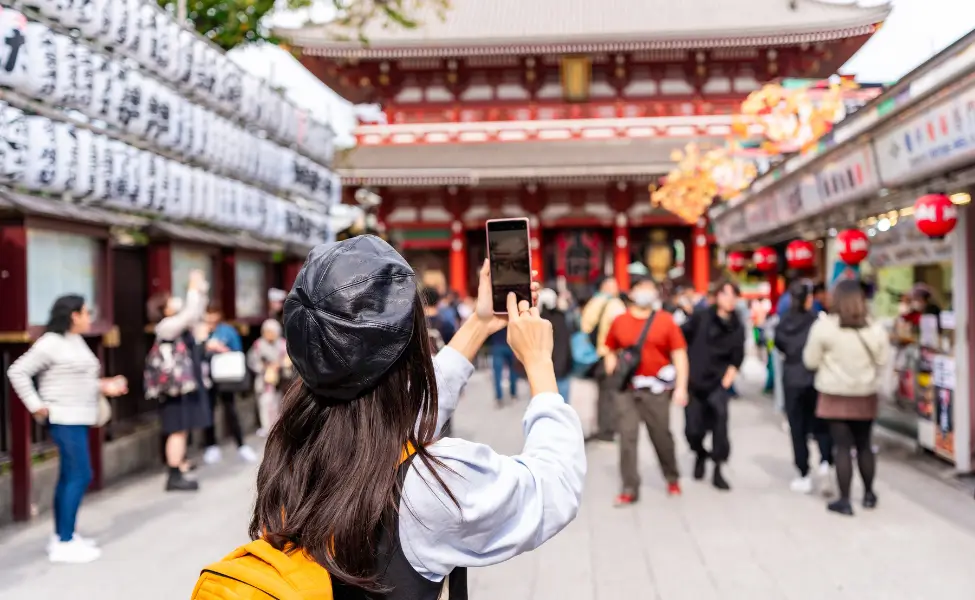
The political mood may be cooling toward foreigners, but the economic logic points firmly in the opposite direction, and economic necessity has a way of outlasting emotional discomfort.
The people who stayed
Japan built something genuinely impressive over the past two decades.
But the social friction that achievement produced is now being distributed unevenly, landing on people who had nothing to do with generating it.
The distinction between someone passing through and someone who has made a permanent life here is not a minor detail.
Once that distinction gets lost in the noise, and there are real signs it is being lost, the people who pay the price are rarely the ones who caused the problem.
They are simply the ones who stayed.
