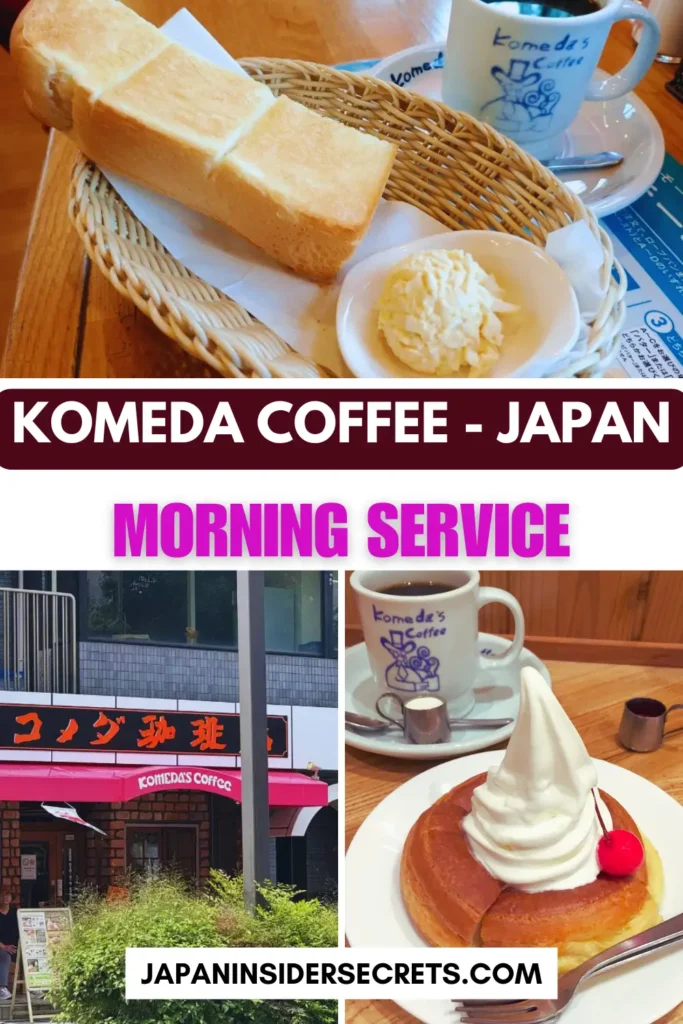
Go into Komeda coffee and order a drink before 11AM, and the staff will ask if you want morning service. Say yes, and your drink comes with a free side, usually toast or a soft bread roll, plus a topping such as boiled egg, egg paste or ogura-an, the sweet red bean paste Nagoya is known for. Nothing extra shows up on the bill.
This is morning service, a custom that started in cafés around Nagoya and Aichi decades ago. KOMEDA’s has since carried it to more than a thousand branches across the country. The custom itself began about a decade before KOMEDA’s opened, and Nagoya still treats it as an everyday habit, not something dressed up for visitors.

What You Actually Get Before 11am
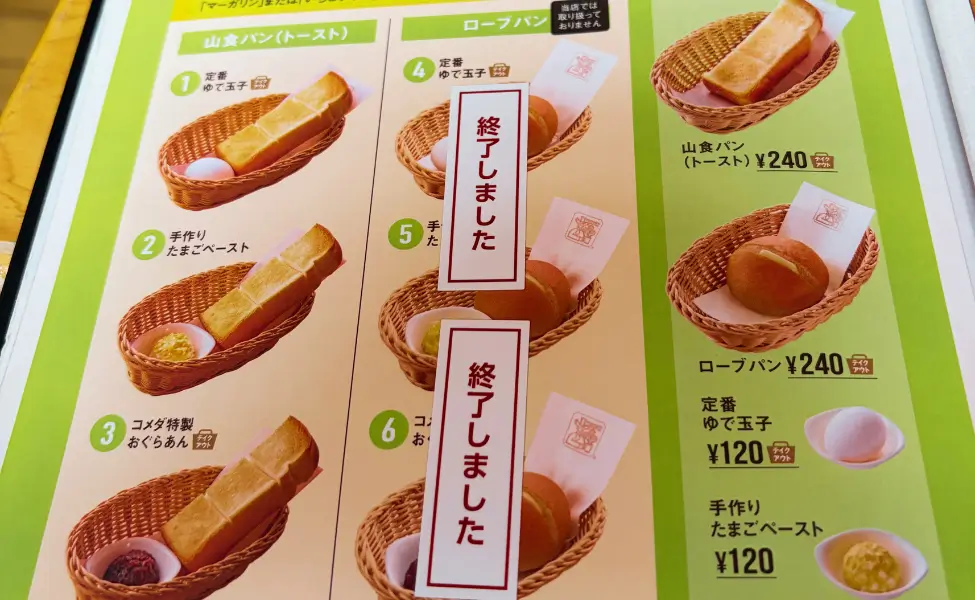
Ordering any hot or cold drink before 11am brings the free side automatically. You don’t need to ask for it, and nothing extra appears on the bill afterwards. The staff will walk you through three quick choices instead, one for the bread, one for the topping and one for the spread. Each choice comes free with your drink.
| Choice | Options |
|---|---|
| Bread | Toast, or a softer bread roll called robu pan |
| Topping | Boiled egg, egg paste, or ogura-an (a sweet red bean paste) |
| Spread | Butter or margarine, strawberry jam, or a sweetened soy milk paste |
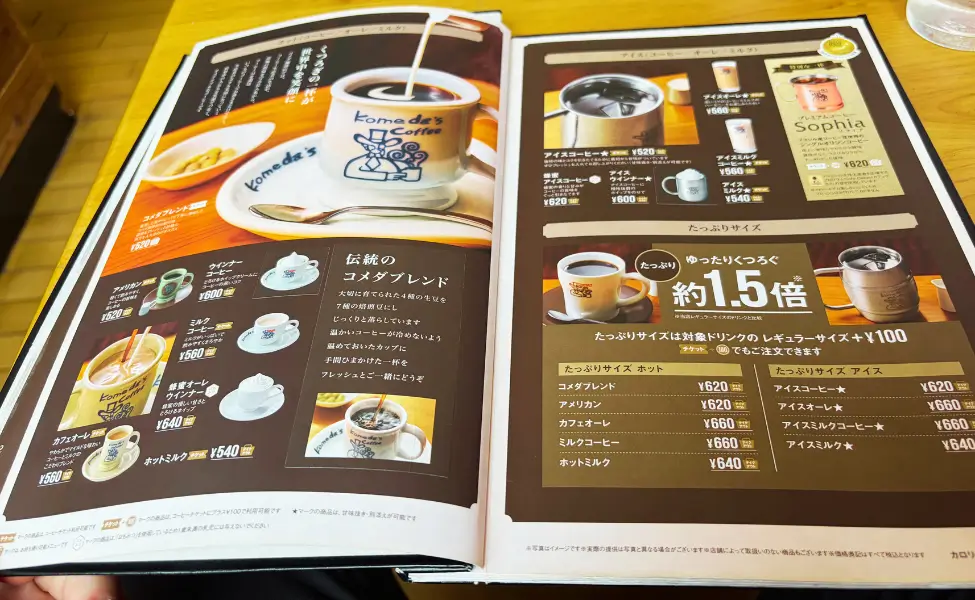
A standard blend coffee falls somewhere between 460 and 700 yen, since Komeda sets a regional price band rather than one fixed price nationwide.
That price covers everything on the table. A full breakfast here often costs about the same as a bottle of water and a snack from a convenience store. The difference is what comes with it, a seat, a hot coffee and a few unhurried minutes before the day gets busy.
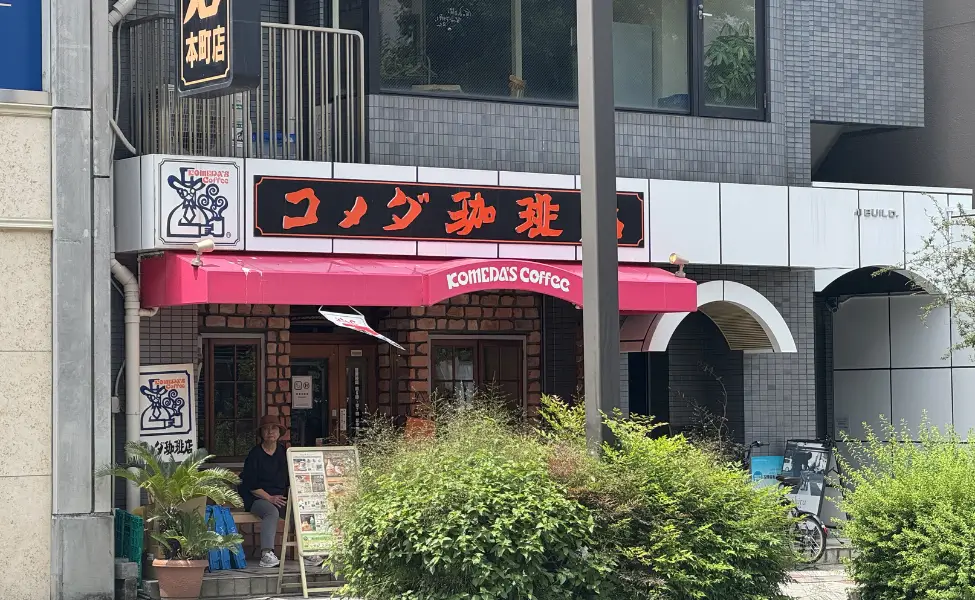
Walking In and Ordering Without Any Japanese
Most of the nervousness first-time visitors feel about KOMEDA’s disappears once you know what happens between the door and the drink arriving. None of it requires more Japanese than a smile and a pointed finger.
- A staff member greets you and shows you to a table. Most branches today have no smoking section at all, since the law changed in 2020. A shrinking number of older branches, mostly around Aichi Prefecture, still keep a separate smoking room, so check the door signage if you’d rather not.
- Water and a hot towel usually arrive before you’ve ordered anything, a small hospitality touch rather than something you need to request.
- You’ll either speak your order to staff directly or enter it on a small tablet at the table, depending on the branch. Either way, you settle the bread, topping and spread choices at the same time as your drink order.
- Menus lean heavily on photos, so pointing works fine even with zero Japanese. Newer branches often keep an English menu behind the counter too, and staff will bring it over if you ask.
Why This Isn’t Just Another Chain Café
KOMEDA’s is a chain, and a big one, with over a thousand branches across the country and a name most locals recognise instantly. That alone makes some visitors wary, since a chain café can feel like settling for something ordinary on a first Japan trip. What changes the picture is a mix of scale and history that few other chains can claim.
Nearly Sixty Years in the Making
Taro Kato opened the first shop in Nagoya in 1968, naming it after his family’s rice business since kome means rice in Japanese. The chain grew through franchising over the following decades and listed on the Tokyo Stock Exchange in 2016. It now runs more than 1,000 branches nationwide, with well over a hundred concentrated in Nagoya alone.
In 2021, it took first place in the café category of a national customer satisfaction survey. Skip it, and the likely default is a hotel buffet, a convenience store rice ball, or a coffee chain identical to the one back home.

None of those are bad choices, but they don’t teach you anything about how mornings actually work in this part of Japan. A slice of toast and a boiled egg sound small, yet they carry a piece of daily Nagoya life that a hotel buffet never will.
Where the Toast and Egg Custom Started
The custom itself is older than KOMEDA’s by about a decade. Local records point to 1956, when a café in Ichinomiya, a textile town near Nagoya, began giving free boiled eggs and peanuts to regular customers. It was a small thank you to mill workers who came in every day for coffee. Other cafés nearby picked up the same habit, and it spread steadily through the wider Chubu region.
Within a few decades, it had become a normal part of café life across much of Japan. KOMEDA’s didn’t invent any of this, but the chain built much of its identity around it. It still treats morning service as central to the brand, not as a passing offer.
The Shiro Noir, KOMEDA’s Other Signature
Morning service ends at 11am, but the dessert worth planning around comes any time after that. The Shiro Noir plays on a simple contrast, since shiro means white in Japanese and noir is French for black. It’s a warm Danish pastry about 15cm across, topped with a generous scoop of soft serve and a drizzle of syrup. The regular size runs to roughly 930 kilocalories, and the mini version comes in at under half that.
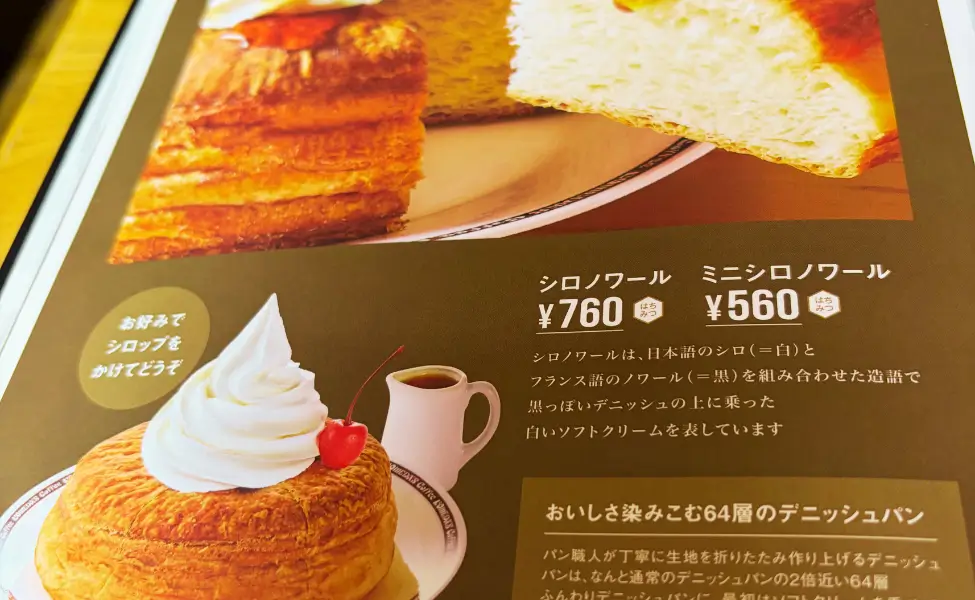
Some branches will swap the ice cream for whipped cream if you ask. The recipe also changes with the seasons, and matcha, pistachio and even a limited Pokémon-themed version turned up earlier in 2026. Ask what’s currently on offer rather than assuming the standard version is the only one available.
Lunch and Evening, If You Stay Past Morning
KOMEDA’s works well outside the morning too, though it’s easy to miss if breakfast is all you came for. On weekdays between 11:30am and 2pm, a lunch set called the Hiru-Kome Plate pairs a sandwich with a side salad and two small fried chicken pieces. It costs a modest amount on top of your drink order.
After 6pm, a smaller evening menu takes over at some branches, including a cheese curry gratin developed with the Tokyo curry and confectionery company Nakamuraya. Ordering it alongside a drink drops the dish price to around 1,090 to 1,150 yen, with the drink charged separately. The same dish on its own runs closer to 1,310 to 1,370 yen, so the drink discount is worth taking if you’re having one anyway.
Hours, Payment and a Few Comfort Details
A few extra details will save you a surprise once you’re there, especially if this becomes a regular stop rather than a one-off visit.
- Opening hours vary by branch, typically 7am to 9 or 10pm at roadside locations, with some city-centre and shopping-centre branches staying open later.
- Most branches accept card, cash, IC transit cards such as Suica or Pasmo, and QR apps like PayPay, so cash alone isn’t necessary.
- Regulars often buy a coffee ticket booklet in advance, usually five or nine tickets with prices varying by branch, valid only at the branch of purchase.
- Seating tends to be generous, with proper armchairs and booths rather than cramped stools, and many branches offer wifi or power outlets, though this depends on the branch.
- Most branches don’t take reservations, so you simply walk in and wait for a seat if it’s busy.
Nagoya is still the easiest place to see all of this working exactly as it always has.
The city has the highest concentration of branches anywhere in Japan, and locals treat the whole routine as entirely ordinary. Order a coffee before 11am, choose your bread, your topping and your spread, and let the rest turn up on its own.
It’s the same small routine Nagoya has run every morning for decades, and now you know what to expect when it arrives at your table.