
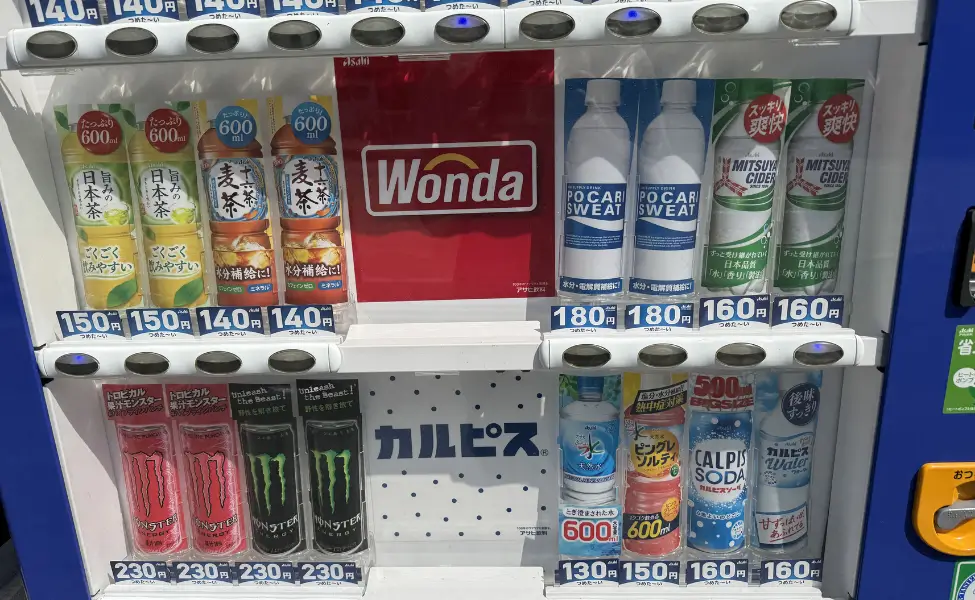
There is a moment, usually in a Japanese convenience store, when you pick up a bottle, read the label, and realise that nobody at the naming meeting spoke English.
Or if they did, they had a very good sense of humour.
You stand there for a second, look around to confirm that this is a real product, and then you put it in your basket anyway because Japan does not particularly need your approval.
There are some truly brilliant Japanese brand names
Some, however. when you sound them out in English, make you want to gently put the bottle back on the shelf and have a quiet think.
This is not an accident, and it is not a sign that anyone made a mistake.
The Linguistics of It (Very Briefly)
Japanese borrows heavily from English to create what the Japanese call wasei-eigo, which roughly translates as “made-in-Japan English.”
These are names assembled from English sounds.
But are designed to make sense in a Japanese context rather than an English one.
The problem is that Japanese phonetics and English phonetics do not overlap cleanly.
A name that sounds fresh and modern on the Tokyo side of things can sound deeply unfortunate on the London or Sydney side.
None of the Japanese brand names below were trying to be funny.
That is exactly what makes them funny.
The Drinks You Would Never Order Out Loud
Calpis
Calpis is a popular Japanese soft drink, cloudy and slightly tangy, somewhere between diluted yoghurt and lemonade, and it is genuinely good.
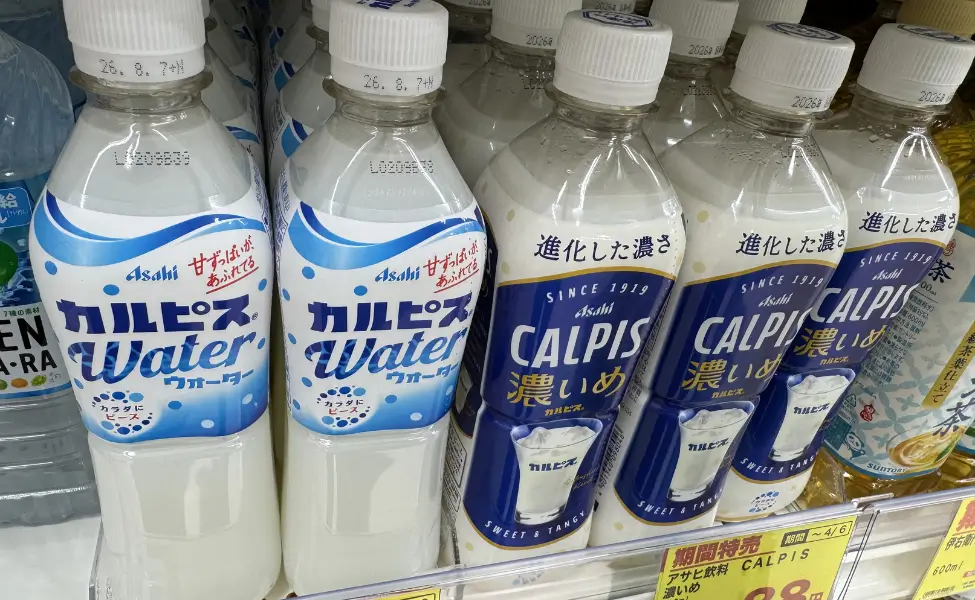
The name combines “cal” from calcium and “pis” from a Sanskrit word for clarified milk.
A pairing that sounds sophisticated and wholesome in its original context.
In English, it sounds precisely like what you hope a soft drink is not.
The company is clearly aware of this, because when they exported Calpis to North America, they quietly renamed it Calpico and nobody asked questions.
In Japan, though, the original name is still on every shelf, every vending machine, and every school café.
The first time I heard this I had to question what I was hearing.
I mean, who would want to drink that?
Well, seems like many people would.
Pocari Sweat
Pocari Sweat is not a niche product or a curiosity hiding at the back of a dusty shelf.
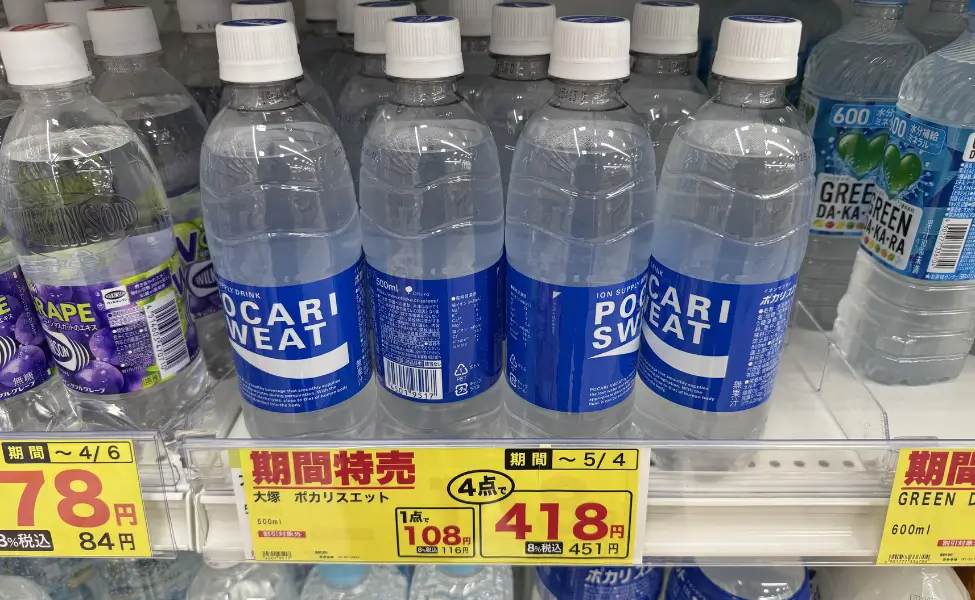
It is one of the biggest-selling sports drinks in Japan and across Asia.
It comes in a powder form you can mix yourself, and it is excellent for keeping you hydrated on a hot day or after a long train journey.
The “sweat” is entirely intentional and entirely logical in its original framing.
The drink replaces what you lose when you perspire, and the name communicates exactly that.
In English, the effect is somewhat different.
You know the drink is good.
You also know that ordering “a Pocari Sweat” at a café abroad is going to require a small explanation.
Creap
Morinaga’s Creap is a coffee whitener.
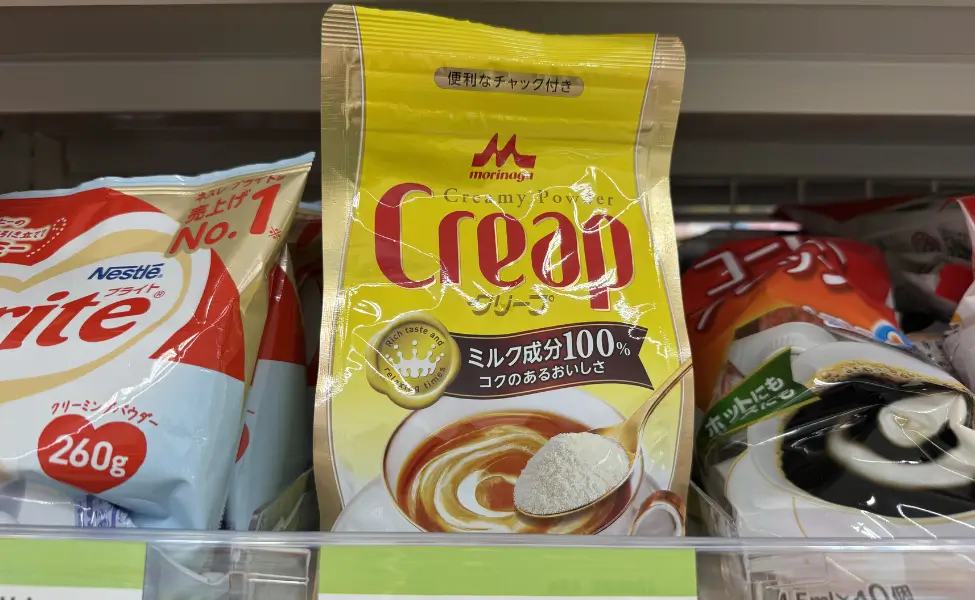
And it has been on supermarket shelves since 1961.
The name is a combination of “cream” and “powder,” which is straightforward enough in Japanese.
In English, the name sounds like something you would call a person you would rather not sit next to at a dinner party.
Nobody in Japan finds this remarkable, which makes it all the more remarkable.
The Shop You Walked Past Without Realising
OIOI
If you have ever walked through any major Japanese city, you have almost certainly walked past an OIOI without knowing how to say it.
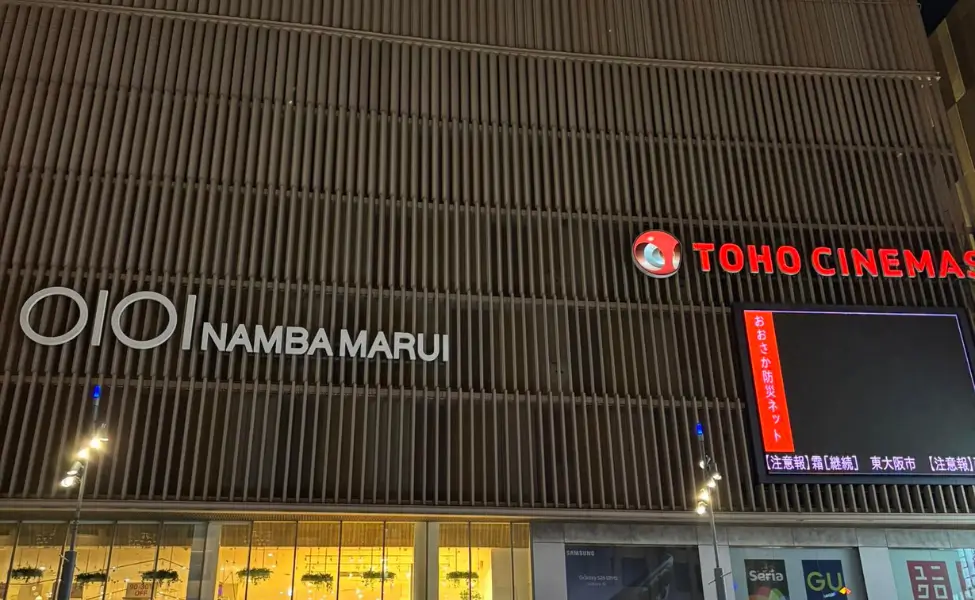
To an English-speaking eye it looks as though it should rhyme with “boy oh boy,” or perhaps be shouted in an inexplicable cockney accent.
It is neither of those things.
OIOI is actually Marui, a major department store chain that has been operating since 1931.
The logo is a visual pun constructed in Japanese.
The circle symbol reads as maru and the vertical line as i, giving you “marui” twice over, which maps to the company’s name in Japanese script.
The branding also references the store’s original telephone number, which ended in 0101.
Every Japanese shopper walking through the doors knows exactly where they are and exactly what the sign means.
Every English speaker reads it and has to be told the joke from scratch.
The Brand That Only Makes Sense in Japanese
CA4LA
CA4LA is a Japanese hat brand with stores across Tokyo, Osaka, and Kyoto, and it is very good at what it does.
The name is written in Latin characters but it is not designed to be read as English.
In Japanese, speakers pronounce the number four as shi, which means the string “CA4LA” spells out kashira, the Japanese word for “head.”
It is a clever visual pun.
Every English-speaking person who sees it for the first time is missing a piece of information they did not know they needed.
Why Nobody Changed These
The companies behind these brands never designed them with English speakers in mind, and for most of their history, they did not need to.
Calpis was a domestic product long before it was an export.
Pocari Sweat sells enormously across Asia, where the word “sweat” carries a different tone.
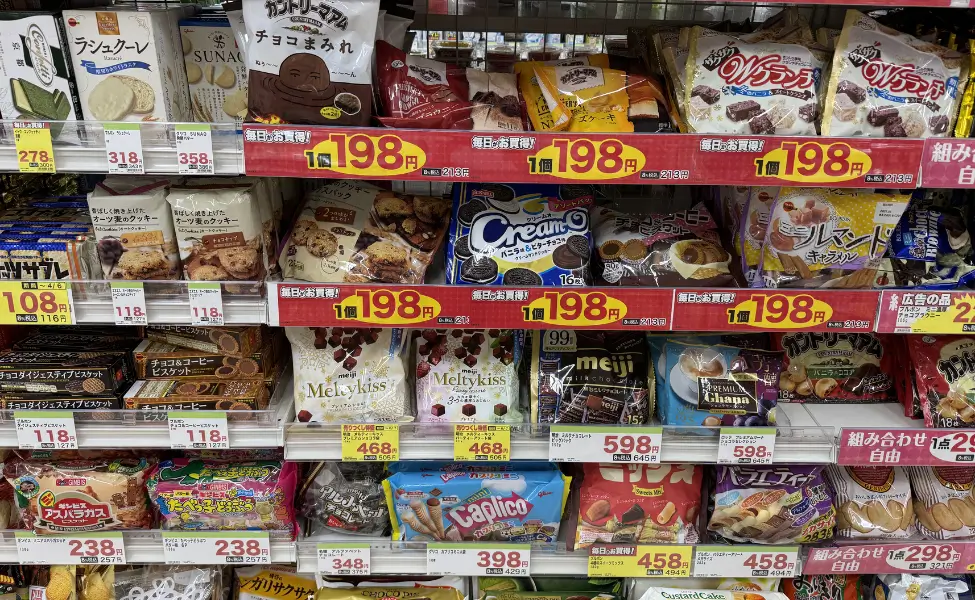
Every person Marui originally created it for reads OIOI correctly, and Creap has happily caffeinated Japanese offices for over sixty years without anyone raising an objection.
The English-speaking world arrived later, found these names already established, and had to adjust.
Sometimes the brands adjusted too, as Calpis did in North America.
More often they did not bother, which is why you can still walk into a Japanese convenience store today, pick up a perfectly ordinary bottle of cloudy lemonade, and find yourself needing to explain to someone back home exactly why you bought something that sounds like that.
