
A traditional Japanese breakfast consists of steamed rice, miso soup, a protein such as grilled fish, and small side dishes including pickled vegetables or natto. For tourists, though, finding breakfast in Japan can be genuinely difficult because most restaurants and cafes don’t open until 10:00 AM or 11:00 AM. Your most reliable early options are hotel buffets, convenience stores, 24-hour beef bowl chains, or the morning service at a traditional kissaten coffee shop.
I’ve lived in Japan for three decades, and I still watch tourists wander past shuttered cafes at 8:00 AM looking confused. Here is how you actually eat breakfast in Japan.
Quick Answer: Where to Eat Breakfast Before 10 AM
- Best overall: Convenience stores (conbini)
- Best sit-down meal: Matsuya, Sukiya, or Yoshinoya (24-hour beef bowl chains)
- Best atmosphere: Kissaten (traditional coffee shop) for the morning service
- Best for families: Hotel breakfast
- Best before an early train: Station bakery or conbini
- Best traditional experience: Ryokan breakfast
The Traditional Japanese Breakfast (What You’re Actually Eating)
Before getting into the logistics, it’s worth understanding what a traditional Japanese breakfast actually looks like, because it’s quite different from what most visitors are used to.
Ichiju-sansai (One Soup, Three Sides)
The traditional structure is called ichiju-sansai, which translates roughly as one soup and three sides.
It’s a framework that has shaped Japanese meals for centuries, and breakfast follows the same principle as dinner.
At its most complete, a traditional Japanese breakfast includes steamed white rice, a bowl of miso soup, a protein, and two or three small side dishes.
It’s balanced, it’s filling, and it looks almost nothing like what most tourists associate with the word breakfast.
What’s Actually on the Plate
- Grilled fish: Usually salmon or mackerel, grilled simply with salt. It’s savoury, slightly fatty, and pairs well with plain rice.
- Steamed rice: Plain short-grain white rice, served hot. Not optional.
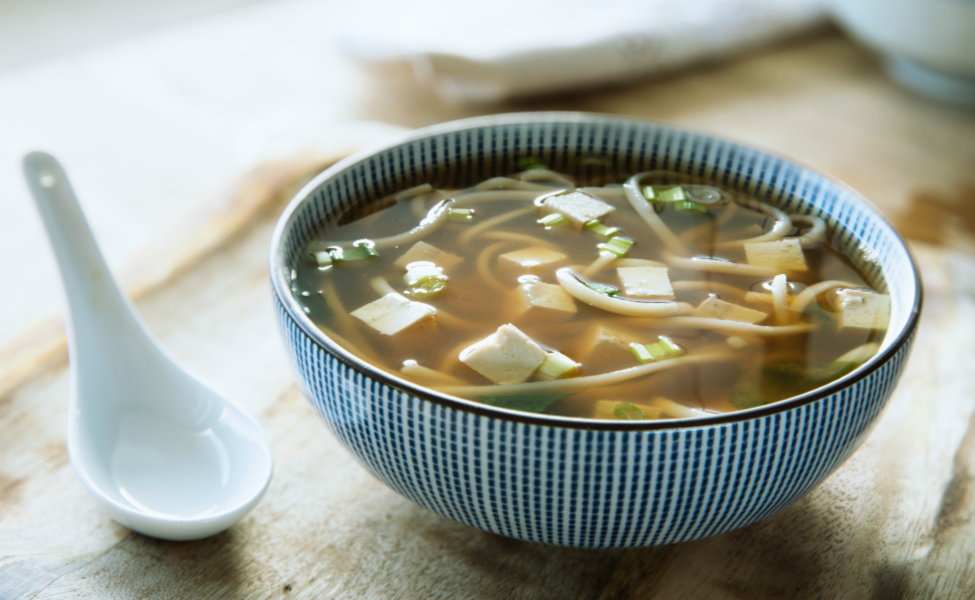
- Miso soup: Made with dashi stock, fermented miso paste, and fillings like tofu, wakame seaweed, or spring onion.
- Tamagoyaki: A gently sweet rolled Japanese omelette, sliced and served cold or at room temperature.
- Natto: Fermented soybeans with a strong smell, sticky texture, and intense flavour. It divides opinion sharply even among Japanese people. If you’re curious, try it once. But don’t feel obligated.
- Pickled vegetables (tsukemono): Small portions of pickled cucumber, daikon, or plum, served as palate cleansers alongside the other dishes.
What Japanese People Actually Eat in the Morning
Here’s the honest resident perspective.
Most Japanese people don’t eat this full spread every morning.
Many grab toast with butter or jam, pour a coffee from a home machine, and leave the house.
Convenience store onigiri eaten at the kitchen counter is completely standard.

The elaborate traditional breakfast still exists, but it’s more likely to appear at a ryokan or a family gathering than on a Tuesday morning before work.
The 10:00 AM Problem (Why You Can’t Find Breakfast)
This catches tourists off guard constantly, and it’s worth addressing directly.
Japan is a late-starting country when it comes to independent food businesses.
Most standalone cafes, bakeries, and restaurants don’t open until 10:00 AM at the earliest, and many don’t begin service until 11:00 AM or even noon.
If you walk out of your hotel at 7:30 AM expecting to find a charming neighbourhood cafe, you’ll mostly find closed shutters.
Why This Happens
Japan’s morning commuter culture means that most working people eat at home, grab something from a convenience store, or use a fast-food chain near their station.
Independent cafes cater to a late-morning and lunchtime crowd.
And because foot traffic before 10:00 AM simply doesn’t justify the staffing cost for most small businesses, they don’t open for it.
This isn’t a problem once you know the four options that actually work.
But it does mean that spontaneous early breakfast hunting without a plan tends to fail.
Where to Eat Early (The 4 Reliable Options)
These are the options that work most consistently in cities, near major train stations, and along popular travel routes.
Option 1: The Kissaten Morning Service
This is the most underrated breakfast option in Japan, and it’s one of my personal favourites.
A kissaten (喫茶店) is a traditional Japanese coffee shop, distinct from modern cafe chains.
The morning service culture, known simply as “morning” (モーニング), originated right here in Nagoya, where I’ve lived for thirty years.

The concept is brilliant in its simplicity.
Order any drink before 11:00 AM and you receive thick-cut toast and a choice of accompaniment completely free.
As a Nagoya resident, I’d say that while Komeda’s Coffee is the famous nationwide version of this tradition, the real joy is finding a tiny, independent, sometimes slightly smoke-filled kissaten in your neighbourhood and settling in with the regulars.
These places have been running the same morning service for decades, and walking into one feels like stepping into a part of Japan that most tourists never see.
That said, Komeda’s Coffee (コメダ珈琲店) is the chain most associated with this culture and now has over 900 locations nationwide.

Order a coffee and you’ll receive a half-slice of thick shokupan toast along with your choice of a boiled egg, egg paste, or sweet red bean paste (ogura-an).
The coffee itself starts at around 540 yen, and the food costs nothing extra.
The atmosphere inside Komeda’s is deliberately slow and comfortable, with wooden booths, soft lighting, and a crowd of regulars that makes it feel genuinely unlike anywhere else in Japan’s food landscape.
Option 2: 24-Hour Beef Bowl Chains
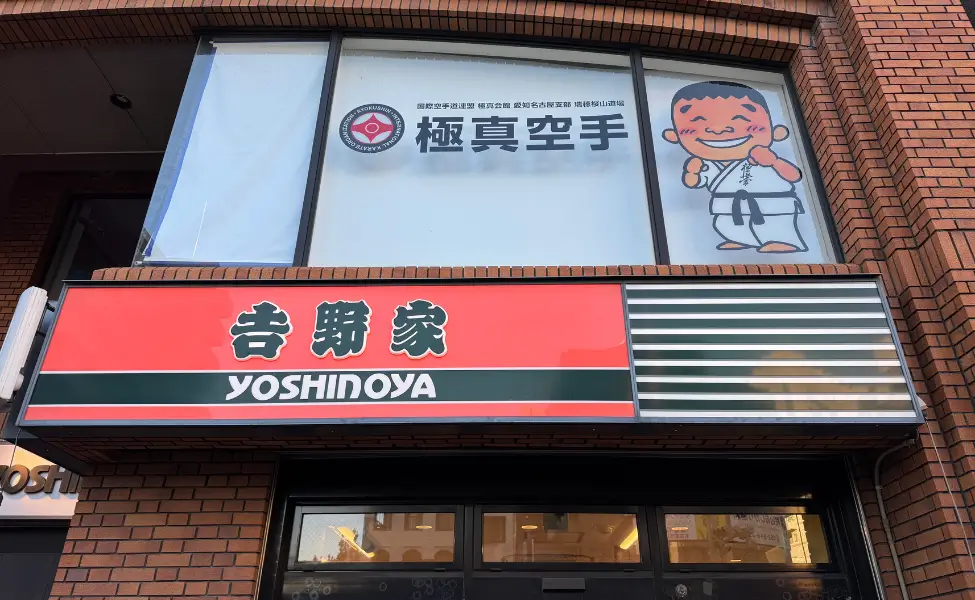
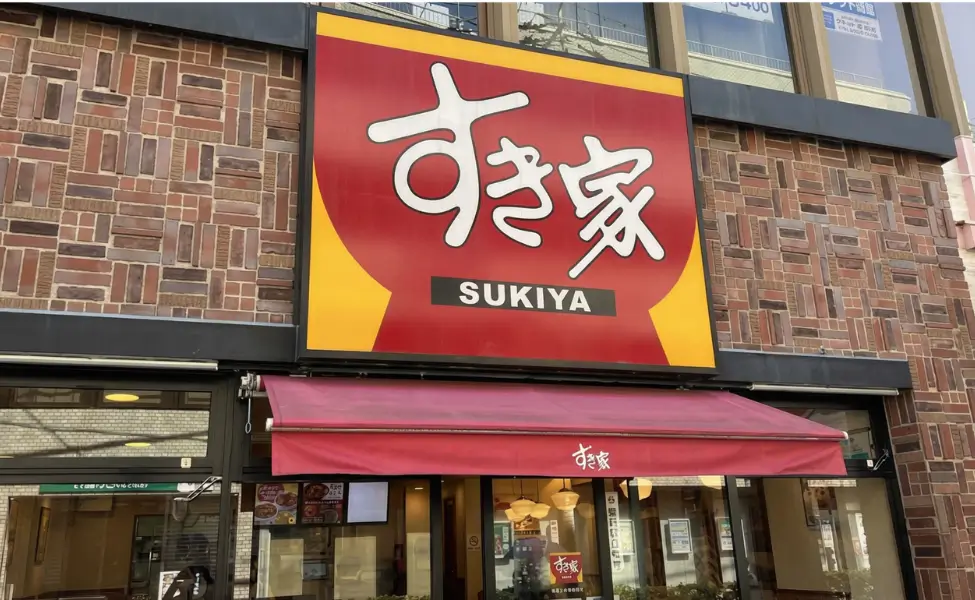
Yoshinoya, Matsuya, and Sukiya are the three major gyudon (beef bowl) chains in Japan, and all of them offer dedicated morning menus from as early as 4:00 AM or 5:00 AM through to 11:00 AM.
These aren’t just beef bowls.
Each chain offers a Japanese-style breakfast set that typically includes grilled salmon, steamed rice, miso soup, and a side dish like natto or pickled vegetables.
It’s a filling, traditional-style breakfast at very low cost, usually between 350 and 600 yen.
- Matsuya: The best budget option because every meal comes with free miso soup. Ordering is done via a ticket machine at the entrance, which removes the language barrier completely.
- Yoshinoya: The classic choice and the oldest of the three chains. Order at the counter or via a tablet at your seat. Breakfast runs from 4:00 AM, making it the earliest option if you have a very early start.
- Sukiya: Usually has the most diverse menu if you want something other than a standard fish set, with options including curry and tuna alongside the traditional choices.
All three are easy to navigate without any Japanese.
Point at the picture, pay at the machine or counter, and your food arrives within minutes.
Option 3: The Convenience Store (Conbini)
The convenience store is the honest answer to the early breakfast problem for most tourists, and it’s a better answer than it might sound.

Japan’s three main chains, 7-Eleven (セブン-イレブン), FamilyMart (ファミリーマート), and Lawson (ローソン), operate 24 hours a day and stock freshly prepared food that is replenished throughout the night.
Quality is consistently high across all three.
What to look for in the morning:
- Egg sandwiches (tamago sando): Thick, pillowy white bread filled with a generous egg salad mixture. One of the genuinely iconic convenience store foods in Japan.
- Onigiri: Rice balls with various fillings including tuna mayo, salmon, pickled plum, and kelp. Inexpensive, filling, and completely satisfying.
- Steamed buns (nikuman): Hot meat-filled buns kept warm near the register, especially good in cooler months.
- Canned or bottled coffee: Japan’s canned coffee culture is its own world, and a hot can of Georgia or Boss coffee from the heated rack near the register is a very normal morning ritual.
One thing most tourists don’t think about until it’s too late is where to actually eat the food.
If your hotel doesn’t have a lobby lounge or seating area, the smart move is to buy your conbini breakfast the evening before and keep it in your room’s mini-fridge overnight.
Don’t plan to eat your egg sandwich while walking down the street.
Eating while walking is considered bad manners in Japan, and finding a public bench is notoriously difficult in most areas.
Buy ahead, eat in your room, and head out without the logistical headache.
Option 4: Station Bakeries
Major train stations across Japan often house bakeries that open considerably earlier than independent street-level shops.
Chains like Vie de France frequently open by 7:00 AM or 7:30 AM inside station buildings, catering to commuters.
The range is reliably good.
Curry bread, melon pan, cream-filled rolls, and sandwiches are all standard, and freshly baked options rotate throughout the morning.

Prices are reasonable and the quality is generally well above what you’d expect from a chain bakery.
If your hotel is near a large station, it’s worth checking whether there’s a bakery on the premises before looking elsewhere.
Useful Google Maps Search Terms
Copy and paste these directly into Google Maps to find early breakfast options near wherever you’re staying.
| Japanese Term | What It Finds |
|---|---|
| モーニング | Morning service and breakfast specials |
| 喫茶店 モーニング | Kissaten with morning service |
| 朝食 | Breakfast generally |
| コメダ珈琲店 | Komeda’s Coffee locations |
| 松屋 | Matsuya restaurants |
| すき家 | Sukiya restaurants |
| 吉野家 | Yoshinoya restaurants |
| パン屋 | Bakeries |
Should You Book the Hotel Breakfast?
This depends entirely on where you’re staying and who you’re travelling with.
Here’s the straight answer.
Yes, if you’re staying at a ryokan. A ryokan breakfast is a full ichiju-sansai spread prepared that morning, often using regional ingredients and served in your room or a dedicated dining area. It’s one of the most distinctly Japanese experiences available to a visitor and is genuinely worth paying for. Skipping it to save money at a ryokan is the wrong call.
Yes, if you’re travelling with young children. The zero-friction argument is real. Having breakfast sorted, served, and available the moment you wake up removes a significant source of morning stress when you’re managing kids in an unfamiliar country.
No, if you’re paying a heavy supplement at a mid-range hotel. The food is rarely worth the markup, and the options above will serve you better for less money. But if you’re staying at a budget chain like Toyoko Inn, where a simple breakfast of rice balls, miso soup, and sausages is included free with the room rate, absolutely grab it before heading out. Free is always the right answer.
No, if you’re a solo or couple traveller who wants to explore. Skipping the hotel breakfast and using the morning service at a kissaten or picking up food from a 24-hour gyudon chain is a far more interesting way to start the day. And it often costs less than half the price of a hotel breakfast supplement.
Breakfast FAQ
Some do, but it’s less common than in the West. Granola has grown popular in recent years, particularly among younger urban Japanese who are health-conscious or time-pressed. Traditional sugary breakfast cereals are available but not a staple. You’ll find them in larger supermarkets, but a Japanese person reaching for a bowl of cereal is far less common than one making toast or reheating rice from the night before.
It depends entirely on the type of train. On the Shinkansen and long-distance limited express services, eating is completely normal and expected. Many people bring bento boxes or conbini food specifically for these journeys. But on regular commuter trains and subway lines, eating is considered poor manners. Japanese commuter trains are quiet, crowded, and governed by strong unwritten social rules. Unwrapping a sandwich or eating an onigiri on a packed morning train will attract uncomfortable looks. Wait until you reach your destination, or find a bench on the platform before boarding.
Final Thoughts
Finding breakfast in Japan is only difficult if you expect to find Western-style cafes open at 7:30 AM.
Once you let go of that expectation and embrace the rhythm of the country, whether that means a quiet kissaten, a fast beef bowl, or an egg sandwich eaten in your hotel room, breakfast becomes one of the easiest and cheapest parts of your trip.
