
The most memorable parts of Japan are not always the famous ones.
This guide highlights ten cities where travellers find better food, fewer queues, and a deeper connection to everyday life.
It is not about skipping Tokyo or Kyoto.
It is about knowing when to go, where to spend your time, and how to get closer to the version of Japan that people remember long after they leave.
Each place on this list mixes a few highlights with local-only experiences.
From side-street bars to quiet neighbourhoods, this is the Japan worth travelling for.
Tokyo – Where Chaos Meets Zen
Tokyo can feel like a maze at first, but it runs with precision.
At the airport, pick up a Suica or PASMO card.
It works on nearly all trains, subways, and buses, plus most vending machines and convenience stores.

Staying near the Yamanote Line keeps you connected to key areas like Shinjuku, Shibuya, and Ueno without needing transfers.
Use Google Maps to get around, but keep Hyperdia bookmarked for platform numbers and transfer accuracy.
Visit Sensoji Temple in Asakusa early in the morning to avoid crowds, then wander the quieter alleys nearby for street snacks like melonpan and grilled senbei.
If you head to Harajuku, skip the noisy Takeshita Street and walk through Omotesando instead, where calm cafes and small design shops line the backstreets.

In the evening, you can grab conveyor sushi at Uobei in Shibuya for speed and fun, or explore the alley bars in Ebisu and Shimokitazawa where menus are handwritten and regulars are friendly.
Tokyo respects your time, and first-timers often find it easier to navigate than expected.
Kyoto – Beyond the Tourist Trail
Kyoto is packed with beauty, but timing is everything.
Start early at Honen-in Temple near the Philosopher’s Path.
Entry is free, and you might only see a caretaker sweeping leaves.
Shisen-do in the north is another quiet spot, with a small garden viewed through a perfectly round window.
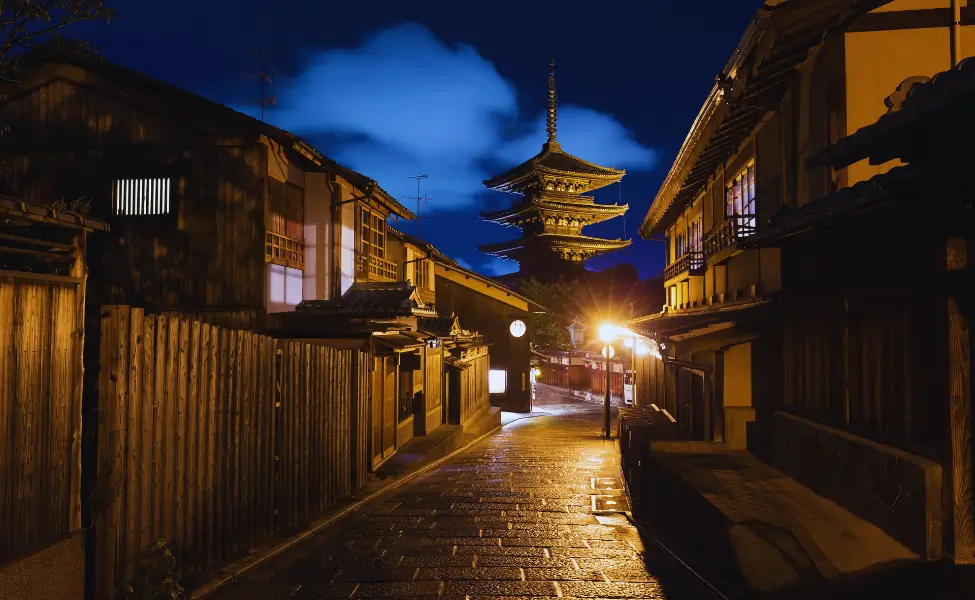
It costs around ¥500 and has a peaceful, local feel.
For tea, go to Ippodo near the Imperial Palace.
Staff explain the differences between matcha, sencha, and gyokuro, and you can taste before buying.
Drinks start around ¥600.
In the Okazaki area near Heian Shrine, you’ll find fewer groups, a scenic canal, and small guesthouses for about ¥9,000 per night.

It is an ideal base to walk to hidden temples and museums without fighting crowds.
Osaka – Where Locals Actually Eat
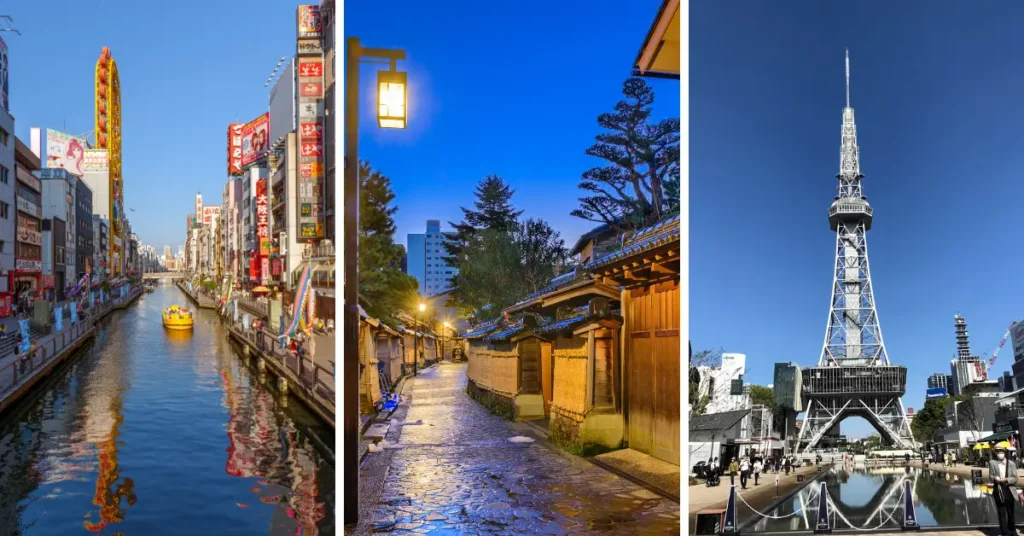
Osaka is known for street food, but the best meals are not in Dotonbori.
That area is built for tourists.

Instead, go to Shinsekai where kushikatsu costs ¥100 a stick and is eaten elbow-to-elbow with locals.
For takoyaki, Aizuya in Namba is the original.
They have been serving it since 1935. Eight pieces cost around ¥600, and the wait is usually under 20 minutes.
At night, skip Namba and try Kitashinchi, Osaka’s business nightlife area.
It fills up after 9pm with salary workers, and you can enjoy drinks and small plates for around ¥4,000 to ¥6,000 depending on the bar.
Nagoya – The City Locals Love
Nagoya often gets overlooked, but it has a quiet confidence.
Start with Nagoya Castle, where you can take a lift to the top of the rebuilt tower.

Entry is ¥500, and weekday mornings avoid school groups. Miso katsu is the local speciality.
Go to Yabaton, open since 1947. A full meal costs around ¥1,200 and service is quick without feeling rushed.
Nagoya also makes a great base.
Day trips to Takayama cost about ¥5,940 return, while Ise Shrine is around ¥3,200 return.

Both trips are cheaper from Nagoya than from bigger cities and save travel time.
Nara – More Than Just Deer
Nara’s deer are famous, but also pushy when they smell crackers.
Buy shika senbei for ¥150 a packet and visit early in the morning before the crowds.
The light is better for photos and the deer are calmer.

Todaiji Temple’s Great Buddha is worth seeing, but for atmosphere, Kasuga Taisha shrine offers more.
It has over 3,000 stone lanterns, all lit during the Mantoro festival on February 3 and August 14 to 15.
Consider staying overnight. Guesthouses cost between ¥3,000 and ¥4,000.
Once the day-trippers leave, Nara Park becomes quiet and feels like a different place.
Hiroshima – Handling Heavy History
Hiroshima’s Peace Memorial Museum is powerful and sobering.

Visit first thing in the morning when your energy is highest.
Entry is only ¥200, and you’ll want at least three hours.
Afterwards, take the ferry to Miyajima Island for ¥180 each way.
The floating torii gate looks best at high tide.

At low tide, you can walk up to it, but the reflection disappears.
For lunch, go to the Okonomimura building near Hatchobori.
Each floor has small stalls serving Hiroshima-style okonomiyaki.

Prices range from ¥800 to ¥1,200, and watching the chefs cook on steel plates is part of the experience.
Hakone – Hot Spring Etiquette
Hakone is famous for hot springs, but many first-timers do not know the rules.

Wash before entering. Do not put towels in the water.
Stay quiet. Day-use facilities cost between ¥1,000 and ¥1,500.
Follow the etiquette and it becomes a relaxing ritual.
To see Mount Fuji, take the early bus to Lake Kawaguchi for around ¥1,500.
The best view is when the water is still, usually before 8am.
For a more traditional experience, book a ryokan.
Prices range from ¥15,000 to ¥25,000 per person, including two meals and access to private or shared baths.
It is expensive but unforgettable.
Yokohama – Beyond the Guidebooks
Just south of Tokyo, Yokohama blends city and coast.
Start in Chinatown with steamed nikuman buns for around ¥300.
They are softer than the Chinese version and often filled with sweet pork or custard.

Minato Mirai lights up after sunset.
The Sky Garden costs ¥750, but the Landmark Tower’s free observation deck on the 69th floor offers a better view.
End your day in the Noge district.
This area is full of standing bars and yakitori joints where grilled chicken and beer cost ¥2,000 to ¥3,000.
It feels like old Tokyo, without the tourist crowd.
Kamakura – Coastal Calm
From Yokohama, take the train to Kamakura.

The Great Buddha is the main draw, but the Daibutsu hiking trail behind it is the real highlight.
The trail takes about two hours and winds through forested hills with ocean views. It is free and well marked.
In the afternoon, head to Shichirigahama Beach.
Locals gather for sunset picnics with a view of Enoshima Island.

Bring food and join them.
The Enoden line between Kamakura and Fujisawa runs vintage trains that pass inches from houses.
Each ride costs ¥260 and gives a rare look at life in a Japanese coastal town.
Kanazawa – Living History
Kanazawa blends history and daily life without feeling staged.
In Nagamachi Samurai District, people still live in preserved homes.

Walk quietly, avoid looking into windows, and visit the Nomura family residence.
Entry is ¥550 and shows authentic interiors from the Edo period.
Kenrokuen Garden is worth visiting in every season.
Spring brings cherry blossoms, summer is shady and quiet, autumn is vibrant, and in winter, ropes are tied to trees to protect against snow.
Entry costs ¥320.
Go first thing in the morning.
Just a few blocks away, Omicho Market opens at 5am.
Watch fishmongers unload the day’s catch and try a seafood rice bowl for breakfast.
A good kaisendon costs between ¥1,500 and ¥2,500.
The same quality would cost triple in Tokyo.
Wrapping up
Obviously, what the best cities in Japan are is subjective.
It’s all about opinions.
We hope you agree with ours somewhat.
