

Ehime Prefecture sits on the island of Shikoku, roughly an hour from Hiroshima by ferry, and most travellers move straight past it.
That is a reasonable call when days are limited and famous destinations are competing for space.
But if you are already asking whether Ehime belongs on your route, the honest answer is that it probably does.
You just need to know what you are looking at before you commit the days.
Ehime is not a single attraction you tick off and leave.
Matsuyama gives you a hilltop castle, one of Japan’s oldest hot springs, a tram network, and good food.
The Shimanami Kaido is a 70-kilometre cycling route across the Seto Inland Sea that serious cyclists travel from overseas to ride.
Uchiko is a small preserved merchant town worth a half day.
Uwajima, further south, is a coastal city that feels unlike anything on the standard tourist circuit.
You can cover the essentials without a car, and two solid days in Matsuyama alone will not leave you looking for things to do.
The question most travellers are really asking is not whether Ehime is nice.
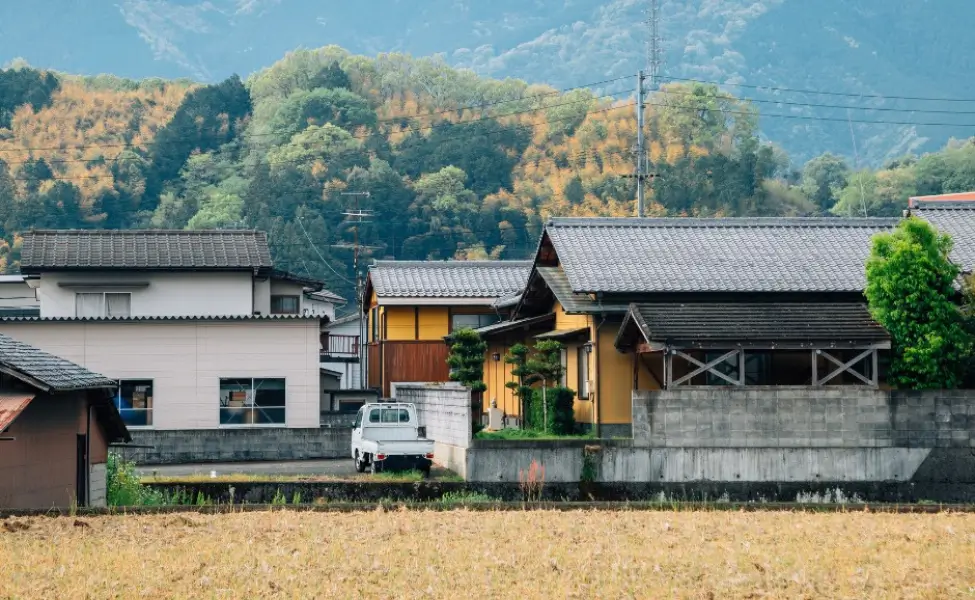
It is whether it justifies the detour when Kyoto and Hiroshima are already pulling at the schedule.
That is what this article works through.
What Matsuyama Gives You
Why Matsuyama Works as a Base
Matsuyama is the capital of Ehime Prefecture and the most practical base for the region.
It is large enough to have good hotels, restaurants, and transport connections, and small enough that you can walk or tram between the main sights without much planning.
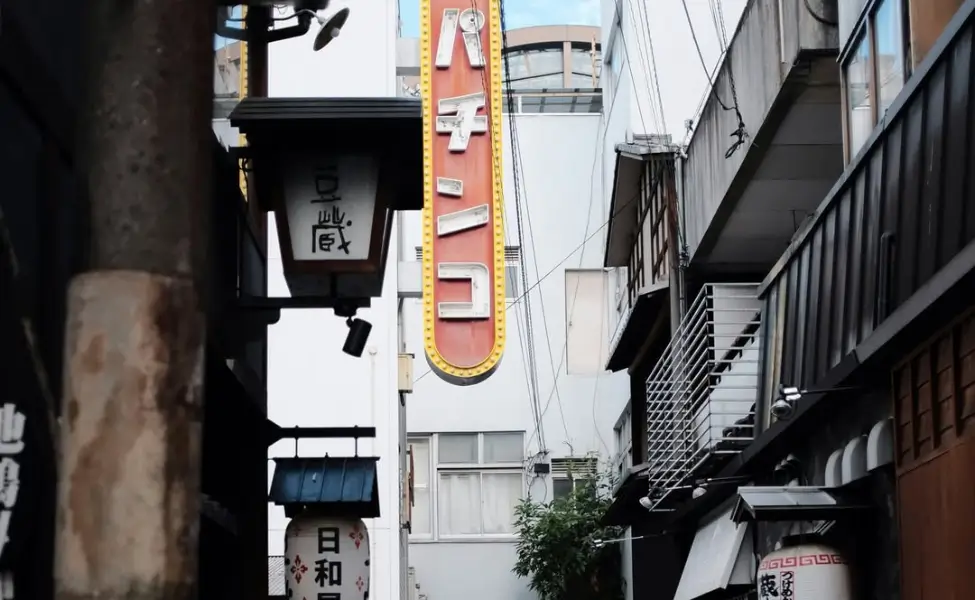
The tram system is cheap, easy to navigate, and covers every stop a visitor is likely to need.
Most people find the city more manageable than they expected.
Matsuyama Castle
The castle sits on top of Mount Katsuyama, 132 metres above the city centre.
A ropeway and chairlift run from the base to a point near the summit, or you can walk up through the park if you prefer.
Construction of the original castle began in 1602.

The current main tower dates from 1854, rebuilt after a lightning strike destroyed its predecessor in 1784.
It is one of only twelve original castle keeps remaining in Japan, which matters more than it sounds.
Many famous Japanese castles are modern concrete reconstructions.
This one is not.
From the top you get a clear view across Matsuyama and out toward the Seto Inland Sea. Inside, the wooden floors and exhibits on feudal history are worth your time.
Allow two hours for the full visit, including the journey up and down.
Dogo Onsen
Dogo Onsen sits about three kilometres east of the castle, a 20-minute tram ride from Matsuyama Station.
The hot spring carries approximately 3,000 years of recorded history and a claim to being the oldest in Japan.

The Honkan, the main bathhouse built in 1894, spent five and a half years under restoration before fully reopening in July 2024.
Studio Ghibli confirmed the building’s labyrinthine wooden interior as one of the main inspirations for the bathhouse in Spirited Away.
The similarity is immediately obvious from the moment you step inside.
Dogo Onsen is a public bathhouse, not a private ryokan.
Day visitors enter for a fee and choose from different bathing tiers, ranging from a basic soak to a fuller experience with a tatami rest room, cotton robe, and tea. It gets busy in the afternoons.
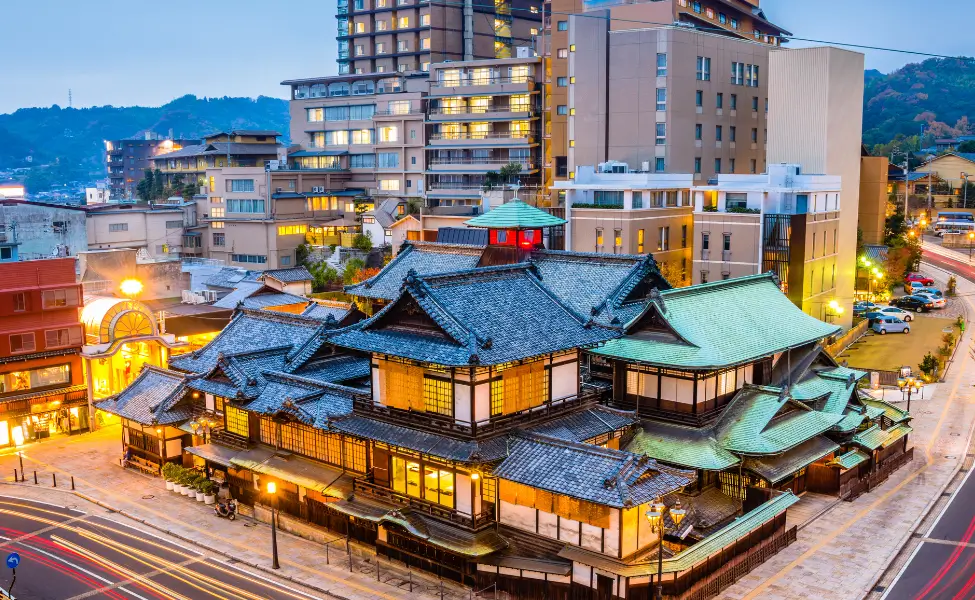
Going early in the morning, when a drum sounds at 6am to open the baths, is the most atmospheric time to visit and the least crowded.
Botchan, Soseki, and the Old Tram
The writer Natsume Soseki lived in Matsuyama as a teacher and visited Dogo Onsen regularly.
His novel Botchan features the onsen throughout as the one place the narrator actually likes.
That connection is still alive across the city in quiet ways.
The name appears on sweets, menus, and the most characterful way to travel between the castle and the onsen.
The Botchan Ressha is a small replica steam tram connecting Dogo Onsen Station with the Okaido stop in the city centre.
Riding it once is worth the small cost.
It moves slowly, it is immediately recognisable among the regular trams, and it gives Matsuyama a particular atmosphere that larger Japanese cities do not have.
Where Matsuyama Works Best in the Evening
The area around Dogo Onsen Station has an arcade shopping street running until late, lined with local food shops, sweets stalls, and places to eat.
Yukata-clad guests walking between ryokan and bathhouse give the district a distinctly unhurried atmosphere after dark.
Around Matsuyama Castle and the Okaido covered arcade, there are further options for food and drinks.
The tram makes getting between these areas at night easy and cheap.
The Shimanami Kaido
The Shimanami Kaido is a 70-kilometre cycling route across the Seto Inland Sea.

Seven bridges connect six islands between Onomichi in Hiroshima Prefecture and Imabari in Ehime, placing the full route across two prefectures.
The cycle path is well-signed throughout, the ramps up to each bridge were designed with cyclists in mind, and rental bikes are available at both ends.
You can pick up at Imabari and drop off in Onomichi, or ride it in the other direction.
How Long the Shimanami Kaido Takes
Experienced cyclists complete the full distance in around four hours of riding.
Most visitors allow a full day, with stops at Oyamazumi Shrine on Omishima, small fishing villages along the way, and viewpoints out over the sea.
A relaxed pace with sightseeing stops takes roughly eight to ten hours end to end.
Can Beginners Ride It?
Yes, with the right bike.
Rental shops at both ends stock electric-assisted bicycles, and the main route avoids significant hills except for the short, steep climbs up to each bridge.
Anyone who cycles occasionally will manage without difficulty.
The route is well-supported, clearly marked with blue arrows painted on the road, and busy enough on weekends that you are rarely out of sight of other riders.
Best Short Route from Imabari
If you only have half a day, start in Imabari and ride across the Kurushima Kaikyo Bridge.
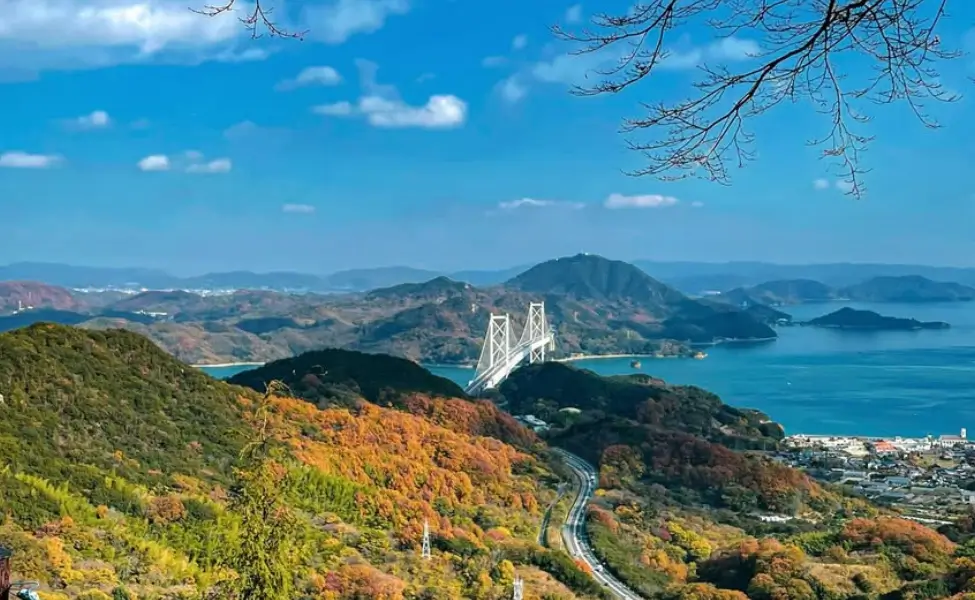
This is the world’s first series of three consecutive suspension bridges, and the sea views from it are hard to match anywhere else on the route.
Riding from Imabari across Oshima Island and back covers the most dramatic section without committing to the full day.
From Matsuyama, Imabari is roughly 40 minutes by limited express train.
Best Seasons for Cycling
Spring and autumn offer the most comfortable conditions.
Cherry blossom season in late March and early April adds something to the ride through the island towns.
Summer heat on the exposed bridges is significant, and winter crosswinds can be strong enough to make the bridge climbs unpleasant.
October and early November bring the best light and temperature for most riders.
Ehime’s Food
The food deserves its own mention because it is a genuine reason to visit.
Ehime produces more sea bream than almost anywhere else in Japan, and taimeshi appears on nearly every local menu.
There are two distinct versions of the dish, and they are different enough that trying both is worth the effort.
Matsuyama taimeshi starts with a whole sea bream, grilled to lock in the flavour, then cooked together with the rice in a pot until the fish’s umami absorbs into every grain.
The result is simple, fragrant, and not the kind of thing you find outside this region.
Uwajima taimeshi, the version from the south of the prefecture, works the opposite way.
Raw sea bream sashimi sits on top of hot steamed rice, poured with a sauce of egg and soy.
The dish came from fishing communities where speed and fresh fish mattered more than ceremony.
Both styles appear in Matsuyama restaurants, so you can try them without travelling the whole length of the prefecture.
Alongside taimeshi, the region produces Iyokan citrus and mikan orange, which show up in local sweets, drinks, and dressings throughout the prefecture.
Uchiko and Uwajima
These two towns work well as additions if you have more than two days, but they play different roles in a trip.
Uchiko: A Half-Day Add-On
Uchiko is a preserved merchant town about 40 minutes south of Matsuyama by limited express train.
In the 19th century it prospered from the production of Japanese wax and silk.
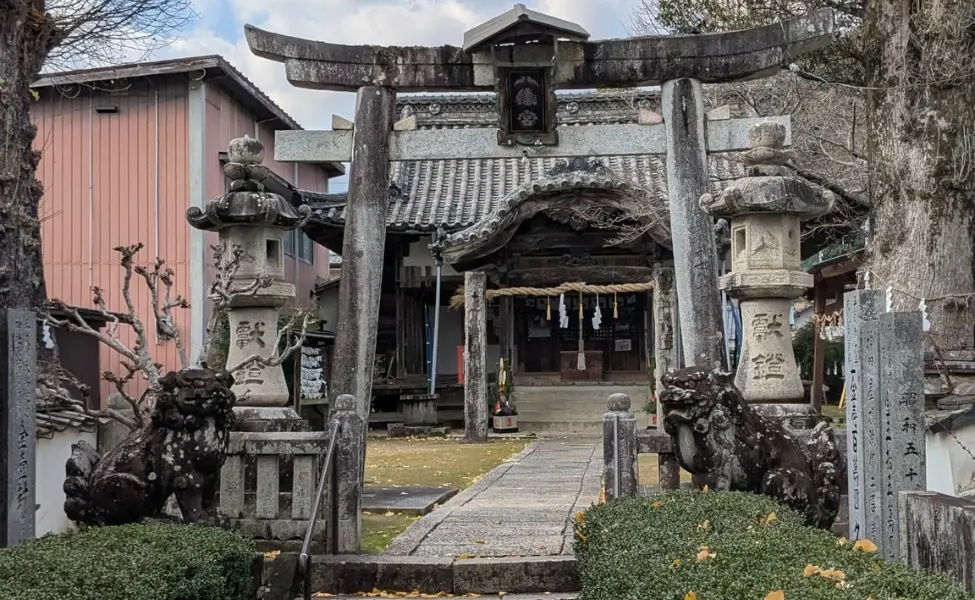
That wealth left behind a short street of traditional merchants’ homes and storehouses that locals maintained rather than rebuilt.
In half a day you can cover the main highlights:
- Walk the Yokaichi and Gokoku Quarters, where the old merchants’ homes and storehouses sit much as they did at the town’s commercial peak
- Visit the wax museum to understand where the wealth came from and how Japanese wax became a significant export
- Browse the small food shops and cafes along the historic street itself
One practical note: the Uchiko-za Kabuki Theatre, built in 1916, currently sits under structural renovation with an expected completion around 2028 or 2029.
Uwajima: Worth It with More Time
Uwajima is a two-hour train ride south of Matsuyama and a different kind of visit entirely.
It has a small original castle from the late 16th century and a fishing culture that still shapes how the city eats.

Uwajima taimeshi, the raw sea bream version described above, is reason enough for food-focused travellers to make the trip south.
The pace is slower, the tourist infrastructure is thinner, and the city suits people who want somewhere that feels properly local rather than polished.
For people comfortable navigating a less-visited Japanese city, it delivers something Matsuyama cannot.
Treat it as an optional extra for a four-day stay rather than a stop to squeeze into two or three days.
Getting to Ehime
Matsuyama is the main arrival point.
The table below shows realistic travel options from the cities most visitors come from.
| From | Method | Approximate Time | Notes |
|---|---|---|---|
| Hiroshima | High-speed ferry (SuperJet) | About 70 minutes | Most popular approach. Arrives close to city centre |
| Hiroshima | Bus via Shimanami Kaido | About 2 hours | Scenic option across the bridges |
| Osaka (Shin-Osaka) | Shinkansen to Okayama, then Shiokaze limited express | About 3 hours | Standard rail route from Kansai |
| Tokyo | Shinkansen to Okayama, then Shiokaze limited express | About 5 to 6 hours | Long day of travel. Flying from Haneda is faster |
| Tokyo | Direct flight to Matsuyama Airport | About 2 hours flying | ANA and JAL fly from Haneda. Add 30 minutes by bus to the city centre |
The high-speed ferry from Hiroshima is the most popular entry route for travellers already in that area.
It is fast, affordable, and arrives close to the centre of Matsuyama.
Visitors coming from Osaka or further east typically take the Shiokaze limited express from Okayama.
You do not need a car for Matsuyama, Dogo Onsen, or the Shimanami Kaido.
The tram network covers all the main Matsuyama sights.
The Shimanami Kaido is designed for cyclists and pedestrians. Uchiko is accessible by limited express train.
Only Uwajima and Mt Ishizuchi, the highest peak in western Japan at 1,982 metres, benefit significantly from a car, though public transport reaches both if you plan the schedule in advance.

How Many Days You Need
Three nights is probably the right allocation for most first-time visitors who want to get a proper feel for Ehime.
Two nights is enough for Matsuyama and Dogo Onsen.
The third night gives you a full day for the Shimanami Kaido, or a relaxed half day in Uchiko plus a slower second day in Matsuyama.
Four nights opens up Uwajima or a day on Mt Ishizuchi without feeling rushed.
| Duration | What You Can Realistically Cover |
|---|---|
| 2 nights | Matsuyama Castle, Dogo Onsen, Botchan Ressha, evenings around Dogo |
| 3 nights | Above, plus a full Shimanami Kaido day from Imabari, or Uchiko as a half-day add-on |
| 4 nights | Above, plus Uwajima or Mt Ishizuchi for travellers who want depth over speed |
If your Japan trip is already two weeks or longer and you have covered the major cities, Ehime makes a genuinely different addition.
Getting there and back from Hiroshima takes less than two hours by ferry.
Three nights adds two full days of something outside the standard tourist circuit.
Who Should Visit Ehime, and Who Should Skip It
Ehime is a good fit if you want a real Japanese city rather than a curated tourist experience.
Ehime is a good fit if you enjoy castle history, onsen culture, cycling, or coastal scenery.
It also works well for travellers who find Kyoto crowded and Hiroshima well covered, but still want somewhere rewarding without needing advanced planning skills.
It becomes harder to justify when every day of your trip is already locked to globally famous sights.
The same applies if you need strong English signage and tourist infrastructure throughout.
Matsuyama sits on the more comfortable end of the scale, while Uwajima feels less polished and more local.
That contrast is part of Ehime’s appeal, but it will not suit every traveller.
If you are on the fence, the simplest version is two nights in Matsuyama, a morning at Dogo Onsen, an afternoon at the castle, and a day trip to the Shimanami Kaido.
That is a manageable addition to any itinerary passing through Hiroshima, and it covers enough that you will leave with a genuine sense of the place rather than the feeling you skimmed it from a list.

