
You booked your flights months ago, and only afterwards did somebody mention the words “Golden Week” in a tone that suggested you should be worried. Maybe you’ve since read a few forum threads calling it Japan’s busiest travel week and left it at that, which tells you almost nothing useful.
Golden Week does change how a Japan trip works, and pretending otherwise would set you up for a rough arrival. It does not ruin a trip, provided you know which parts need planning and which parts you can leave to chance.
- Golden Week is four separate national holidays, not one continuous celebration
- Golden Week 2027 runs from Thursday 29 April to Wednesday 5 May
- It sits alongside New Year and Obon as one of Japan’s three busiest travel periods
- Standard JR reserved-seat sales generally open one month before travel, although SmartEX offers limited reservations on the Tokaido, Sanyo and Kyushu Shinkansen up to one year ahead. Hotels follow no such rule and need booking much earlier
What Golden Week Actually Is
Golden Week is not one holiday stretched across a week. It is four separate national holidays that happen to sit close together on the calendar. Add the surrounding weekend and a single bridge day, and they turn into one long block of time off.
The name has nothing to do with the government and everything to do with the entertainment industry. Decades ago, the film company Daiei noticed that this stretch produced unusually strong cinema ticket sales. A company executive coined the term as a promotional label, borrowing from the radio expression “golden time” for a peak listening period.
The label stuck around long after anyone remembered why.
The Four Holidays That Make Up the Break
Each of the four holidays marks something different, and knowing what they are helps explain why the crowd pattern behaves the way it does.
| Holiday | Date | What It Marks |
|---|---|---|
| Showa Day | 29 April | The birthday of Emperor Showa, who reigned from 1926 until his death in 1989 |
| Constitution Memorial Day | 3 May | The day Japan’s postwar constitution took effect in 1947 |
| Greenery Day | 4 May | A day dedicated to nature, moved to this date in 2007 when 29 April became Showa Day |
| Children’s Day | 5 May | A celebration of children, marked by koinobori carp streamers flown outside homes |
On their own, these four days would not add up to much. What turns them into Golden Week is the way Japanese law treats the gaps around them. Any single working day trapped between two public holidays automatically becomes a holiday too, and weekends slot in wherever the calendar happens to place them.
That rule is why the shape of the break shifts slightly from year to year. It depends on which day of the week 29 April falls on.
The Exact Dates for Golden Week 2027
Golden Week 2026 has already come and gone. Ahead of the break, JTB Corporation’s annual survey forecast that an estimated 23.9 million people would take domestic trips. That projection was close to JTB’s comparable figure of 24 million for 2019, showing that expected domestic travel had nearly returned to its pre-pandemic level.

If you are planning ahead, the date that matters now is Golden Week 2027.
Why the Calendar Falls Kindly This Time
Golden Week 2027 runs from Thursday 29 April to Wednesday 5 May. Showa Day opens the run on a Thursday, and the weekend follows right after. Three more holidays then sit back to back on the Monday, Tuesday and Wednesday.
That leaves one ordinary working day inside the broader period, Friday 30 April. Employees who use a day of paid leave can turn the whole stretch into seven continuous days off. Government-announced one-off holidays can occasionally shift this shape, so it pays to check nearer the date.
Why the Crowds Look the Way They Do
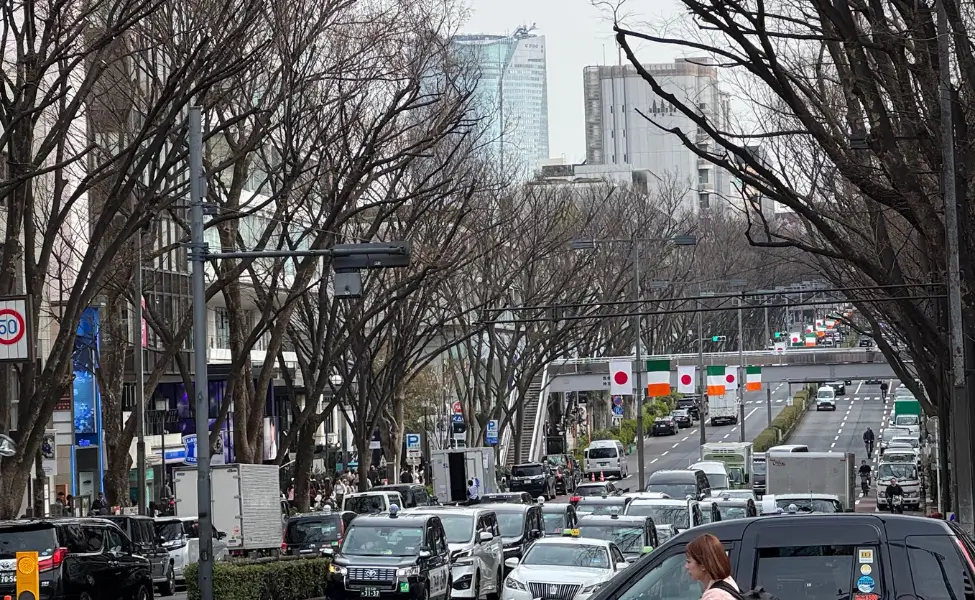
Golden Week is Japan’s most obligation-free holiday, and that is exactly why it gets so crowded. Unlike Obon and New Year, when people are expected to return to their hometowns and pay respects to family, Golden Week carries no such tradition.
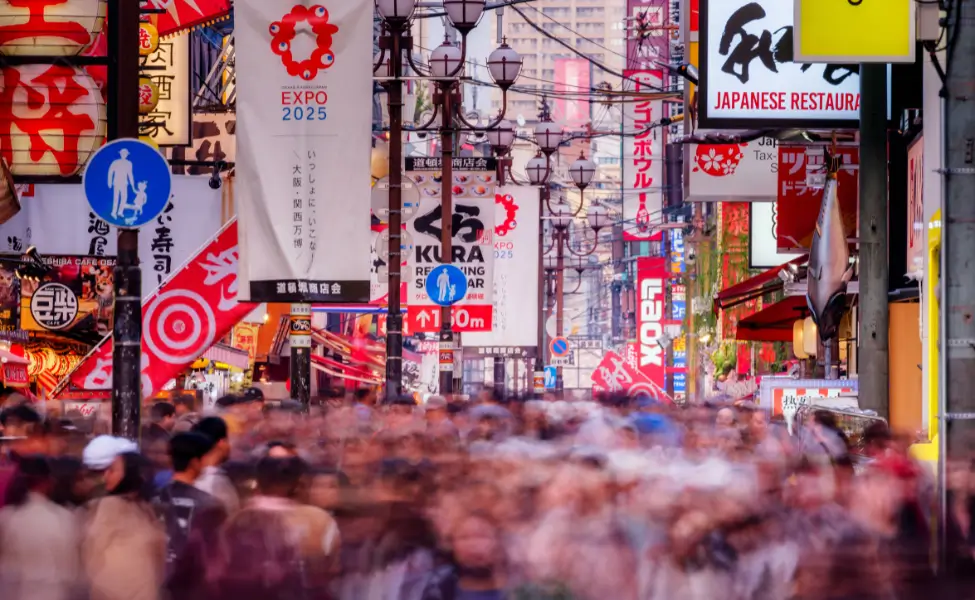
Most people simply go out and enjoy themselves, choosing sightseeing, shopping, theme parks and the same handful of famous destinations you are planning to visit. That overlap, not an exodus to the countryside, is the real reason Kyoto, Tokyo and the other headline spots feel so much busier than usual.
None of this means the country shuts down the way it does around New Year. Most shops, restaurants and tourist attractions stay open right through Golden Week.
Children’s Day on 5 May adds its own bright note, with koinobori carp streamers hung outside houses and along riverbanks. Many families also display kabuto helmets or samurai dolls indoors, as a wish for their children’s strength and health.
The crowds you will meet come from people out enjoying the same week you are, not from businesses closing their doors. That is exactly why a trip during this week still works, provided you plan around where everyone else is heading.
Should You Change Your Dates, or Work Around Them
If your flights are already booked and non-refundable, changing your dates probably isn’t realistic. It doesn’t need to be, either.

Golden Week is a different version of a Japan trip, not a ruined one. The sooner you stop treating the dates as a mistake, the sooner you can start planning around them properly.
The Case for Going Anyway
The weather is one of the strongest arguments for this window. Late April and early May bring mild temperatures, clear skies and greenery everywhere, well before the heat and humidity of June arrive.
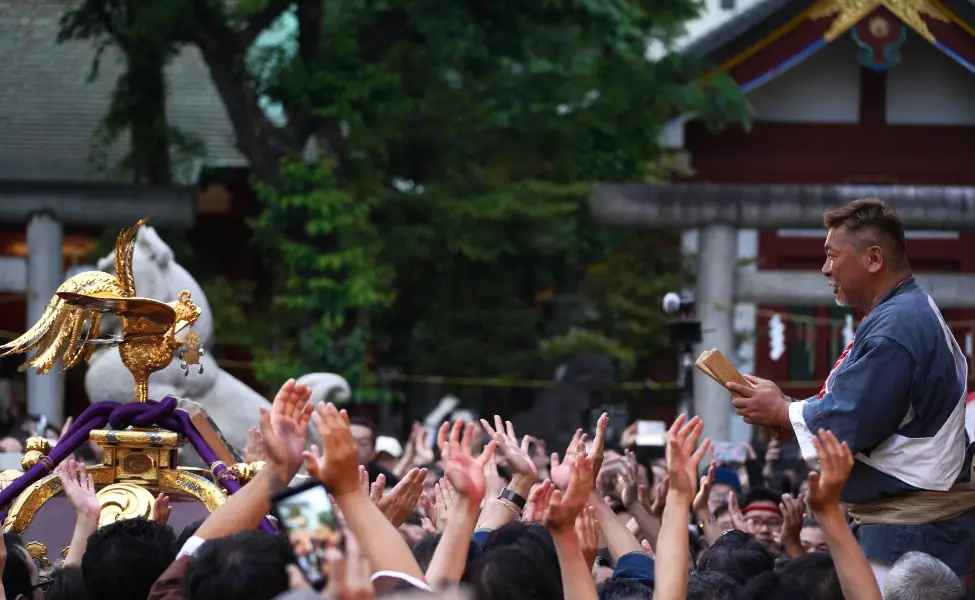
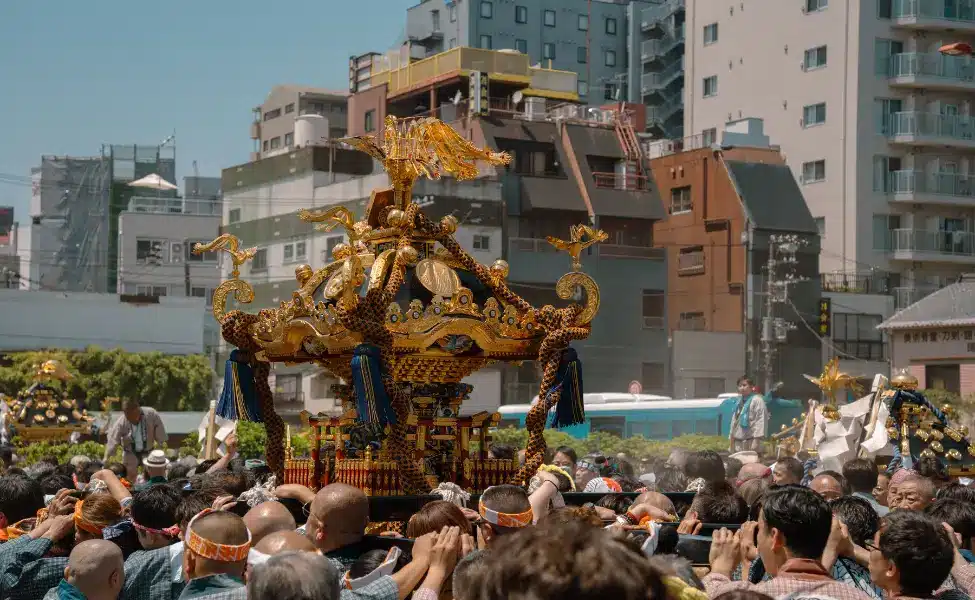
Festivals run across the country during the break, including Fukuoka’s Hakata Dontaku Festival on 3 and 4 May, one of Japan’s largest citizen festivals.
There is also a genuine energy to the country during Golden Week that is hard to find at any other time of year. Millions of people are choosing to celebrate at once, rather than simply going about an ordinary week.
The Case Against Going
The crowds are real, and they reach further than famous landmarks alone. Popular restaurants, coin lockers, rental car counters and even convenience stores near stations can all feel the strain.
Food stalls in festival cities like Fukuoka can run wait times past an hour. Hotel prices climb well above their usual rates across the board. Rooms in cities like Kyoto and Tokyo can disappear months in advance, rather than simply becoming more expensive.
If you are the kind of traveller who prefers to book things when you arrive, this week will test that habit hard. Better to admit that now than to discover it standing at Kyoto Station.
None of that means the crowds are identical to an ordinary busy day in Tokyo. They are heavier, they last longer, and they follow a different rhythm across the week. That is exactly why the next section matters more here than it would for a normal trip.
Booking Deadlines
Trains and hotels do not follow the same rules. Treating them as though they do is the most common planning mistake for this particular week.
You only need to lock in a handful of anchor points. Everything else can stay flexible.
- Reserve your Shinkansen seats as soon as the relevant booking window opens. Standard JR reserved-seat sales generally begin at 10:00 a.m. one month before travel, so tickets for 29 April normally go on sale on 29 March. SmartEX is an exception for the Tokaido, Sanyo and Kyushu Shinkansen, allowing a limited number of reservations up to one year ahead, with the train and seat confirmed one month before departure. Popular morning departures on routes like Tokyo to Kyoto can sell out within hours.
- Book Tokyo and Kyoto hotels three to six months ahead if you want a genuine choice of properties. Unlike trains, hotels have no fixed release date, which means rooms disappear one by one as other travellers commit, and waiting rarely brings prices down. Golden Week hotel rates in both cities typically run well above their usual levels for the entire period. There is little advantage to holding off.
- Target the middle days for your longest train journeys. Long-distance travel tends to be noticeably calmer once the initial outbound rush has cleared and before the return journey builds. Sightseeing crowds at places like Fushimi Inari or Kiyomizu-dera do not always follow the same pattern.
- Keep two or three days genuinely unplanned. Once your key trains and hotels are confirmed, you do not need an hour-by-hour itinerary for the rest of the trip. Golden Week works best for the traveller who has the essentials locked in, with the flexibility to change plans around them. It doesn’t work well for the traveller who has scheduled every minute.
Where to Go for a Calmer Version of the Same Trip
Stepping away from Tokyo, Kyoto and Osaka does more for your experience than any amount of careful timing ever could. The crowd pressure in Japan during Golden Week concentrates heavily on the same handful of famous names.

A short detour to somewhere less obvious can change the entire feel of your trip.
Cities That Take the Edge Off
Kanazawa offers the castle towns, gardens and traditional streets that draw people to Kyoto, without anywhere near the same crush of visitors.

Takayama, tucked into the mountains of the Hida region, keeps its old town walkable even during the busiest week of the year.
Further north, cities across the Tohoku region see a fraction of the domestic travel pressure that Kyoto and Osaka absorb. Most of the crowd is funnelling towards the same three destinations everyone else has heard of.
Two Places Still Worth the Trip for Their Flowers
Cherry blossom season is finished across most of central Japan by the time Golden Week begins. Do not build a trip around catching sakura in Tokyo or Kyoto during this window. Plenty else is still in bloom instead.
Ashikaga Flower Park in Tochigi Prefecture centres on a wisteria tree that is over 160 years old. Its trellis spreads wide enough to walk beneath for minutes at a time.

Hitachi Seaside Park‘s rolling hillside of blue nemophila flowers offers a completely different kind of spring colour.
Both often reach their seasonal peak around Golden Week and can become extremely crowded, so visit early and expect queues and transport congestion.
Handle Golden Week this way and it stops being something you have to survive. Reserve the two or three journeys that genuinely need it. Choose at least one destination outside the obvious three cities, and leave the rest of the week open.
Do that, and the week you were worried about becomes one of the most memorable stretches of your entire trip, crowds included.
