

In Japan, night can still feel ancient, when the stars appear as they once did centuries ago.
Away from neon-lit cities, the country offers extraordinary opportunities to observe the night sky in its full glory.
From remote southern islands to alpine plateaus, these destinations provide some of the clearest views of stars, constellations, and the Milky Way.
Whether you seek guided tours with astronomy experts or quiet spots to simply lie back and watch the cosmos unfold, these locations deliver unforgettable experiences beneath the stars.
Why Japan Excels for Stargazing
The country’s varied geography creates ideal conditions for observing celestial wonders.
Mountain regions reward visitors with high altitudes and thin, clear air.
Remote islands sit far from urban sprawl.
Many areas maintain strict light pollution controls, preserving natural darkness.
You can observe phenomena rarely visible from mainland locations, including the Southern Cross constellation and shooting stars during peak meteor showers.
Best Time for Stargazing in Japan
Winter generally brings the clearest skies across most regions, though temperatures drop significantly.
Spring offers milder weather with reasonable visibility, particularly in mountain areas.
Summer presents warm nights but higher humidity that can obscure fainter stars.
Autumn provides excellent conditions with stable weather patterns.
New moon periods deliver the darkest skies, whilst full moons illuminate landscapes beautifully but reduce visible stars.
Top Stargazing Destinations in Japan
Ishigaki Island, Okinawa
The Yaeyama Islands in southern Okinawa provide Japan’s premier stargazing destination.
Ishigaki Island earned designation in 2018 as the country’s first International Dark Sky Place through the International Dark Sky Association.

The Iriomote-Ishigaki National Park encompasses much of the island, where exceptionally dark skies allow observation of 84 out of 88 recognised constellations.
From mainland Japan, particularly Honshu, you can typically see only 60 constellations at most.
Located at approximately 24 degrees north latitude, Ishigaki reveals sights unseen elsewhere in Japan.
Between late December and mid-June, observers can spot the Southern Cross, a constellation primarily visible in the Southern Hemisphere.
All 21 first-magnitude stars, the brightest in the night sky, appear here.
Only 16 of these brilliant stars can be seen from mainland Japan.
The island benefits from relatively stable weather throughout the year compared to other regions.
Clear skies occur frequently, particularly during certain seasons.
From May through October, the Milky Way stretches distinctly across the darkness, creating spectacular photographic opportunities.
What to Do: Join a certified stargazing tour where guides explain constellations and share stories about Yaeyama’s star culture.
Many tours offer reclining chairs, binoculars, and photo sessions under the brilliant Yaeyama sky.
Kabira Bay offers particularly stunning settings for night sky observation.
Some tours include traditional sanshin music performances, blending astronomy with local cultural heritage.
Access: Direct flights connect Ishigaki Airport with Tokyo, Osaka, Nagoya, and Fukuoka (two to three and a half hours).
From Naha on Okinawa’s main island, flights take approximately one hour.
Oishi Park, Lake Kawaguchiko
Situated on the northern shore of Lake Kawaguchiko in Yamanashi Prefecture, this location combines mountain scenery with exceptional night sky views.
Mount Fuji’s silhouette provides a dramatic foreground to the stars above.
During winter, snow-covered Fuji reflects moonlight, making the peak visible even after dark.

You can simultaneously observe the mountain and skies thick with stars, creating a uniquely Japanese stargazing experience.
Lake Kawaguchiko’s high altitude and clear winter air make it excellent for astronomical observation. Winter months bring high rates of sunny weather with minimal cloud cover.
The surrounding Fuji Five Lakes region maintains relatively low light pollution, particularly at parks along the northern shore.
During daytime, visitors enjoy the park’s flower displays, which change seasonally.
Lavender blooms in early summer, whilst autumn brings vibrant cypress foliage.
The promenade stretches along the lakeside, offering views year-round.
At night, the atmosphere transforms into a peaceful observation spot.
What to Do: Bring a blanket and find a comfortable position on the lawn.
The park gives visitors a perspective few places can match, with unobstructed views requiring no special equipment, though binoculars enhance the experience.
Several guest houses organise winter stargazing events, and some tours focus on photographing Mount Fuji beneath the stars.
Access: From Tokyo, take the JR Chuo Line to Otsuki Station, then transfer to Fujikyu Railway to Kawaguchiko Station (approximately two hours).
From Kawaguchiko Station, take the Fujikyu red loop bus (25 minutes) to Kawaguchiko Natural Living Centre stop.
Shirakawa Village, Gifu
Deep in the Japanese Alps lies this UNESCO World Heritage village, famous for traditional gassho-zukuri farmhouses with distinctive steep thatched roofs.
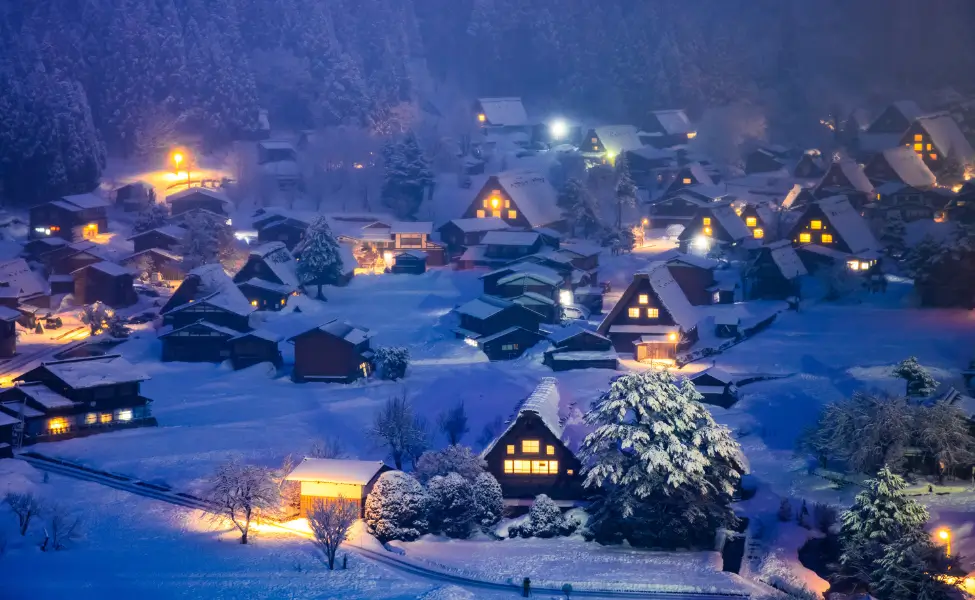
The architectural style, developed over generations to withstand heavy snowfall, creates a remarkable setting for night sky observation.
When illuminated by starlight or moonlight, these centuries-old structures add cultural depth to the astronomical experience.
The village’s remote mountain location places it far from any significant sources of light pollution.
Surrounded by peaks and forests, the area maintains exceptionally dark skies.
Crisp alpine air at approximately 400 metres elevation enhances visibility.
The isolation that once made this region difficult to reach now preserves its pristine night environment.
Ogimachi, the largest hamlet with 59 gassho-zukuri houses, provides the best base for stargazing.
The village maintains its traditional character, with ridges of farmhouse roofs aligned parallel to the Sho River, creating a unified historical landscape.
What to Do: After exploring the village during daylight hours, find a quiet spot away from the few streetlights.
The contrast between ancient architecture and eternal starlight creates powerful visual memories.
Staying overnight at a gassho-zukuri minshuku allows you to observe stars from a futon spread on tatami mats, experiencing traditional Japanese mountain life whilst the cosmos wheels overhead.
Access: From Kanazawa, take the Nohi Bus directly to Shirakawa-go (approximately 75 minutes).
From Takayama, buses run regularly (about 50 minutes). During peak seasons, advance bus reservations are essential.
Achi Village, Nagano
Achi Village, located in the Japanese Alps of southwestern Nagano Prefecture, was named Japan’s top stargazing spot by the Ministry of Environment in 2006.
This peaceful alpine town has 6,500 residents.
It now draws over 100,000 visitors each year.
They come to see some of the darkest skies in the country.
The village’s remote location creates exceptionally low light pollution.
Achi sits at 1,400 metres, surrounded by the Central and Southern Alps.
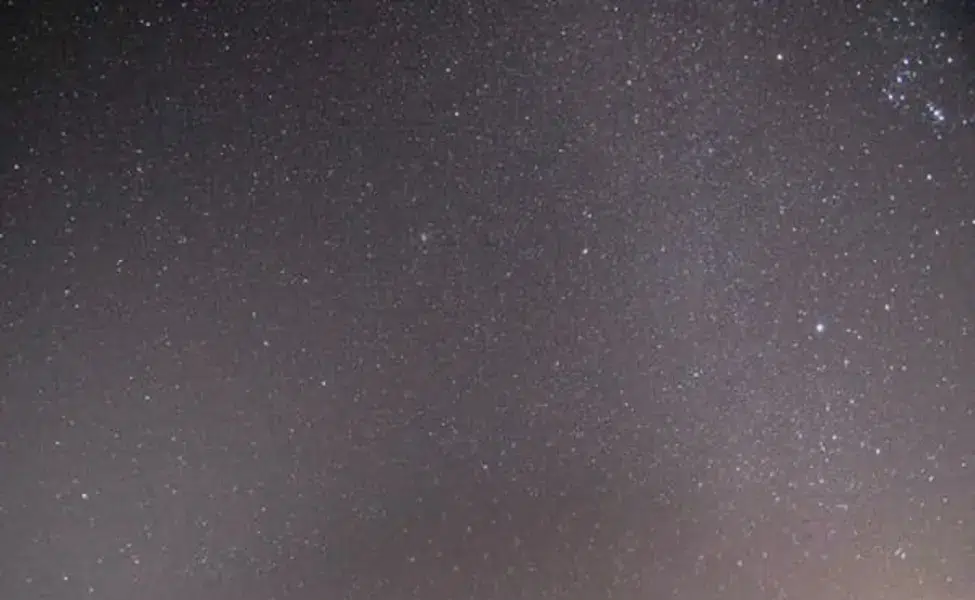
This high altitude, along with clean mountain air and its remote location, offers amazing visibility.
It rivals dedicated dark sky preserves around the world.
Star Village Achi, perched atop Heavens Sonohara ski resort, serves as the main observation facility.
As a side note, Heavens Sonohara ski resort is one of the beat places to go skiing in Japan for beginners.
A 15-minute gondola ride transports visitors through darkness to the mountaintop observatory.
At the summit, a wide plain equipped with telescopes offers unobstructed views.
Each evening at 8pm, all lights extinguish following a countdown.
Certified Star Concierges then use laser pointers during a 30-minute presentation to identify constellations and explain seasonal celestial phenomena.
Namiai Starry Sky Park, which opened in 2018, provides a different experience at 1,200 metres.
This forest park offers more educational tours, often in English, combined with camping facilities and an observation deck.
What to Do: Book tours at least two weeks ahead.
Star Village Achi costs 2,000 yen for adults, Namiai runs 1,000 yen. Winter delivers the clearest skies.
Bring warm layers, as mountain temperatures drop significantly after sunset even in summer.
Combine stargazing with nearby Hirugami Hot Springs, where traditional ryokan offer highly alkaline waters.
During daylight, explore fruit picking, peach blossom roads in spring, or winter skiing.
Access: From Tokyo, take the JR Chuo Line to Okaya Station, then the Iida Line to Iida Station (total 5 hours), followed by a 30-minute bus to Achi.
Highway buses from Shinjuku reach the area in 2.5 hours.
From Nagoya, Meitetsu buses take 90 minutes. Driving from Tokyo via Chuo Expressway takes about four hours.
Mount Yoshino, Nara
Famous worldwide for its 30,000 cherry trees that bloom across mountain slopes each spring, Mount Yoshino transforms dramatically at night.
The mountain ridge stretches approximately eight kilometres, rising from the Yoshino River through multiple elevation zones.

This UNESCO World Heritage site attracts hundreds of thousands during cherry blossom season, but after crowds depart at dusk, a different beauty emerges.
Clear spring nights allow observation of stars framed by cherry branches.
The trees cluster in four distinct groves at different altitudes: lower, middle, upper, and inner areas.
This arrangement, established over centuries, means blossoms open progressively as you ascend.
During the brief window when flowers bloom and skies remain clear, visitors can experience both terrestrial and celestial beauty simultaneously.
The mountain’s religious significance adds cultural layers to any visit.
Kinpusenji Temple, a massive wooden structure and important Buddhist site, serves as a focal point.
What to Do: During cherry blossom season, certain areas remain illuminated until evening, but quieter spots away from the lights offer better stargazing.
Yoshimizu Shrine provides elevated views across blossom-covered slopes, where you can watch stars appearing as twilight deepens.
Staying overnight at a mountain ryokan allows evening and pre-dawn observation when crowds have vanished.
Access: From Osaka’s Abenobashi Station, take the Kintetsu Minami Osaka Line directly to Yoshino Station (approximately 85 minutes).
From Kyoto, travel via Kyoto Station to Kashiharajingu-mae Station, then change to the Yoshino line.
A ropeway cable car operates between the station and upper mountain areas.
Planning Your Stargazing Adventure
Weather significantly affects visibility, so check forecasts carefully.
Cloud cover ruins even the darkest location.
Light pollution maps help identify additional prime locations beyond these five sites.
National parks often maintain dark sky policies.
Coastal areas with offshore winds that clear atmospheric haze can surprise with excellent conditions.
Allow your eyes at least 20 to 30 minutes to fully adapt to darkness.
Avoid white lights, which destroy night vision.
Red-filtered torches preserve your ability to see faint stars.
Smartphone screens should be dimmed or covered with red filters if you need to check star charts or apps.
Star chart apps help identify constellations, though taking time to simply absorb the spectacle without technology creates its own rewards.
These destinations represent just a beginning.
Japan’s varied geography creates countless opportunities to connect with the night sky.
Wherever you go, Japan’s night skies promise both beauty and perspective, a reminder that some of the best sights begin after dark.

