
Planning a first trip to Japan gets complicated surprisingly quickly. You start off wondering where to stay in Tokyo, and twenty minutes later you’re comparing rail passes and checking whether your phone supports an eSIM. Then you find three IC cards that seem to do exactly the same thing.
I’ve lived in Japan since 2000, and there’s no single correct way to travel here. Japan is much bigger than Tokyo, Kyoto and Osaka, and Hokkaido in February is a completely different trip from Okinawa in June. Nagoya sits on the bullet train line between Tokyo and Osaka, which makes it a practical base for central Japan.
So rather than one-size-fits-all answers, here are the Japan travel questions first-time visitors ask most, including several where the answer has changed recently.
When to Go
Is there a best time to visit Japan?
Not really. Spring and autumn get most of the attention, and both can be lovely. Still, the best month depends on what you want to do and where you’re going.
Cherry blossom season shows how much location matters. Blossoms can open as early as January in subtropical Okinawa and as late as May in Hokkaido. Tokyo, Kyoto and Osaka usually bloom around late March or early April. The timing shifts every year with the weather, though, and full bloom is short, so check the forecasts as your dates get closer.
Autumn colours generally peak from late October to late November in many popular areas, though again it varies by region and year. Summer and winter often get written off, which is a shame. Midsummer is typically hot and humid in cities such as Tokyo, while Hokkaido stays cooler. Winter suits anyone after skiing, snow festivals or a hot spring bath, particularly in the north.

Typhoons are the main late-summer caveat. They’re most likely in August and September, with some risk in July and October. A strong typhoon can halt bullet trains and flights, so leave a little slack in your plans if you’re travelling then. Overall, I’d choose your dates based on what you actually want to experience rather than somebody else’s definition of perfect weather.
Should I avoid Golden Week?
If you have flexibility, I usually would. Golden Week is a cluster of national holidays running from late April into early May. It’s one of the country’s biggest domestic travel peaks, alongside Obon in mid-August and the New Year holiday, and trains, sights and accommodation fill up during all three.
Japan doesn’t shut down or become impossible to visit during these periods. You simply need to book earlier and expect plenty of domestic travellers.
What will the weather be like?
First decide where you’re going. Asking what Japan is like in November is a bit like asking what Europe is like in November. Look up typical conditions for each place on your route, then check the actual forecasts again just before you leave.
Before You Fly
Do I need Visit Japan Web?
Visit Japan Web is the government’s free website for completing your arrival paperwork before you land. You enter your immigration and customs information, then show a QR code at the airport. A single code has covered both immigration and customs since 2024. Each traveller has their own code, but you can register family members on one account and switch between them.
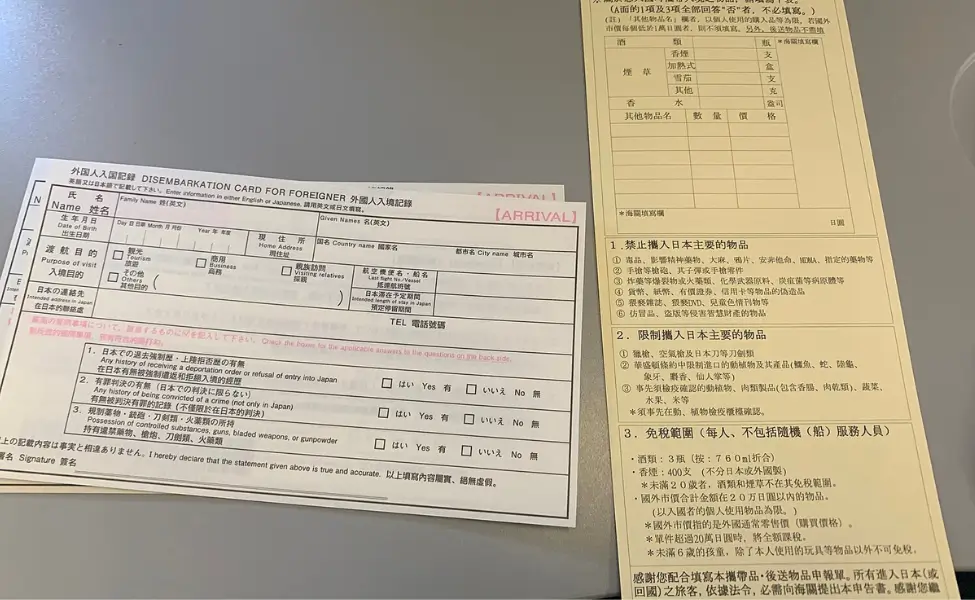
It isn’t compulsory for the customs declaration, as the paper form still exists. I’d still recommend completing Visit Japan Web before you fly rather than doing everything in an arrivals hall after a long-haul flight.
Use only the official Digital Agency site, which is a website rather than an app. In May 2026, Japan Customs warned travellers about fake sites and paid “assistance” services charging for procedures that are free.
Can I bring my medication into Japan?
This is one question where you shouldn’t rely on a travel blogger, a Facebook comment or a Reddit thread. Go to Japan’s Ministry of Health, Labour and Welfare instead.
As a general rule, you can bring up to a month’s supply of prescription medicine for personal use without an Import Confirmation. Many non-prescription medicines can come in up to a two-month supply. Those allowances only apply if nothing in the medicine is prohibited or specially controlled in Japan. Some ingredients are banned outright, and narcotics and other controlled substances follow separate rules.
If you need more than the permitted amount, you’ll need an Import Confirmation before you travel. You apply through the ministry’s online system, receive the certificate by email, and show it to customs if they ask.
Don’t assume that because a medicine is legal at home, you can bring it into Japan. Check your specific medicine early, well before your departure date.
How long will immigration take?
There isn’t an honest answer. It depends on your airport, terminal and arrival time, and other flights arriving at the same moment, staffing and how fast the bags come off all play a part.

I wouldn’t build a tight train connection or an expensive reservation around clearing immigration quickly. Assuming you’ll collect your bags and pass customs within a set number of minutes is asking for trouble.
Arriving at the Airport
How do I get from the airport to my hotel?
That depends entirely on which airport you use, and Tokyo isn’t the only way in. Kansai, Chubu Centrair near Nagoya and Fukuoka also handle international arrivals, so the right airport depends on where your trip starts.
In Tokyo, Narita has two main rail options. JR’s Narita Express runs to Tokyo Station and other major stations, while the Keisei Skyliner goes to Nippori and Ueno. From Haneda, the Tokyo Monorail runs to Hamamatsucho and the Keikyu Line runs towards Shinagawa. Limousine buses also link both Tokyo airports with major stations and hotels.
At Kansai Airport, JR’s Haruka is a common choice for Kyoto, while Nankai trains serve Namba in Osaka. From Chubu Centrair, Meitetsu’s μSKY can reach Meitetsu Nagoya in as little as 28 minutes. It’s a private railway, so a JR Pass won’t cover it.
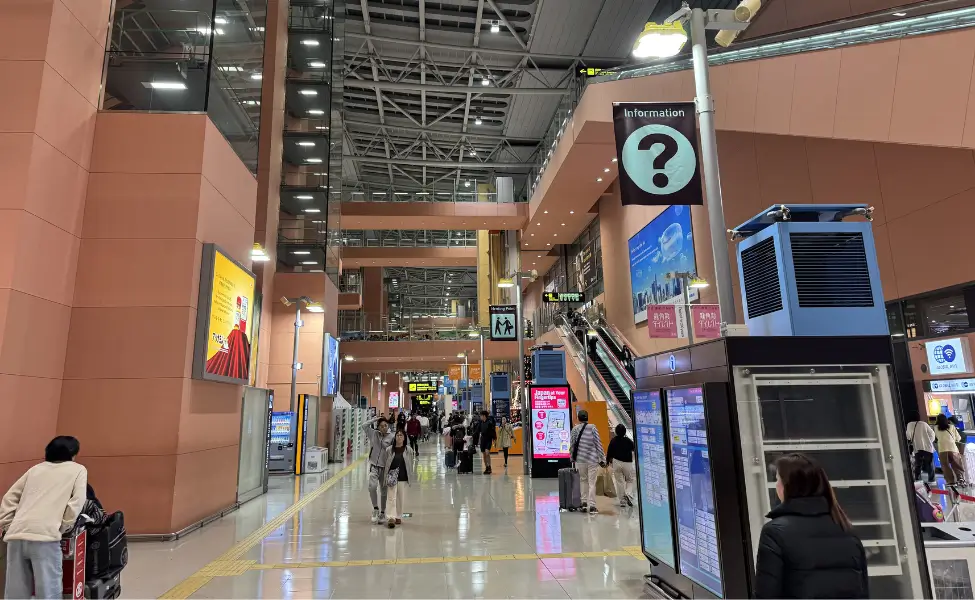
Somebody arriving at Centrair and staying in Nagoya faces completely different choices from somebody heading from Narita to Shinjuku. Google Maps is useful, but check the official airport and railway websites for current times and fares too.
Money and Paying for Things
Is Japan still a cash society?
Less than it used to be, but don’t arrive without cash. Government figures put cashless payments at just under 60 percent of consumer spending in 2025, so cards, IC cards and phones cover a lot. They don’t cover everything, though. Small restaurants, temples and shrines, some buses and many businesses in rural areas still often take cash only.

For cash, Seven Bank ATMs in 7-Eleven stores and Japan Post Bank ATMs at post offices are the most useful options for overseas visitors. Whether your particular card works, and what fees you’ll pay, depends on the card issuer and the ATM.
How much spending money do I need each day?
I don’t think a fixed figure such as ¥10,000 per person per day is particularly useful. A traveller eating ramen and convenience-store breakfasts spends very differently from somebody booking kaiseki dinners, cocktail bars and theme parks. Work out food and drink, attractions, local transport, shopping and nightlife separately instead, and keep accommodation and pre-booked long-distance trains out of that daily figure.
A few other costs deserve a line in your budget too. Japan’s International Tourist Tax rose from ¥1,000 to ¥3,000 per person for departures from 1 July 2026, although transitional rules may apply to some tickets issued earlier. Airlines and ferry operators collect it through the ticket price, so you won’t hand it over at the airport.
Local accommodation taxes can also add to the bill. Kyoto introduced revised rates from 1 March 2026, ranging from ¥200 to ¥10,000 per person per night depending on the room rate. Tokyo, Osaka and other places have their own lodging taxes, so check the places you’re actually staying rather than assuming one rule applies nationally.
How does tax-free shopping work now?
If you’re reading this before 1 November 2026, the existing system still applies. From that date, Japan switches to a refund-based system. You pay the tax-inclusive price in the shop, customs confirms that the goods are leaving Japan, and the shop or its refund operator then pays the consumption tax back.
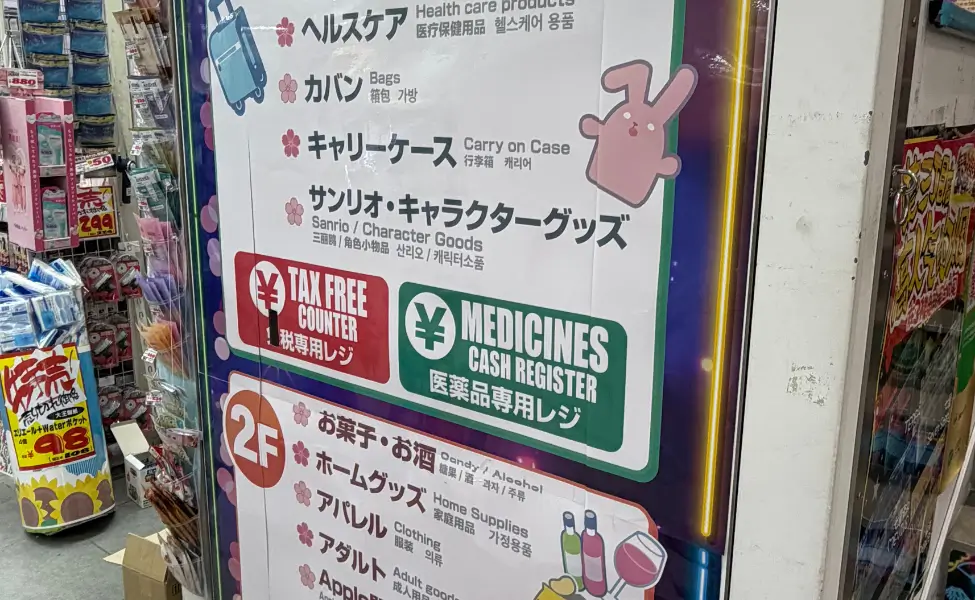
The customs check has to happen within 90 days of purchase, and the ¥5,000 minimum per shop per day stays. Anything you eat or use in Japan won’t qualify. Refund methods vary between shops, from card refunds to bank transfers and apps, so follow the instructions each shop gives you rather than assuming they all work the same way.
Phones, Data and Apps
Should I use an eSIM, a physical SIM or pocket Wi-Fi?
For one person with an unlocked phone that supports eSIM, an eSIM is normally the simplest option. You’ve nothing to collect, return, carry or charge.
Pocket Wi-Fi can make more sense for families or groups sharing a connection, although everybody then needs to stay reasonably close to the device. A physical SIM remains an option if your phone doesn’t support eSIM.
There isn’t one provider I would automatically call the best. Coverage, data allowance, speed limits, length of stay and price matter far more than whichever company pays a blogger the biggest commission. Whatever you choose, having your own data connection is far less stressful than relying on public Wi-Fi.
Which apps should I install before I go?
You don’t need twenty Japan-specific apps. For most people, I’d start with these.
- Google Maps, for station navigation, walking routes and public transport.
- Google Translate, for menus and signs.
- A weather app, which earns its place during typhoon season.
- Your airline and accommodation apps, for when plans change.
JNTO’s Japan Safe Travel Information page and its social media account also post weather warnings and transport updates in English. Bookmark them before you leave.
Planning Your Itinerary
Where should I start?
Start with what you want to experience, not a list of cities somebody says you’re supposed to visit. Food, castles, hiking, hot springs, anime, snow, small towns or nightlife will all point you in different directions, and once you know your priorities the itinerary gets much easier.

The Tokyo, Kyoto and Osaka route makes sense for plenty of first-time visitors, but it isn’t compulsory. Central Japan alone gives you Nagoya, Inuyama, Gifu, Takayama, the Kiso Valley, Ise and the Hokuriku region.
The Noto Peninsula is reopening gradually after the January 2024 earthquake, but recovery remains uneven, so check what’s open before including it. Kyushu could fill an entire holiday, and so could Hokkaido.
How many places should I visit?
Fewer than you think. One of the most common mistakes I see is an itinerary that effectively turns Japan into a race between railway stations. Two nights in Tokyo, one in Hakone, one in Nagoya, two in Kyoto, one in Osaka and one in Hiroshima is technically possible, but it rarely feels enjoyable.

Every hotel change eats time. You pack, find a locker or drag cases across a city, then check in and unpack again. If you’ve got ten days, you don’t need six different hotel rooms, so give yourself enough time to experience a place rather than simply prove you visited it.
Should I use a travel agent or book everything myself?
Either can be right. Japan is relatively straightforward to organise independently, particularly if you’re following major rail routes and staying in cities.
But I wouldn’t tell everybody that using a travel agent is a waste of money. A good specialist can earn their fee if you’re arranging accessible travel, travelling with older relatives, organising a large family trip or heading somewhere remote. Some people simply don’t want to spend weeks researching, and that’s a fair reason too.
Getting Around by Train
Do I need the Japan Rail Pass?
Probably not, but calculate it rather than guessing. The nationwide pass jumped in price in October 2023, when the 7-day version went from ¥29,650 to ¥50,000. These are the official online prices at the time of writing.
| Pass length | Standard | Green car |
|---|---|---|
| 7 days | ¥50,000 | ¥70,000 |
| 14 days | ¥80,000 | ¥110,000 |
| 21 days | ¥100,000 | ¥140,000 |
Child passes cost half the adult price. Buying through an overseas JR-designated agent now costs more, at ¥53,000 rather than ¥50,000 for the standard 7-day pass.
The pass doesn’t cover the fastest Nozomi and Mizuho trains unless you buy a separate NOZOMI MIZUHO Ticket for each journey. Hikari and Kodama trains, which make more stops, remain covered.
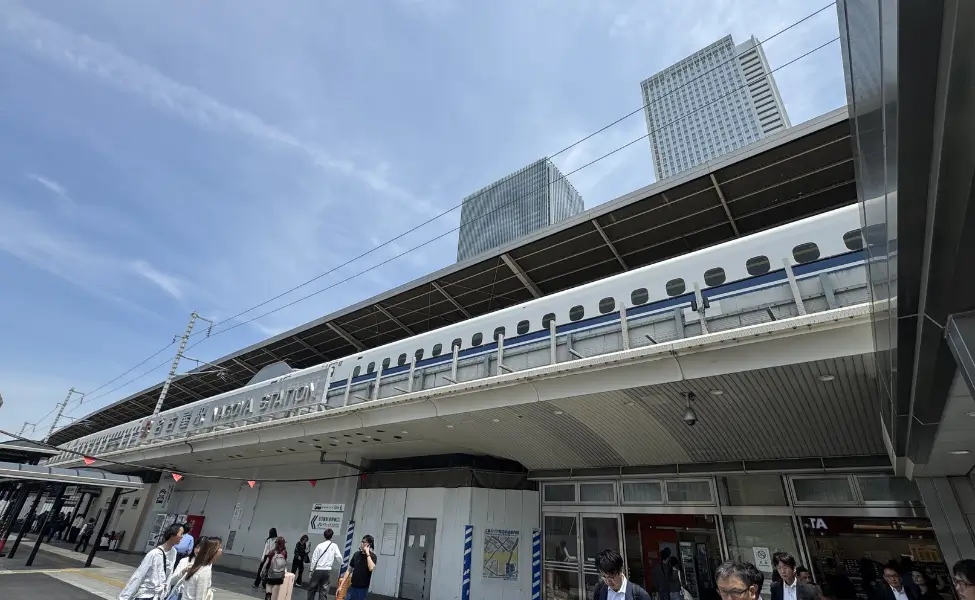
The pass can still pay off for itineraries packed with long-distance JR travel. For many visitors, though, individual tickets work out cheaper. JR companies also sell regional passes, which can be better value if your trip centres on one part of the country, so price your actual journeys before you buy anything.
Do I need to reserve Shinkansen tickets?
Not always. Outside the busiest periods, you can often buy tickets shortly before travelling. Reserved seats normally go on sale at 10 am one month before departure. JR Central’s online service also lets you request a limited number of seats up to a year ahead, with the details confirmed a month out.
Reserving makes more sense in these situations.
- You’re travelling during Golden Week, Obon or New Year.
- Several people want to sit together.
- You’re catching a popular train at a busy time.
- You’re carrying a large suitcase.
- You need to arrive somewhere at a specific time.
In the busiest periods, every seat on Nozomi trains becomes reserved, so you can’t simply turn up and sit in a non-reserved car. Each JR company also runs its own online booking service, and the right one depends on the line you’re riding. That’s another reason not to treat every train journey as though it starts in Tokyo.
Can I take a large suitcase on the bullet train?
Usually, yes, but the rules differ by line. On the Tokaido, Sanyo, Kyushu and Nishi-Kyushu Shinkansen, a case with total dimensions of more than 160 cm and up to 250 cm needs a reserved seat with an oversized baggage area. That total means height, width and depth added together.
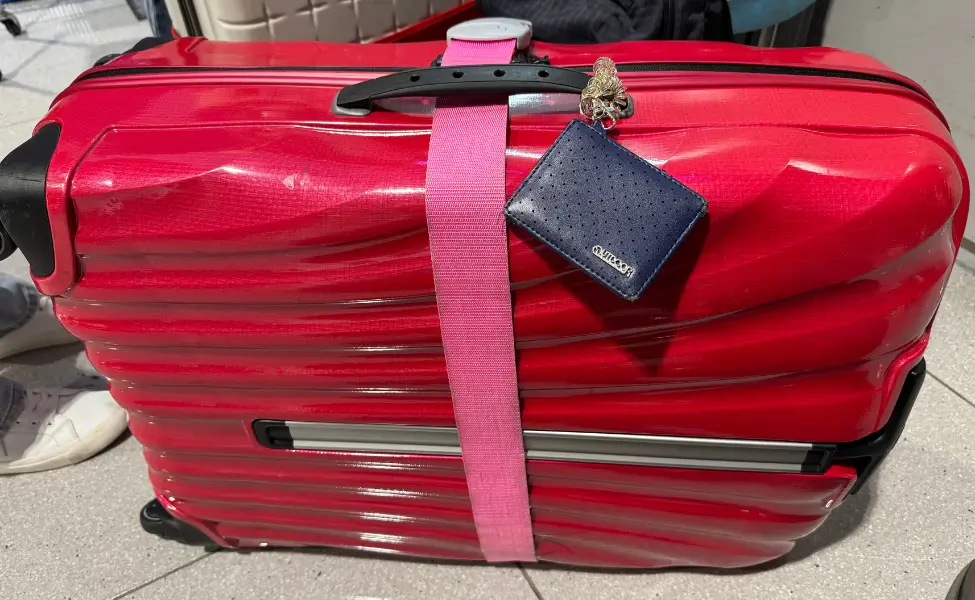
The reservation costs nothing extra, but bringing oversized baggage on board without one means a ¥1,000 fee. Anything over 250 cm isn’t accepted. JR East’s lines, such as the Tohoku and Hokuriku Shinkansen, don’t use this reservation system, though space for big cases isn’t guaranteed. Don’t assume one luggage rule applies to every bullet train in Japan.
Should I send my luggage ahead?
If you’re changing hotels several times, it’s worth considering. Luggage forwarding lets you send a suitcase ahead to your next hotel or the airport, and hotel receptions, airport counters and many convenience stores can arrange it.
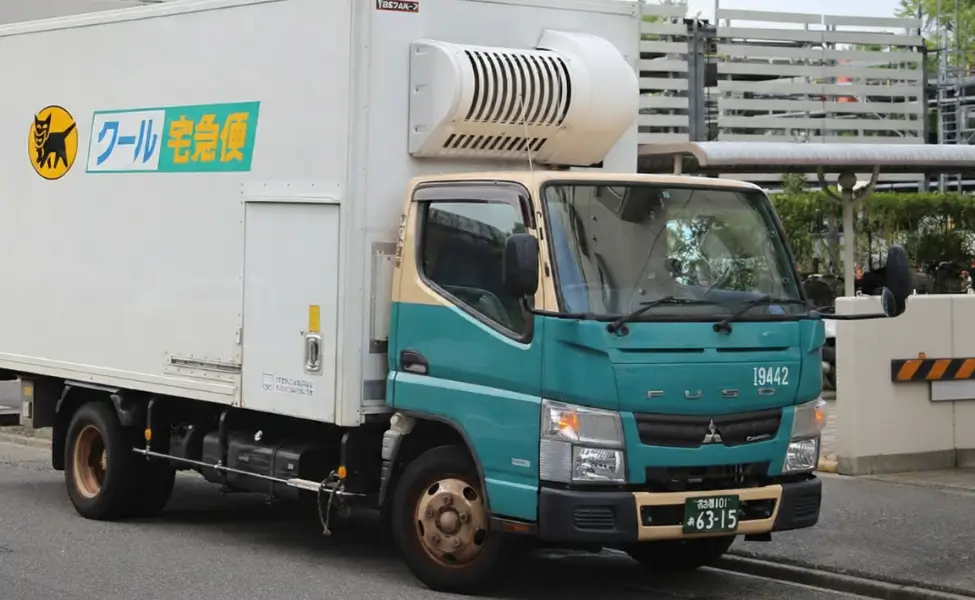
Don’t assume same-day delivery. Depending on the route, your case may arrive the following day or later, so pack what you’ll need separately and check that your next accommodation accepts forwarded luggage.
IC Cards
What is an IC card?
An IC card is a rechargeable card you tap at ticket gates and on buses. You can also use it to pay in shops displaying the IC logo. The names vary by region, but the major cards work in each other’s areas.
| Region | Main cards |
|---|---|
| Tokyo area | Suica, PASMO |
| Nagoya and central Japan | TOICA, manaca |
| Kansai | ICOCA |
| Hokkaido | Kitaca |
| Kyushu | SUGOCA, nimoca, Hayakaken |
Which IC card should I get?
For most visitors, whichever interoperable card is easiest to get where you arrive. Flying into Tokyo, that might be Suica or PASMO, while ICOCA makes sense if you’re arriving in Osaka. If you’re starting in Nagoya, don’t hunt down a Suica just because you’ve seen it mentioned online. TOICA and manaca are the local options and work in the other regions too.
Is Suica still available?
Yes. JR East and the PASMO operators suspended sales of ordinary cards during a chip shortage, then restarted them on 1 March 2025. Older articles saying you can’t buy a Suica or PASMO are out of date, and a standard Suica includes a ¥500 deposit.
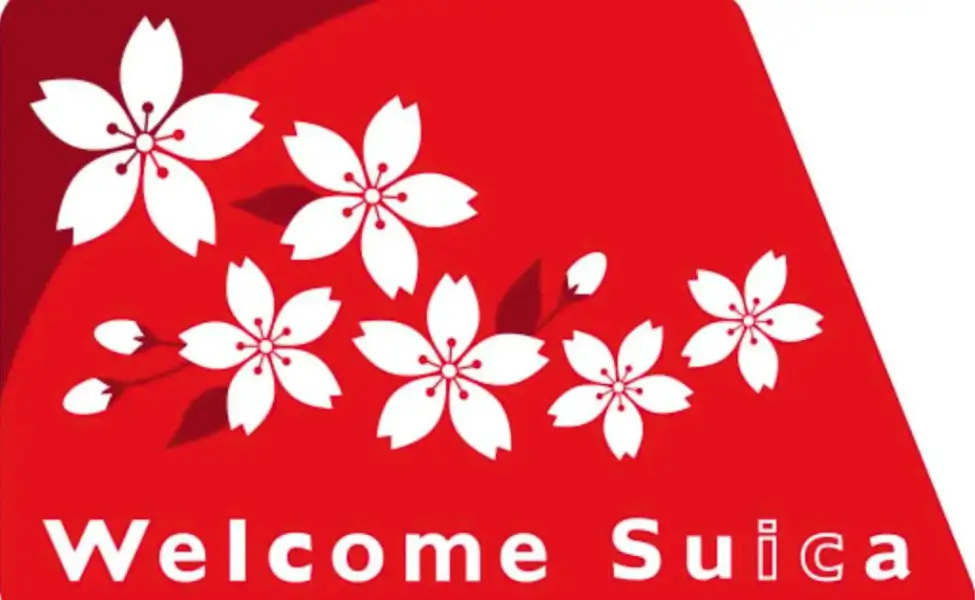
There are also cards aimed specifically at overseas visitors. Welcome Suica needs no deposit and is valid for 28 days, including the day you buy it. PASMO introduced TOURIST PASMO in May 2026, sold at railway stations at Narita and Haneda airports.
According to launch coverage, it lasts 28 days from issue, needs no deposit and doesn’t refund any balance left at the end. Sales locations and conditions can change, so check before you depend on getting a particular card at a particular station.
Can I put Suica on my phone?
iPhone users can download JR East’s Welcome Suica Mobile app and set up a Suica before leaving home. There’s no Android version of that app. Android is less predictable in general, because many overseas models lack the Japanese FeliCa support that mobile IC cards rely on.
I wouldn’t tell every overseas Android user that digital Suica simply isn’t possible. I also wouldn’t rely on it without checking your specific phone, and a physical card is the safe fallback.
Does an IC card work everywhere?
No, and “works throughout Japan” is too broad. A card won’t carry you on one fare from one IC area into another, such as Nagoya to Osaka on a local ticket, and it doesn’t work outside IC areas at all.
An IC card isn’t a bullet-train ticket either. You can’t ride the Shinkansen on ICOCA, for example, so buy a proper Shinkansen ticket for those journeys.
Travelling with Children
Is Japan easy to visit with children?
Generally, yes, but a family trip needs slightly different planning from a solo or couples trip. Each person needs their own IC card at the ticket gates, because a card can’t be used by more than one person. A child card charges the child fare, so your children shouldn’t use adult cards.
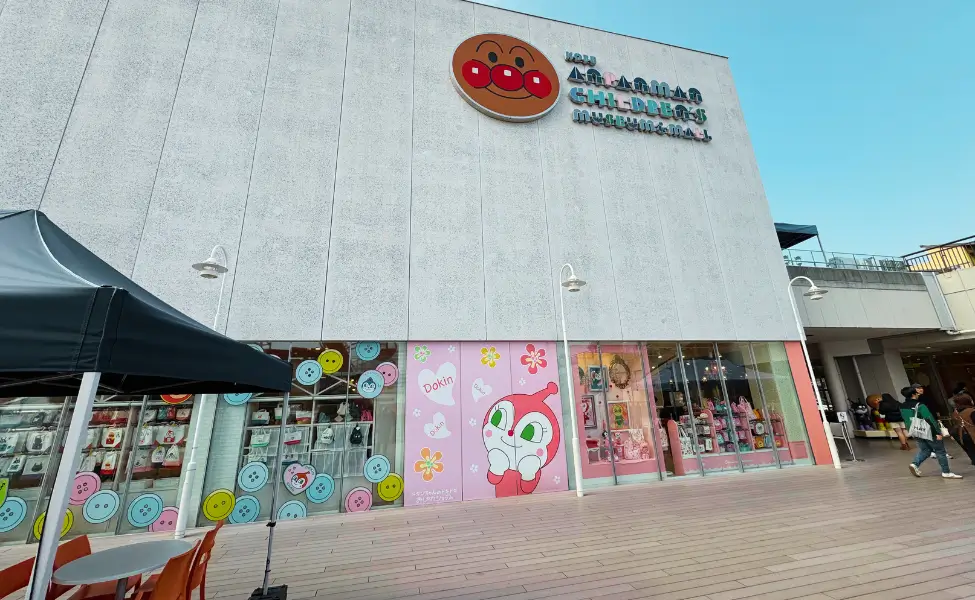
Welcome Suica comes in a child version, which works until the 31 March after the child’s 12th birthday. When you buy one, you’ll need the child’s passport or other ID, though a parent can make the purchase. Child Japan Rail Passes cost half the adult price.
Check accommodation carefully too. Don’t assume that because a room appears to sleep three or four people on a booking site, the hotel’s rules on children, bed sharing and breakfast charges will match what you’re used to at home.
Pushchairs are a normal sight on Japanese trains, and Tokyo’s trains have spaces set aside for wheelchairs and pushchairs. Finding the lifts in a big station can still take time, so I’d build a little more slack into each day rather than following exactly the itinerary you’d plan for adults.
Where You Stay
How early should I book accommodation?
It depends where and when. For ordinary city stays, you don’t always need to book six months ahead. If your dates overlap Golden Week, Obon or New Year, or you’re heading to a small town with few places to stay, booking earlier makes sense.
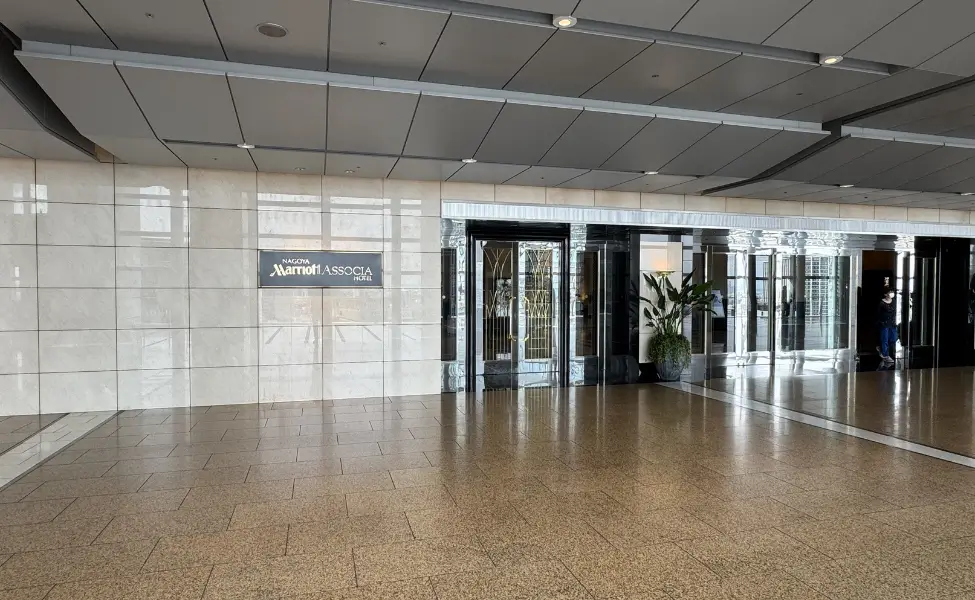
If somewhere you want shows no availability far in advance, check again later, as it may not have opened bookings yet. It’s also worth checking the hotel’s own website alongside the big booking sites before you commit.
Why is my hotel or holiday let asking for my passport?
It comes down to whether you have an address in Japan. Licensed holiday lets must record your passport details and keep a copy if you don’t, so a request for your passport before a self check-in isn’t automatically suspicious. Hotels will also ask overseas visitors for their passport at check-in.
Make sure you’re dealing with the genuine property or booking platform before you send passport information online.
Onsen
Do I have to be naked in an onsen?
In a standard communal onsen, yes. You bathe naked after washing at the taps, and swimwear generally isn’t allowed.

But I wouldn’t say bathing clothes are never allowed. Some mixed baths provide a bathing wrap called a yuami-gi, so check the individual facility rather than relying on a blanket rule from the internet.
What if I have tattoos?
Check before you go, because policies vary bath by bath. Many still refuse tattoos, some accept small ones under a cover sticker, and more are now openly tattoo-friendly. A private bath you can book for yourself is often the simplest option, although it’s still worth checking the property’s own rules.
Accessibility
Is Japan easy to travel around with a wheelchair or limited mobility?
It can be, especially in major cities, but don’t assume every station, hotel, temple or attraction will be straightforward. Many major destinations now publish accessibility information in English. Some tourist sites offer wheelchair rental, and certain hotels provide accessible bathing facilities and even an assisted bathing service.
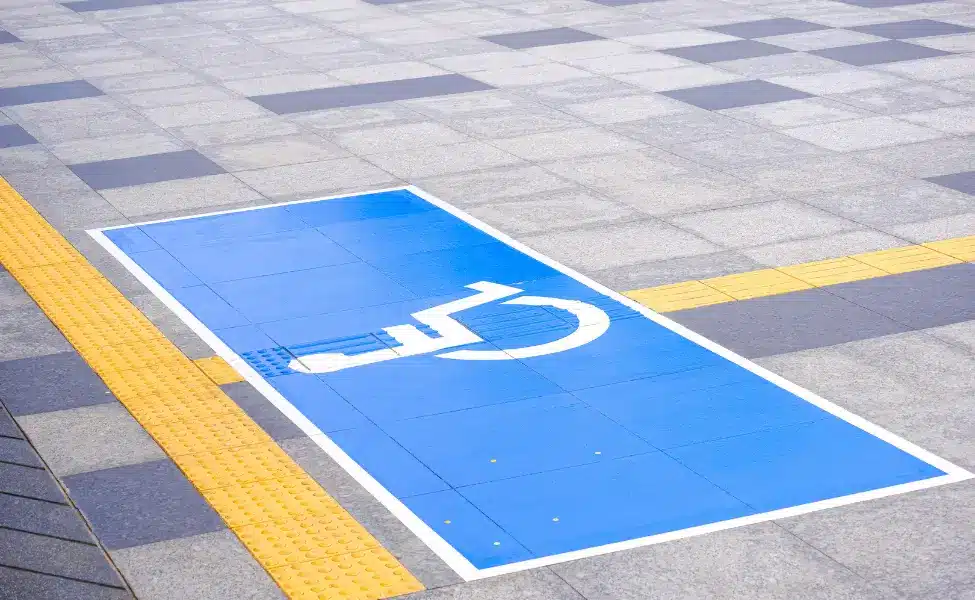
In Tokyo, most stations have lifts and accessible toilets, and station staff can often help with ramps for boarding. Avoid the morning and evening rush hours if you can. On the Shinkansen, wheelchair spaces need booking in advance, so arrange them when you reserve your seats.
Historic buildings, temples, mountain areas and older ryokan can be harder going, and buses in rural areas may have steps. If accessibility matters for your trip, check each station, attraction and place to stay individually. A specialist travel service can be worth paying for if your itinerary covers several destinations or more complex needs.
If Something Goes Wrong
What are Japan’s emergency numbers?
Call 110 for the police and 119 for an ambulance or fire service. Both calls are free.
JNTO’s Japan Visitor Hotline runs 24 hours a day, 365 days a year, handling emergencies, natural disasters and general tourist questions in English, Chinese and Korean. The number within Japan is 050-3816-2787, or +81-50-3816-2787 from an overseas phone. Save it before you leave.
Is Japan easy to get around without speaking Japanese?
Generally, yes, but “Japan is easy” often really means “Tokyo, Kyoto and Osaka are easy”. Smaller towns, mountain areas and islands take more preparation, and cash matters more there. A translation app helps enormously, as does knowing a handful of basic Japanese words and phrases.
None of that is a reason to avoid rural Japan. For many visitors, getting away from the busiest parts of Tokyo, Kyoto and Osaka ends up being one of the best parts of the trip. Just plan for the Japan you’re actually visiting rather than assuming the whole country works like central Tokyo.
