Japan has been my home since January 2000. That’s close to 3 decades of living here, rather than visiting for a week or two and heading home.
Most first-time visitors focus on Tokyo, Kyoto, Osaka and perhaps Mount Fuji. They’re wonderful places, but they represent only a small part of the country.
Japan has more than 14,000 islands and 47 prefectures, each with its own food, festivals and regional traditions. Forests and mountains cover around two-thirds of the country, and more than 100 active volcanoes help create its thousands of hot springs.
Of all the castles that once stood across Japan, only 12 still have their original keeps. There are valleys where bridges are woven from vines, hot springs as white as milk and islands surrounded by remarkably clear water.
There’s an enormous amount to discover outside the familiar tourist destinations, whether you’re planning a visit or simply interested in learning more about Japan.
I’ve chosen 26 of Japan’s hidden wonders that offer something beyond the usual tourist route. Some are famous within Japan, while others rarely appear on international travel itineraries.
They stretch from the wild northeastern coast of Hokkaido to a coral island in the far south, covering everything from historic towns to some extraordinary natural landscapes.
1. Shiretoko, Hokkaido
On the far northeastern tip of Hokkaido, the Shiretoko Peninsula reaches out into the Sea of Okhotsk. Its name comes from the language of the Ainu, the indigenous people of northern Japan, and means “the end of the earth”.

There are hardly any roads here. Much of the peninsula can only be seen from the sea, where waterfalls pour straight off the cliffs into the waves.
Shiretoko is a UNESCO World Natural Heritage Site and has one of the densest populations of brown bears anywhere in the world. Deer, foxes and sea eagles live here too.
At the Shiretoko Five Lakes, a raised wooden boardwalk lets you walk above the marshland, with an electric fence underneath to keep bears away. On calm days, the mountains reflect perfectly in the water.

In late winter, drift ice floats down from the north and packs the coastline in white. In the forest, naturally heated water flows down the mountainside at Kamuiwakka, creating a waterfall that’s actually warm.
2. Matsumae, Hokkaido
At the southern tip of Hokkaido, the small town of Matsumae was once the seat of the island’s only samurai domain.
Matsumae Castle, completed in 1854, was the last traditional Japanese castle built during the feudal period. The keep you see today is a reconstruction, but the original stone walls and one of the castle gates have survived.

In spring, around 10,000 cherry trees bloom across the castle grounds. There are about 250 varieties, some found nowhere else, and because they flower at different times, the blossom season lasts for about a month.
The Matsumae clan controlled trade with the Ainu, and ships loaded with herring and seaweed once made this little town rich.
3. Oirase Gorge, Aomori
Crossing over to Honshu, a stream flows out of Lake Towada and winds for about 14 kilometres through Oirase Gorge in Aomori. Lake Towada itself fills an old volcanic crater and is more than 300 metres deep.

A walking path follows the water, passing more than a dozen waterfalls, rocks wrapped in thick green moss and ferns growing right down to the water’s edge.
In autumn, usually around late October, the whole gorge turns red, orange and yellow. With the sound of the water all around you, it feels like walking through a living painting.
4. Hachimantai, Iwate and Akita
On the border of Iwate and Akita, Hachimantai is a broad volcanic plateau more than 1,600 metres high, covered in marshes, ponds and fir forest.
All winter, the mountain road across it, the Hachimantai Aspite Line, lies buried under deep snow. When it reopens around mid-April, snowploughs cut a corridor straight through, leaving walls of snow up to eight metres high on both sides.
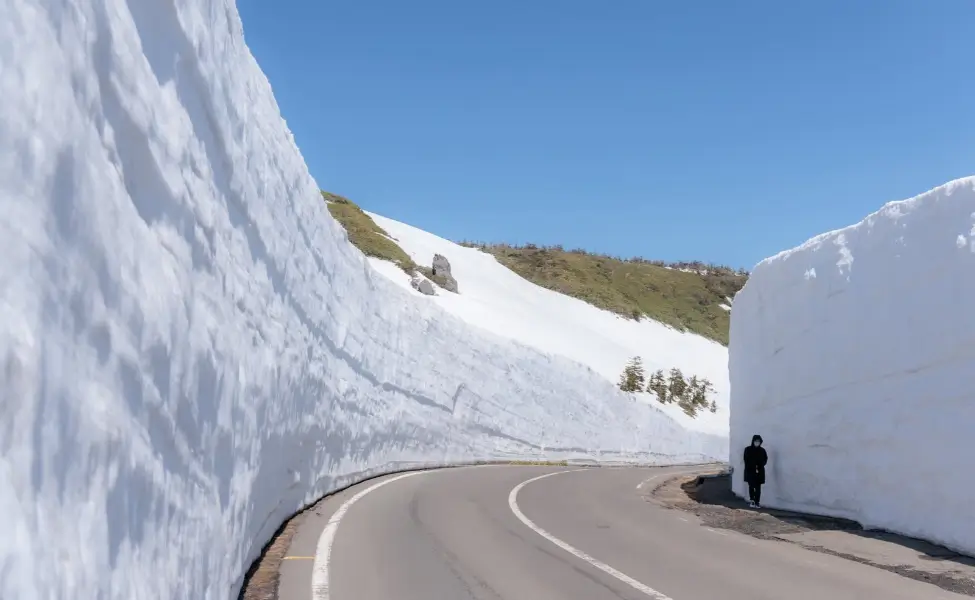
The route stretches for 27 kilometres, making it Japan’s longest snow corridor. Down at the foot of the mountain, cherry blossoms are often flowering at the same time.
A little later in spring, something stranger happens near the summit. As the ice on Kagami-numa pond melts, a ring of blue water opens around a white disc of ice in the middle.
From above, it looks just like a giant eye staring up at the sky. People call it the Hachimantai Dragon Eye, and its appearance changes each year depending on the snow and weather.
In autumn, the whole plateau turns red and gold.
5. Nyuto Onsen, Akita
Deep in the beech forests of Akita, at the foot of Mount Nyuto, Nyuto Onsen is a cluster of seven traditional hot spring inns. Each has its own source of water.
The oldest, Tsurunoyu, has thatched-roof buildings and a history stretching back centuries. Satake Yoshitaka, the second lord of the Akita domain, reportedly came here for hot spring treatment in 1638.

Its outdoor bath has water so milky that you can’t see an inch below the surface. In winter, snow piles up around the baths while steam rises into the freezing air.
If you stay overnight at a participating inn, you can buy a pass to visit all seven. The water varies from milky white to completely clear, giving each bath a different character.
6. Hiraizumi, Iwate
Further south in Iwate, the small town of Hiraizumi was once one of the richest places in Japan, thanks to gold mined from the surrounding hills.
Its Golden Hall, known as Konjikido, stands within the grounds of Chuson-ji Temple. Built around 900 years ago, the hall is covered almost entirely in gold leaf, inside and out. Today it sits inside a larger protective building, glowing in the half-light.
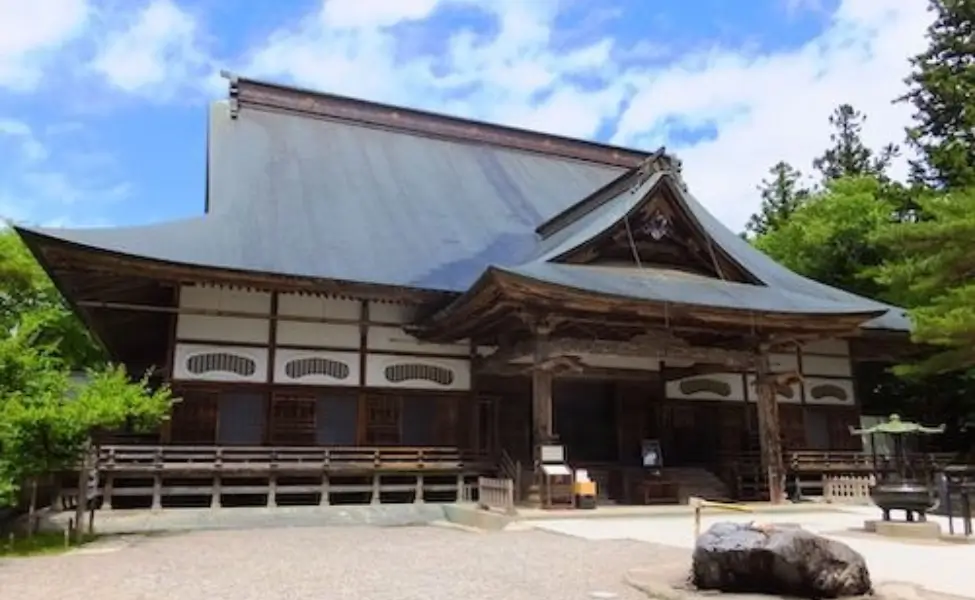
Close by, Motsu-ji Temple has a large pond garden designed to represent the Buddhist paradise. UNESCO recognises Hiraizumi’s historic temples and gardens as a World Heritage Site.
Matsuo Basho, one of Japan’s most famous haiku poets, visited Hiraizumi in 1689, centuries after its golden age.
Looking out at the summer grass where powerful families once lived, he wrote his famous Natsukusa ya haiku. The poem reflects on the dreams of warriors and how their former glory has disappeared.
7. Matsushima, Miyagi
On the coast of Miyagi, Matsushima Bay holds around 260 small islands, many topped with twisted pine trees.
It’s one of Japan’s Three Scenic Views, a collection of landscapes that people have celebrated for nearly 400 years.

Red bridges link some of the islands to the shore, and small temples sit hidden among the pines. On the mainland, the historic Zen temple of Zuigan-ji has nearby caves carved into the rock, where monks once meditated and left memorials.
In winter, the bay is famous for its oysters, grilled right by the water. At sunrise, the islands appear one by one out of the morning mist.
8. Dewa Sanzan, Yamagata
In Yamagata, people have worshipped three sacred mountains, Haguro, Gassan and Yudono, for more than 1,400 years. Together, they’re known as Dewa Sanzan.
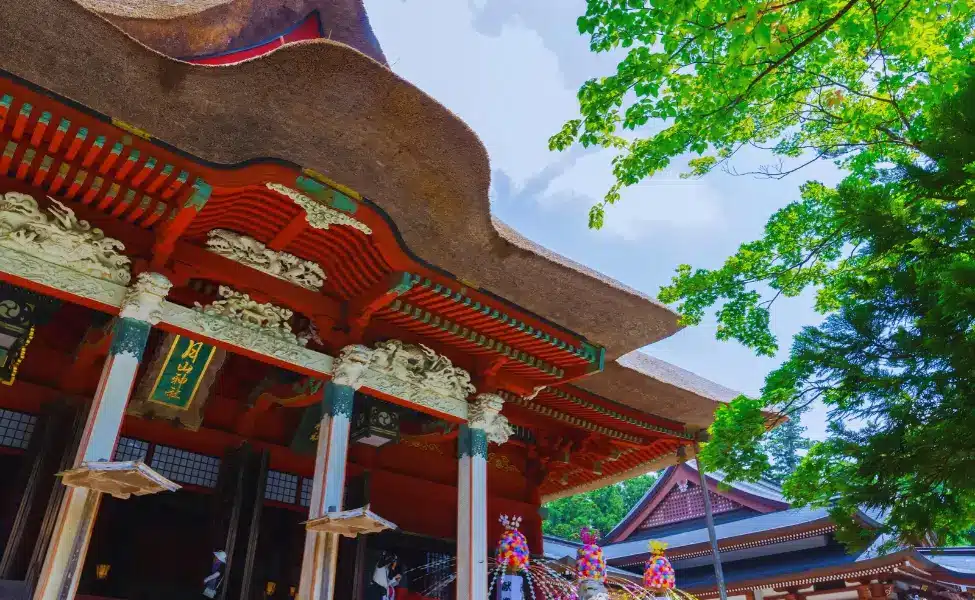
A pilgrimage across them represents a journey of rebirth. Haguro stands for the present, Gassan for the past and Yudono for the future.
On Mount Haguro, a stone path of 2,446 steps climbs through a forest of giant cedars. Near the bottom, a wooden five-storey pagoda stands alone among the trees. It’s more than 600 years old and a National Treasure.
Close by is the Grandfather Cedar, believed to be around 1,000 years old. At the summit, the main shrine has one of the largest thatched roofs in Japan.
These mountains are still home to the yamabushi, practitioners of traditional mountain asceticism. They blow conch shells and train by walking the peaks and standing under icy waterfalls.
9. Mount Zao, Yamagata and Miyagi
On the border of Yamagata and Miyagi, Mount Zao has one of the strangest winter sights in Japan.
Freezing winds blow in from Siberia, carrying moisture that sticks to the fir trees and freezes. Layer after layer builds up until the trees disappear completely beneath thick coverings of ice and snow.
By late winter, huge white figures cover the slopes. Locals call them juhyo, but most visitors know them as snow monsters.

A ropeway carries you up among them, and in the evening some areas light up in colour.
In summer, the snow melts away to reveal Okama, a volcanic crater lake that changes colour with the light, from emerald green to deep blue.
10. Shima Onsen, Gunma
In the mountains of Gunma, Shima Onsen sits in a narrow valley beside a river so clear and blue that the colour has its own name, Shima Blue.
The name Shima uses the Japanese characters for 40,000, and legend says the water here can cure 40,000 illnesses.
At the heart of town stands Sekizenkan, whose oldest surviving building dates back to 1691. It’s believed to be Japan’s oldest hot spring inn.
A red bridge leads across the river to its old wooden entrance. Many people believe it helped inspire the bathhouse in Spirited Away, although that connection hasn’t been officially confirmed.
After dark, the inn’s windows glow above the river, and the scene looks like it could have come straight out of the film.
11. Unno-juku, Nagano
In eastern Nagano, the old Hokkoku Kaido road once linked the Nakasendo through the mountains with the coast of the Sea of Japan.
Unno-juku became a post town along it in 1625, and its main street still looks much as it did centuries ago. A stone-lined water channel runs along the 650-metre street, with willow trees and wooden houses featuring fine latticework on both sides.
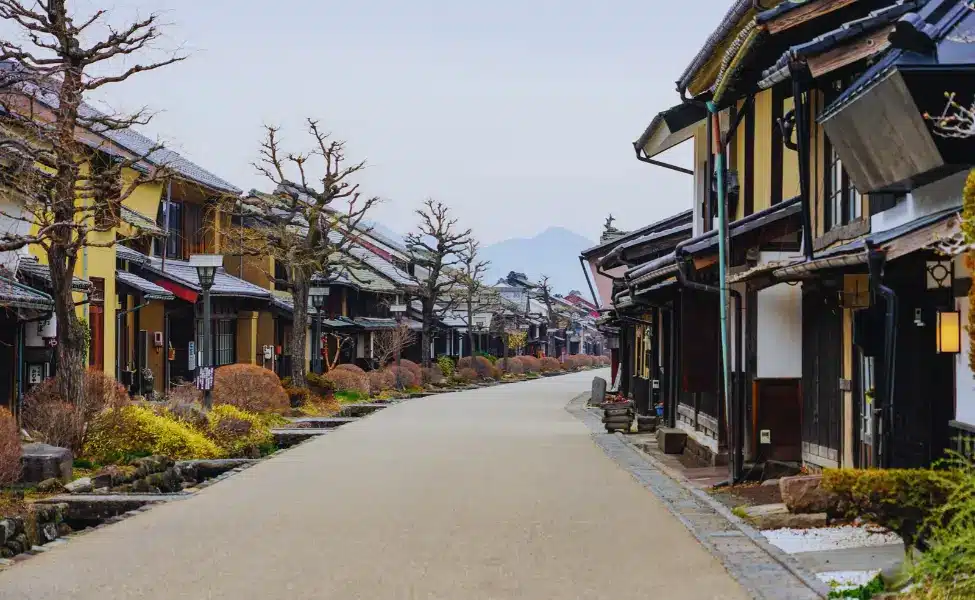
Look up at the roofs and you’ll see udatsu, raised firewalls between the houses. They were expensive, so only wealthy families could afford them, giving rise to a Japanese saying that’s still used today.
If someone’s udatsu won’t go up, it means they’ll never get ahead in life.
When travellers stopped coming in the late 1800s, residents turned to raising silkworms in the large rooms of the old inns. You can still spot the little vents on the rooftops where heat and smoke escaped.
12. Gujo Hachiman, Gifu
In the mountains of Gifu, Gujo Hachiman is a town built around water.
Clear streams run beside its streets, and residents still use traditional stone water tanks where water flows from one pool to the next. The first pool is for drinking, the second for washing vegetables and the last for rinsing pots, with fish cleaning up the scraps.

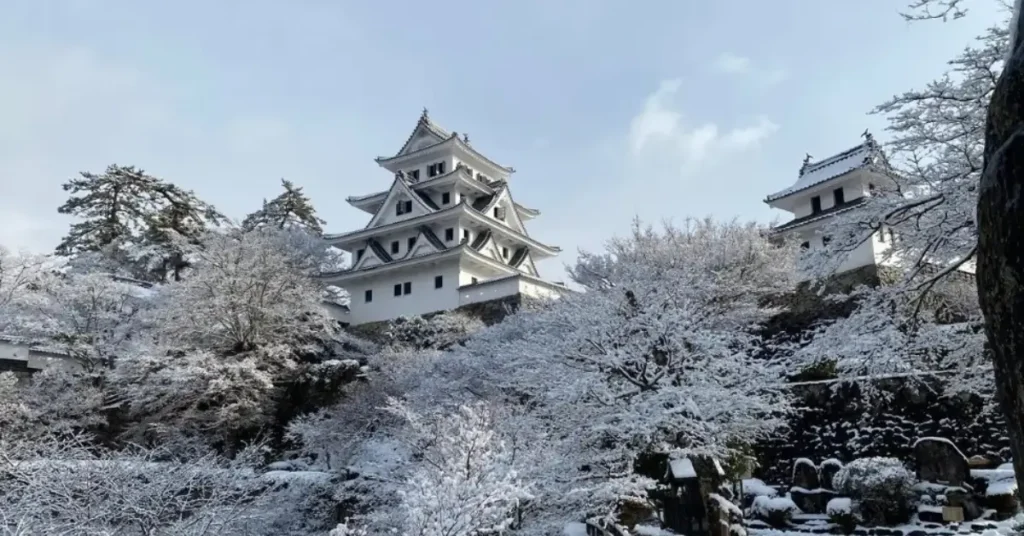
On the hill above town stands Gujo Hachiman Castle, rebuilt in wood in 1933. It’s recognised as Japan’s oldest surviving wooden castle reconstruction.
Sogi-sui, the town’s historic spring, was the first selected for Japan’s list of 100 Famous Waters.
Every summer, the Gujo Odori dance festival takes place over more than 30 nights between July and early September. For four nights during Obon, people dance in the streets until dawn.

Much of Japan’s realistic plastic food comes from Gujo Hachiman too, including the replica dishes you see in restaurant windows across the country.
And on hot summer days, local boys still jump from a bridge into the river far below.
13. Inuyama, Aichi
North of Nagoya, Inuyama Castle sits on a cliff above the Kiso River.
It’s one of the 12 castles that still have their original keeps and among the oldest of them all. It’s also a National Treasure.

From the top floor, a wooden balcony runs all the way around, with views across the river into the mountains.
On summer nights, fishermen still practise ukai, a way of fishing with more than 1,300 years of history in Japan. Fires burn in iron baskets at the front of their boats, while trained cormorants catch sweetfish in the dark water.

At the foot of the castle, Urakuen Garden contains Joan, a tiny teahouse more than 400 years old and also a National Treasure.
In spring, the Inuyama Festival fills the old streets with tall wooden floats carrying mechanical puppets that perform on top. UNESCO lists the festival alongside other traditional float festivals around Japan.
14. Oidaira Park, Aichi
In the hills of eastern Aichi, Oidaira Park follows the banks of the Nagura River in the Inabu area of Toyota City.

Around 520 maple and ginkgo trees grow along the water here. The park has historic ties to the Furuhashi family, local sake brewers who were active here from the middle of the Edo period.
In autumn, usually around early to mid-November, the leaves turn brilliant red and gold, with their colours reflecting in the river.
During the maple festival, local stalls sell gohei mochi, rice cakes grilled on sticks and covered in a sweet miso sauce.

Then in June, when the leaves are green again, fireflies drift above the water after dark.
15. Hikone, Shiga
On the eastern shore of Lake Biwa, Hikone has another of Japan’s 12 original castles and another National Treasure.

Its white keep has stood for more than 400 years. Below it, Genkyu-en is a landscaped garden modelled on a detached palace belonging to Emperor Xuanzong of China’s Tang dynasty.
The garden dates from 1677, with ponds, islands and small bridges arranged to create views towards the castle. In spring, more than 1,000 cherry trees bloom around the castle moats.
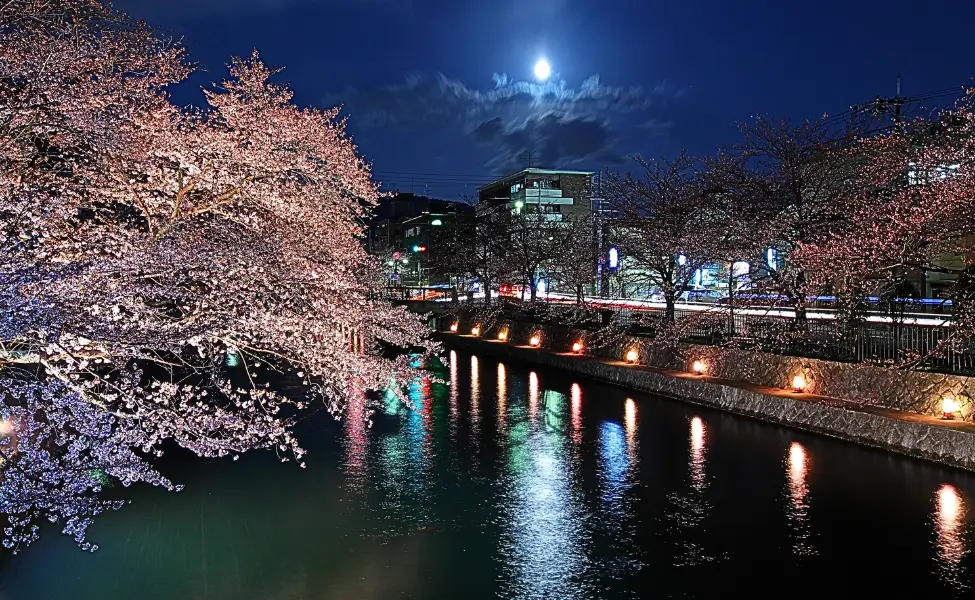
Lake Biwa itself is the largest lake in Japan. It’s also one of the oldest lakes on Earth, at more than four million years old, and home to fish that live nowhere else.
16. Tojinbo and Mikuni, Fukui
On the coast of Fukui, the Tojinbo cliffs rise straight out of the Sea of Japan.
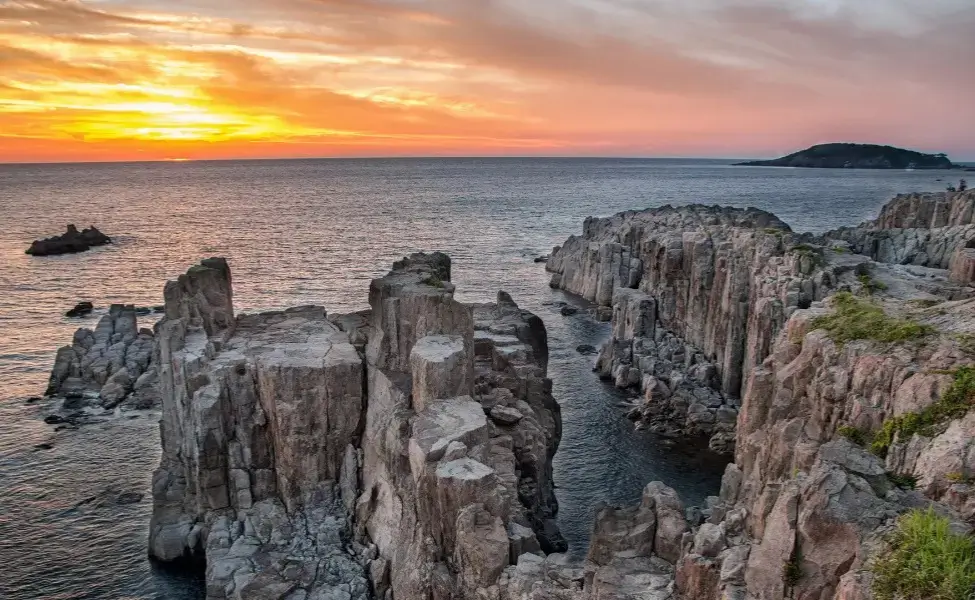
They’re made of thousands of rock columns with five or six sides, formed as volcanic rock cooled and cracked millions of years ago. The columns run along the coast for about a kilometre, with cliffs reaching around 25 metres high and waves crashing against their base.
Sightseeing boats take you along the bottom of the cliffs, and at sunset the whole coastline glows orange.
Just down the road, Mikuni was once a busy port for merchant ships travelling along the Sea of Japan coast. They traded rice and other goods across the country, bringing wealth to local merchants whose tall wooden townhouses still line the old streets.

Every May, the Mikuni Festival brings huge floats through the town, each topped with giant warrior figures.
In winter, the port is famous for Echizen crab, so prized that it has been presented to Japan’s imperial family.
17. Tottori Sand Dunes, Tottori
On the coast of Tottori, sand dunes stretch for about 16 kilometres along the shore. It’s a landscape that looks very different from the forests and mountains found across much of Japan.
The highest ridges rise around 50 metres above sea level, and climbing through the soft sand is harder than it looks.
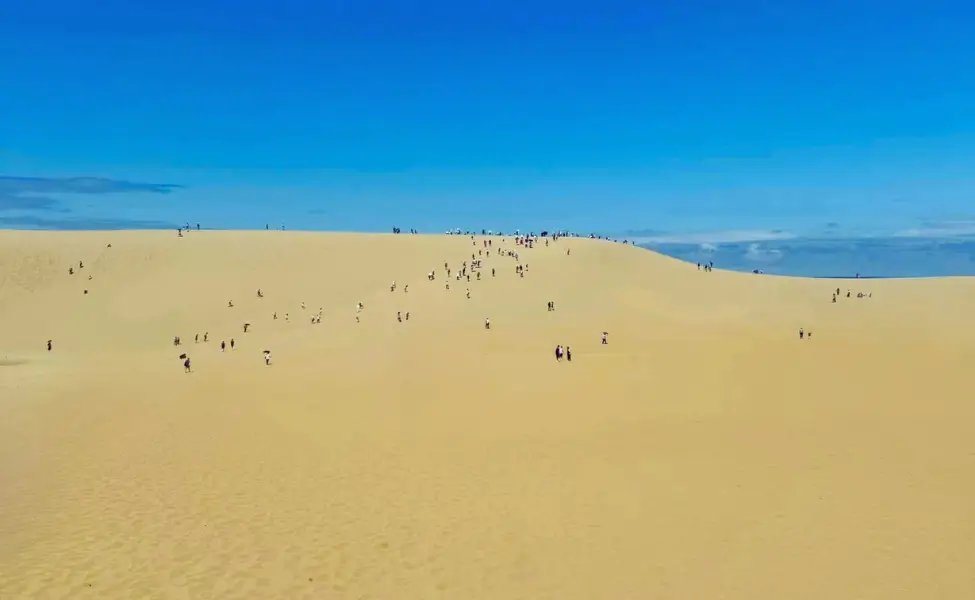
Wind keeps drawing ripples and patterns across the surface. There are camel rides and sandboarding, and from the top you get a view of little more than sand and sea.
After heavy rain or snowmelt, a shallow lake sometimes appears in a hollow between the dunes, like a small oasis.
Nearby, the Sand Museum displays enormous sculptures carved entirely from sand. Artists rebuild them around a new theme each year.
18. Izumo Taisha, Shimane
In Shimane, Izumo Taisha is one of Japan’s oldest and most important Shinto shrines.
It’s dedicated to Okuninushi no Okami, a deity associated with bringing people together and forming relationships. Many visitors come here to pray for a good marriage.

In front of the Kaguraden hall hangs a giant rope made from rice straw, more than 13 metres long and weighing around five tonnes.
At most Shinto shrines, people clap twice when they pray. At Izumo Taisha, they clap four times.
According to tradition, Japan’s gods gather here during the tenth month of the old lunar calendar, usually falling around November today. The rest of the country calls this period Kannazuki, or the month without gods.

In Izumo, people call it Kamiarizuki, the month with gods.
The shrine may once have been even more impressive. Huge wooden pillars uncovered in its grounds suggest that an earlier main hall may have stood nearly 50 metres high.
Afterwards, try Izumo soba, buckwheat noodles served in a stack of small, round lacquered dishes.
19. Hagi, Yamaguchi
On the coast of Yamaguchi, Hagi is an old castle town that has retained much of its historic street layout.
The castle is gone, but its stone walls remain by the sea. Behind them, the old samurai district is a maze of earthen walls, with summer orange trees leaning over the top.

Hagi is famous for its pottery. Its soft glaze slowly absorbs tea through tiny cracks, so a cup gradually changes colour with use.
This small town also played an important role in the creation of modern Japan.
During the final years of the Tokugawa shogunate, Yoshida Shoin taught young samurai at a private school called Shokasonjuku. Several of his students later helped overthrow the shogunate and establish the new Meiji government.

One of them was Ito Hirobumi, who became Japan’s first prime minister.
The original wooden schoolhouse still stands and forms part of a UNESCO World Heritage Site.
20. Iya Valley, Tokushima
In the mountains of Shikoku, the Iya Valley is one of the most remote places in Japan.
Its gorges are so deep and steep that legend says warriors from the defeated Heike clan fled here more than 800 years ago. The mountains supposedly helped them hide from their enemies.

Bridges woven from mountain vines still hang across the river. These days, hidden steel cables reinforce them, but they still sway with every step.
The main vine bridge is rebuilt every three years.
Further down the river, boats take you through Oboke Gorge, between walls of grey stone.
On one cliff edge stands a little statue of a boy, marking the spot where local children supposedly proved their courage. According to the story, they did so by relieving themselves over a 200-metre drop.
21. Dogo Onsen, Ehime
In Matsuyama, on Shikoku’s northwestern coast, Dogo Onsen is one of the oldest hot springs in Japan.
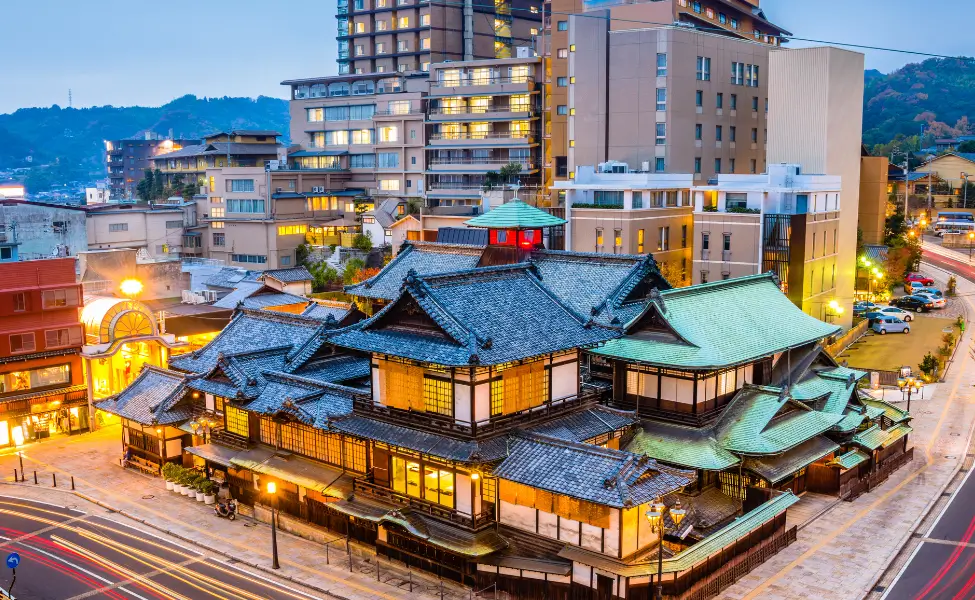
Legend says a white heron with an injured leg healed itself in the warm water, leading people to discover the spring. Its history is said to go back around 3,000 years.
The main bathhouse, Dogo Onsen Honkan, is a grand wooden building from the late 1800s, with layered roofs and a white heron perched on top.
A traditional drum sounds every morning to announce that the baths are open.
Inside, there’s even a private bathing area originally built for members of the imperial family.
On a hill in the middle of Matsuyama stands one more of Japan’s 12 original castles, and a ropeway carries you part of the way up to it.
22. Amakusa, Kumamoto
Off the western coast of Kyushu, Amakusa is a cluster of islands linked to the mainland by a chain of five bridges.
Some of Japan’s most dramatic Christian history played out here. During the 17th century, the Shimabara-Amakusa Rebellion led to the deaths of tens of thousands of people.

Afterwards, families who continued practising Christianity had to hide their faith for generations.
In the fishing village of Sakitsu, hidden Christians used abalone shells in their religious practices. The shells’ shimmering interiors reminded them of images of the Virgin Mary.
Today, a Gothic church stands among the fishermen’s houses by the bay, with tatami mats covering the floor inside.
Its altar occupies the spot where officials once forced villagers to step on Christian images to prove they’d given up their faith. The village is now part of a UNESCO World Heritage Site.
Out at sea, nearly 200 wild dolphins live around the islands throughout the year, and local boats take visitors out to see them.
23. Unzen, Nagasaki
Across the water from Amakusa, on the Shimabara Peninsula, Unzen has another connection to Japan’s history of Christian persecution.
The hot spring town sits beside a field of steaming volcanic vents. White steam pours from the ground at more than 30 spots, with temperatures reaching around 120°C and a strong smell of sulphur in the air.

People call this geothermal area the Unzen Hells.
In the 1600s, that name became horribly real. Officials brought Christians who refused to give up their faith here and tortured them using the boiling water.
A memorial to the victims now stands among the steam.
Today, the area has a much gentler side. You can stand on a wooden platform and let the steam warm your feet, while vendors sell eggs cooked using geothermal heat.
In 1934, Unzen became part of one of Japan’s first three national parks. Above the town, a ropeway climbs into mountains that turn red and gold in autumn.
24. Takachiho Gorge, Miyazaki
In the mountains of Miyazaki, a river carved Takachiho Gorge through ancient volcanic rock.
Cliffs of columned volcanic rock rise high above the water. Rowing boats float along the bottom, right up to Manai Falls, which pours down the cliff into the river.
Takachiho is closely tied to some of Japan’s oldest myths.

According to tradition, the sun goddess Amaterasu hid in a nearby cave, plunging the world into darkness until the other gods persuaded her to come out.
Every night at a local shrine, performers act out these stories through sacred kagura dances.
Not far away, in a riverside cave where the gods are said to have gathered, visitors have stacked thousands of small piles of stones as prayers.
25. Sakurajima, Kagoshima
In Kagoshima Bay, Sakurajima is one of the most active volcanoes in Japan. It erupts frequently, sending clouds of ash high into the sky.
It used to be an island. Then, in 1914, a huge eruption sent out enough lava to join it to the mainland.
A few thousand people still live on its slopes. Local weather forecasts tell residents which way the ash will blow, and they collect it in special yellow bags.
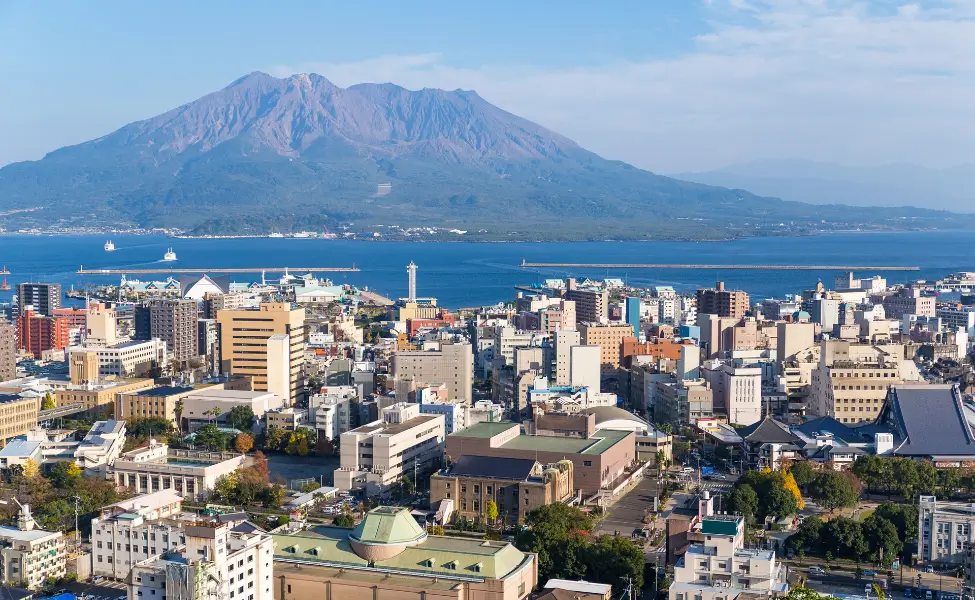
The volcanic soil grows giant radishes, some as big as a beach ball, and tiny mandarin oranges about the size of a golf ball.
A ferry crosses from Kagoshima city in about 15 minutes, day and night.
By the shore, a foot bath around 100 metres long lets you soak your feet in hot spring water while you watch the volcano smoke.
26. Miyakojima, Okinawa
Far to the south, between Okinawa and Taiwan, Miyakojima is a flat island made of coral limestone.
There are no mountains or major rivers, so rain sinks straight into the ground. The island stores its fresh water in underground dams hidden beneath the fields.

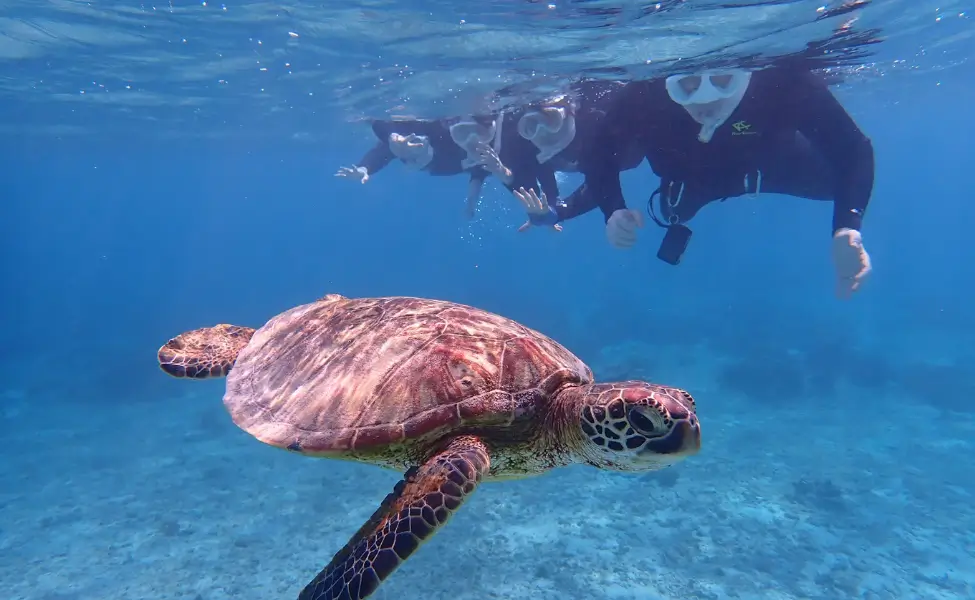
With no large rivers washing mud into the sea, the water around Miyakojima is among the clearest anywhere in Japan.
Sea turtles swim close to the beaches, and the white sand of Yonaha Maehama stretches for about seven kilometres.
The Irabu Bridge, around 3.5 kilometres long, connects Miyakojima to the neighbouring island of Irabu. It’s the longest toll-free bridge in Japan, and driving across it feels like flying over turquoise glass.
Off the northern coast lies Yabiji, an enormous coral reef system.
A few times a year, at the lowest spring tides, parts of the reef rise above the sea, forming what people call a phantom continent.
For decades, organised tours brought thousands of visitors to walk on the exposed reef. Those large landing tours ended after 2014, when the ferry operators sold their vessels following the opening of the Irabu Bridge in 2015.
You can no longer simply join a landing tour and walk across the exposed coral. Boat trips and snorkelling excursions still provide opportunities to see Yabiji.
More of Japan Waiting to Be Found
From the end of the earth in Hokkaido to the coral islands in the far south, Japan has far more to offer than its most famous cities and landmarks.
There are snow monsters and vine bridges, warm waterfalls and roads cut through walls of snow. There are towns where old traditions continue, and small places with stories that rarely reach international visitors.
Some of these destinations are famous within Japan, while others remain largely unknown outside their local areas.
Whether you’re planning your first trip or have already visited several times, there are many of Japan’s hidden wonders waiting to be found.