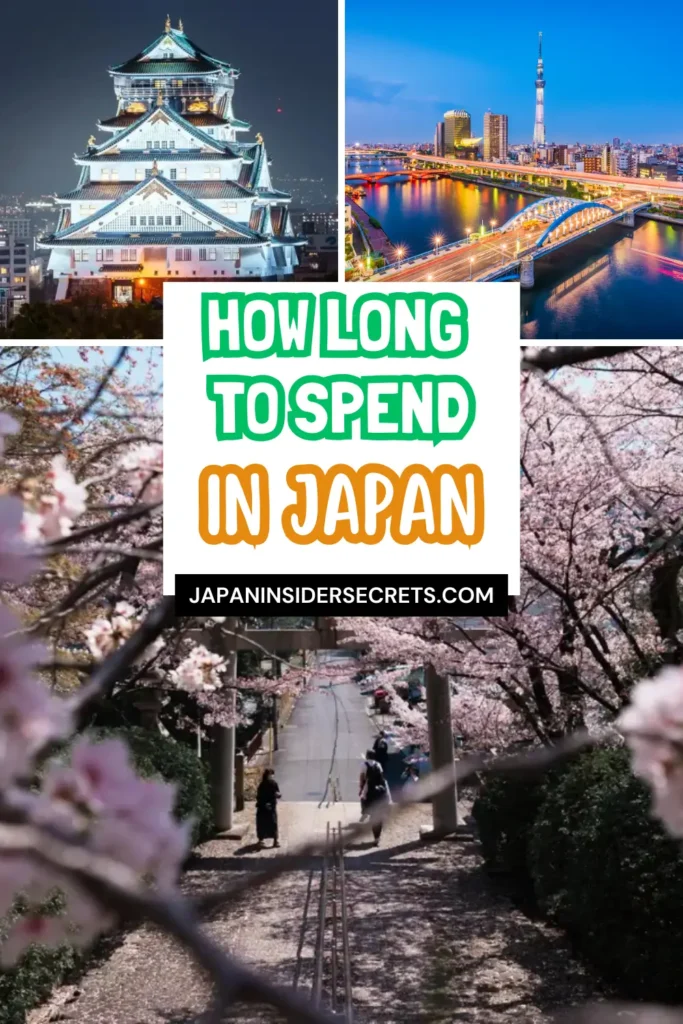

How long to spend in Japan?
Many travellers think a week is enough, but by the time you’ve shuttled between Tokyo, Kyoto, and Osaka you’ll have lost nearly two days to trains.
The truth is that the best moments happen when you slow down.
A second visit to the same ramen shop or a walk down the same backstreet often tells you more about Japan than any checklist.
The right trip length depends on budget, season, and your own style of travel.
What Shapes Your Trip Length
Budget
Accommodation ranges widely.
A night at a business hotel chain such as APA, Toyoko Inn, or Dormy Inn runs about ¥8,000–12,000 for a double.
They are reliable, clean, and close to transport.
Boutique hotels can cost twice as much without adding much convenience.
Traditional ryokan with dinner and breakfast included start around ¥15,000 per person per night.
Hostels are often under ¥3,000.
Food prices cover the same spectrum.
Sukiya or Matsuya serve filling beef bowls for under ¥800.
Independent ramen or curry shops are rarely more than ¥1,200.

Izakaya dinners with drinks average ¥3,000–5,000 per person.
At the top end, Kyoto’s kaiseki meals begin at ¥15,000.
Travel style
Your personality matters more than any itinerary template.
Some people need three days just to adjust to Tokyo before they enjoy it.
Others get bored if they stay in one city too long.
Knowing whether you prefer depth or constant movement will shape the right length for you.
Season
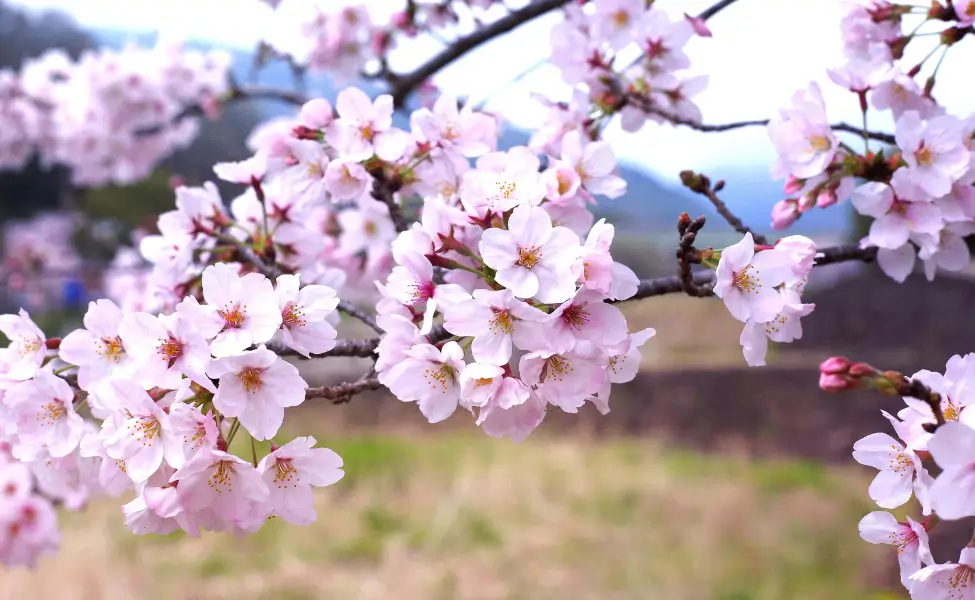
Spring means cherry blossoms and high hotel prices.
Summer delivers fireworks and festivals, along with heavy humidity in big cities.
Autumn is often ideal with crisp weather and colourful foliage.
Ski resorts in Nagano and Hokkaido, or quiet, less-crowded city trips with the bonus of hot springs.
Realistic Trip Options
One Week: Choose Your Focus
Seven days is not enough to see the country.
You must focus.
Staying in Tokyo alone is a smart choice.

Each district feels like its own city.
Shinjuku is all business towers and neon.
Asakusa is lined with traditional stalls leading to Senso-ji Temple.
Harajuku bursts with youth culture.

Ginza is polished and formal.
One week lets you explore them in more detail and take a day trip to Kamakura or Nikko.
If you want two cities, Tokyo and Kyoto form the classic mix of modern and traditional.
The shinkansen takes just over two hours.
Tokyo and Osaka is another option, especially for food lovers.
Osaka is Japan’s street food capital, known for takoyaki, okonomiyaki, and kushikatsu.
Two Weeks: Time to Breathe
Two weeks gives you space.
You can cover Tokyo, Kyoto, and Osaka without being on constant alert.
A common split is four days in Tokyo, three in Kyoto, two in Osaka, and the rest for day trips and relaxation.
This schedule fits in experiences that take more time: a night in a ryokan, a cooking class, or a sake brewery visit.
From Tokyo, Nikko’s mountain temples are two hours away.

Kamakura’s coastal shrines are an hour away.
From Kyoto, Nara is only 40 minutes.
From Osaka, Hiroshima is 90 minutes by shinkansen.
Three Weeks or More: Beyond the Basics
With three weeks or more, you can break away from the tourist loop.
Takayama and Kanazawa preserve Edo-period streets and crafts.
Matsumoto has one of Japan’s most striking castles.
The San’in coastal region shows off slower fishing towns and seafood culture.

Northern Japan feels like another country.
Hokkaido has open landscapes, lavender in Furano during summer, and some of the world’s best skiing in Niseko.
The longer you stay, the easier it is to settle into routines.
Shopping at the same morning market, greeting the same izakaya owner, or attending a local festival gives you experiences no guidebook promises.
Practical Considerations
Transport
The JR Pass is useful only if you plan several long-distance trips.
A round trip from Tokyo to Kyoto costs about ¥28,000.
Kyoto to Osaka is ¥1,000 return.
Osaka to Hiroshima return is about ¥20,000.
Together, these trips exceed the value of a 14-day JR Pass.
If you stick to one region, buy local passes instead.
Prepaid IC cards such as Suica, PASMO, or ICOCA make urban travel simple and can be topped up in convenience stores.
Accommodation
Location usually matters more than amenities.
A hostel may be cheaper, but if it adds 30 minutes of commuting each way, you waste time.
Business hotels near stations save energy.
At least one ryokan stay is worth the cost for the food and hot springs.

Food
Convenience store meals are fresh, filling, and usually ¥500 or less.
Department store basements in Tokyo and Kyoto sell high-quality sushi, tempura, and bento boxes at good value.
Seek out regional specialties: Hiroshima okonomiyaki layered with noodles, miso ramen in Sapporo, and Hida beef in Takayama.

Sample Itineraries
One Week: Tokyo Focus
Day 1–2: Explore Shinjuku and Shibuya. Both on the JR Yamanote Line. Lunches cost ¥800–1,200. Dinners in izakaya ¥3,000–5,000.
Day 3: Visit Asakusa’s Senso-ji Temple and Ueno’s museums. Use a Tokyo Metro pass for ¥600.
Day 4: Day trip to Kamakura. One hour, ¥940 each way. Budget ¥5,000 for transport, meals, and entry fees.
Day 5: Harajuku, Omotesando, Ginza.
Day 6–7: Free time for Odaiba, teamLab Planets, or returning to favourite districts.
Budget: ¥12,000–15,000 per day for mid-range travel.
One Week: Tokyo and Kyoto
Day 1–3: Tokyo highlights such as Shinjuku, Asakusa, and Harajuku.
Day 4: Travel to Kyoto on the shinkansen. 2h 20m, ¥14,000. Stay near Kyoto Station.
Day 5–6: Explore Kyoto’s temples, Philosopher’s Path, Gion, and Arashiyama bamboo grove. Entry fees total about ¥2,000–3,000.
Day 7: Day trip to Nara. 40 minutes, ¥720 each way. Visit Todai-ji Temple and Nara Park.
Budget: ¥13,000–17,000 per day. The shinkansen ticket is the largest single cost.
Two Weeks: Classic Route
Days 1–4: Tokyo, with a day trip to Nikko (2h, ¥2,800 one way) or Hakone (1h 30m, Hakone Freepass ¥6,100).
Days 5–6: Mount Fuji area or Hakone overnight. A ryokan with meals is ¥15,000–20,000.
Days 7–9: Kyoto, with one day in Nara.
Days 10–11: Osaka for food and nightlife. Street food for two days totals about ¥5,000–7,000.
Days 12–14: Hiroshima, 1h 30m from Osaka. Add Miyajima Island (ferry ¥180 each way).
Budget: ¥11,000–16,000 per day. The JR Pass pays off here.
Three Weeks: Extended Exploration
Week 1: Tokyo and nearby day trips to Kamakura, Yokohama, or Nikko.
2: Kyoto, Nara, Osaka, and Hakone.
3: Choose your region. Western Japan with Hiroshima, Okayama, Kurashiki, and Fukuoka.
Northern Honshu with Takayama, Kanazawa, and Matsumoto.
Hokkaido with Sapporo, Otaru, and Furano in summer or Niseko in winter.

Budget: ¥10,000–15,000 per day. Flights from Tokyo to Hokkaido cost ¥8,000–15,000 one way.
Three to Four Weeks: Comprehensive Journey
Three or four weeks lets you go end to end.
Begin with a week in Tokyo and day trips such as Nikko.
Head to Nagano for snow monkeys or mountain scenery.
Continue through Takayama, Kanazawa, and Shirakawa-go with their farmhouses and crafts.

Spend time in Kyoto, Nara, Osaka, and Hiroshima without rushing.
If you have four weeks, add Hokkaido in the north for seafood and skiing or Okinawa in the south for beaches and island culture.
Wrapping Up
Japan is not a country that rewards rushing.
A trip planned around train schedules and a checklist of famous sights will always feel hurried.
The most memorable moments usually come from the slower details, such as a meal in a neighbourhood diner, a chat with a shop owner, or a quiet evening walk down backstreets.
How long you stay depends on budget, travel style, and season, but the principle is the same at every length.
Give yourself room to pause.
A week can work if you focus on one city.
Two weeks allows the classic three-city route with day trips.
Three weeks or more opens the door to regional towns, coastal areas, and northern Japan.
Whatever you choose, plan less and notice more.
Japan reveals itself gradually, and the best experiences often happen between the big sights.